
Science
NASA Tests Innovative CryoFILL System for Future Space Missions

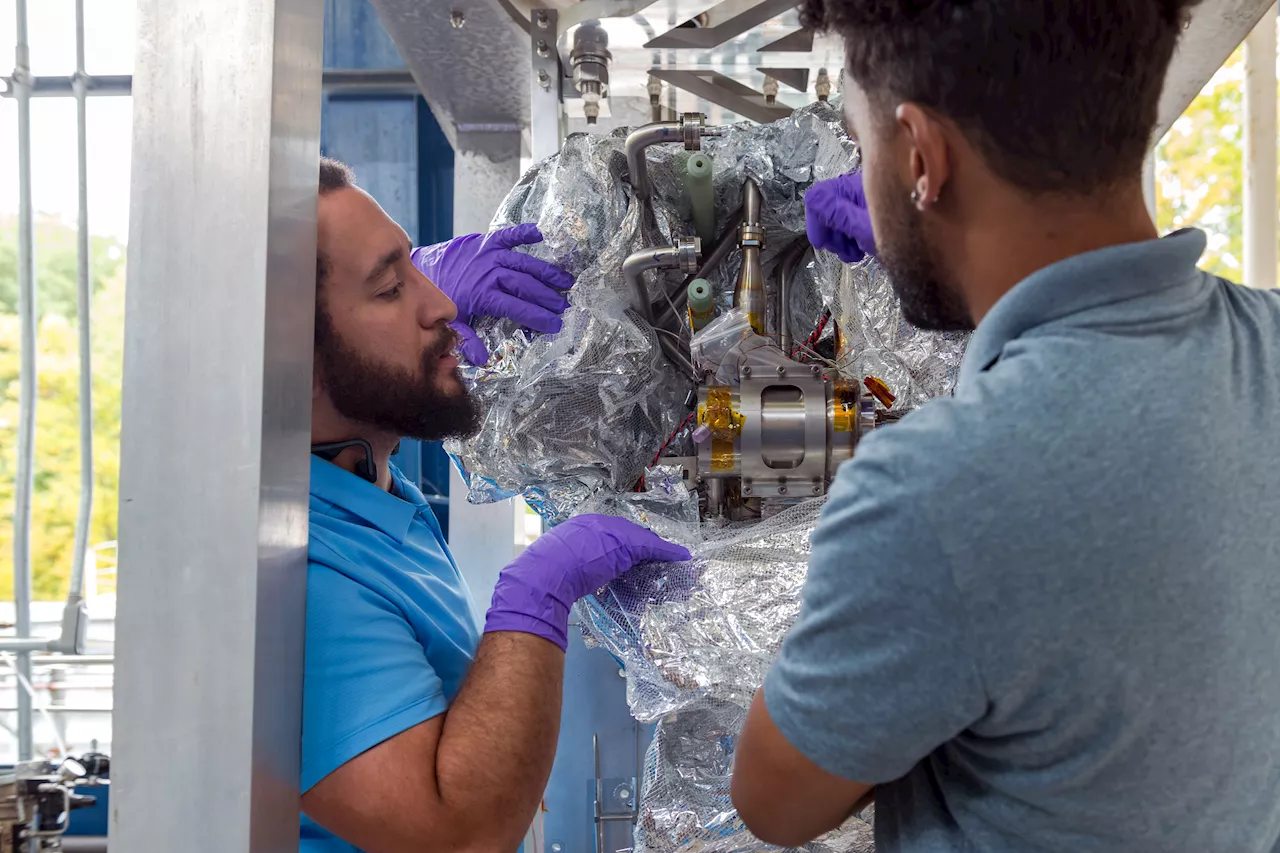
Experts at NASA’s Glenn Research Center in Cleveland are pioneering a groundbreaking technology that could significantly alter how future space missions are fueled. This initiative, known as the CryoFILL project, aims to reduce costs and extend operational durations for landers on planetary surfaces.
On September 24, 2025, engineers, including Evan Racine, the CryoFILL project manager, were observed testing a flight-like cryocooler developed by Creare LLC. This component is critical for the integration into the CryoFILL system currently undergoing evaluation. The challenge of fueling rockets is substantial; as missions venture further into space, the need for fuel increases, resulting in heavier spacecraft that require even more fuel for launch.
“If you think about how much fuel your spacecraft would need to go to Mars and come home, it’s quite a lot,” Racine explained. By producing and liquefying oxygen on the Moon or Mars, NASA can potentially fuel landers directly at their landing sites, thus decreasing the amount of propellant necessary for launches from Earth.
In line with its ongoing lunar exploration program, NASA’s vision includes sending astronauts on increasingly ambitious missions to enhance scientific discovery and lay groundwork for future crewed missions to Mars. To establish a sustainable presence on the Moon, NASA plans to utilize lunar resources, such as water ice, to generate essential products like propellant. Oxygen, a vital component of rocket fuel, can be extracted from this water ice located in permanently shadowed regions on the Moon.
To facilitate this extraction, the oxygen must be cooled and condensed into liquid form. The CryoFILL project is designed to efficiently manage the cryogenic fluids involved in this process. Wesley Johnson, the lead engineer for CryoFILL, stated, “We’re testing with flight-like hardware to see how oxygen liquefies and how the system responds to different scenarios.” This phase is crucial for scaling up the technology and automating future in-situ refueling operations.
Over the next three months, NASA engineers will conduct extensive studies on how oxygen condenses under varying conditions. They will use this data to validate temperature computer models and demonstrate how the technology can be applied to larger missions. The outcomes of these tests will inform designs for equipment intended for use on the Moon, Mars, and potentially other planetary surfaces.
The Cryogenic Fluid Management Portfolio Project falls under a collaborative effort between NASA Glenn and the Marshall Space Flight Center in Huntsville, Alabama. This cross-agency team is part of NASA’s Space Technology Mission Directorate, encompassing over 20 individual technology development activities aimed at advancing cryogenic technology for space exploration.
The CryoFILL initiative represents a significant step toward solving the logistical challenges of fueling deep space missions, showcasing NASA’s commitment to innovative solutions that leverage extraterrestrial resources for sustainable exploration.







Revolutionary Photonic Ski-Jump Could Miniaturize LiDAR Systems

Couples Detox from Plastics in New Netflix Doc: Can It Boost Fertility?

Aventon Launches Affordable Full-Suspension Electric Mountain Bike

Discover Eight Must-Try Restaurants This Spring Season

UC Irvine Team Unveils Innovative Ion Pump for Water Treatment

One-Third of Americans Trim Daily Expenses for Healthcare Needs

Apple Secures First Oscar in Three Years with F1: The Movie

Fourth Graders Celebrate St. Patrick’s Day with Creative Weather Drawings

Kim Kardashian Dazzles at Vanity Fair Oscars Party 2026

Nostradamus’ 2026 Predictions: Star Death and Dark Events Loom

Breakthroughs and Challenges Await Science in 2026

Electric Moto Influencer Surronster Arrested in Tijuana

OpenAI to Implement Age Verification for ChatGPT by December 2025

Discover the Top 10 Calorie Counting Apps of 2025

Bella Hadid Shares Health Update After Treatment for Lyme Disease

Analysts Project Stronger Growth for Apple’s iPhone 17 Lineup

Japanese Study Finds Rose Oil Can Increase Brain Gray Matter

Top 10 Penny Stocks to Watch in 2026 for Strong Returns
-
 Science4 months ago
Nostradamus’ 2026 Predictions: Star Death and Dark Events Loom
-
 Science4 months ago
Breakthroughs and Challenges Await Science in 2026
-
 Technology7 months ago
Electric Moto Influencer Surronster Arrested in Tijuana
-
 Technology4 months ago
OpenAI to Implement Age Verification for ChatGPT by December 2025
-
 Technology9 months ago
Discover the Top 10 Calorie Counting Apps of 2025
-
 Health7 months ago
Bella Hadid Shares Health Update After Treatment for Lyme Disease
-
 Health7 months ago
Analysts Project Stronger Growth for Apple’s iPhone 17 Lineup
-
 Health7 months ago
Japanese Study Finds Rose Oil Can Increase Brain Gray Matter
-
 Technology4 months ago
Top 10 Penny Stocks to Watch in 2026 for Strong Returns
-

 Science6 months ago
Starship V3 Set for 2026 Launch After Successful Final Test of Version 2
-

 Technology1 month ago
Nvidia GTC 2026: Major Announcements Expected for AI and Hardware
-

 Education7 months ago
Harvard Secures Court Victory Over Federal Funding Cuts