
Science
NASA Discovers Signs of Life on Mars; Scientists Create Visible Time Crystals

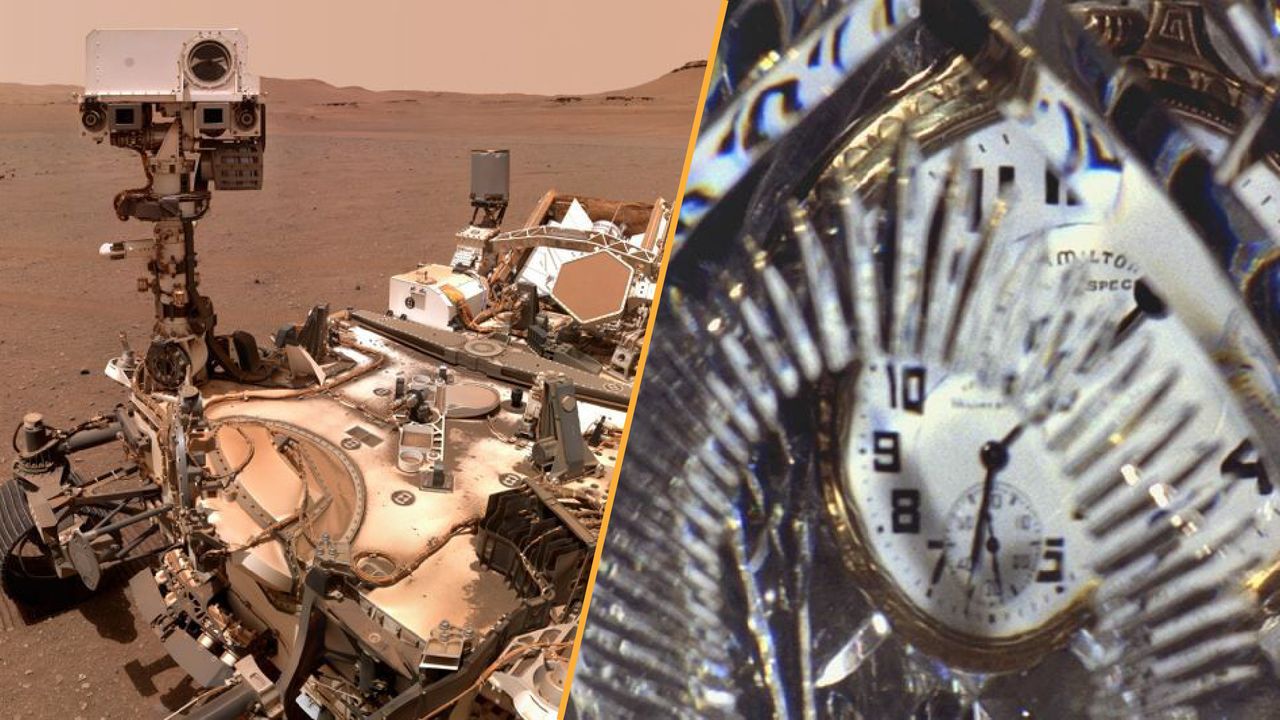
This week, significant advancements in science emerged, highlighted by NASA’s discovery that rocks on Mars may provide the strongest evidence yet of past life on the planet. The rocks exhibit distinctive speckled patterns that, on Earth, indicate chemical reactions typical of microbial energy sources. This discovery, along with findings of organic compounds and indications of historical water flow through the rocks, has spurred excitement among scientists. Nonetheless, experts caution that these markings could result from inorganic processes, emphasizing the need for further investigation through the Mars Sample Return mission, which remains politically challenging.
Breakthroughs in Gravitational Waves and the Nature of Time Crystals
In another significant development, the Laser Interferometer Gravitational-wave Observatory (LIGO) confirmed a long-held theory by the late Stephen Hawking. By detecting faint ripples in space-time from the merger of two black holes, LIGO has taken a crucial step towards linking general relativity with quantum mechanics. This milestone offers potential pathways toward a unified theory of everything, though actual exploration of black holes may require advanced cellular engineering, especially in light of recent studies indicating accelerated aging in human stem cells in space.
Additionally, scientists announced the creation of the first visible time crystals, a concept theorized in 2012. These time crystals were produced using liquid crystals typically found in LCD screens and represent a breakthrough in the ability to visualize this fascinating quantum phenomenon. Beyond their scientific intrigue, these crystals may have practical applications, possibly emerging as anti-counterfeiting features on future high-denomination banknotes.
Environmental Concerns and Historical Discoveries
Amidst these scientific milestones, researchers have made significant strides in understanding the environmental impact of submerged barrels off the coast of Los Angeles. Initially discovered in 2020, these 27,000 barrels were believed to contain the banned pesticide DDT, surrounded by toxic sediment. However, a new study revealed that the barrels actually contain caustic alkaline waste, which poses a considerable threat to marine life. This finding is critical as scientists work to assess the scale of this environmental disaster.
Moreover, researchers are looking into other remarkable phenomena, such as the mysterious lights detected in Chile’s Patagonia region and the curious transformation of the interstellar comet 3I/ATLAS, which may be turning green. These discoveries continue to captivate both scientists and the general public, reminding us of the mystery and wonder that persists in our exploration of the universe.
As advancements in science unfold, they not only enrich our understanding but also prompt further questions, driving the pursuit of knowledge forward. With the potential for groundbreaking discoveries in various fields, the coming weeks are sure to bring even more exciting news from the world of science.




Revolutionary Photonic Ski-Jump Could Miniaturize LiDAR Systems

Couples Detox from Plastics in New Netflix Doc: Can It Boost Fertility?

Aventon Launches Affordable Full-Suspension Electric Mountain Bike

Discover Eight Must-Try Restaurants This Spring Season

UC Irvine Team Unveils Innovative Ion Pump for Water Treatment

One-Third of Americans Trim Daily Expenses for Healthcare Needs

Apple Secures First Oscar in Three Years with F1: The Movie

Fourth Graders Celebrate St. Patrick’s Day with Creative Weather Drawings

Kim Kardashian Dazzles at Vanity Fair Oscars Party 2026

Nostradamus’ 2026 Predictions: Star Death and Dark Events Loom

Breakthroughs and Challenges Await Science in 2026

Electric Moto Influencer Surronster Arrested in Tijuana

OpenAI to Implement Age Verification for ChatGPT by December 2025

Discover the Top 10 Calorie Counting Apps of 2025

Recovering a Suspended TikTok Account: A Step-by-Step Guide

Bella Hadid Shares Health Update After Treatment for Lyme Disease

Backpack Drives Equip Students with Supplies for New School Year

Analysts Project Stronger Growth for Apple’s iPhone 17 Lineup
-
 Science7 months ago
Nostradamus’ 2026 Predictions: Star Death and Dark Events Loom
-
 Science7 months ago
Breakthroughs and Challenges Await Science in 2026
-
 Technology10 months ago
Electric Moto Influencer Surronster Arrested in Tijuana
-
 Technology8 months ago
OpenAI to Implement Age Verification for ChatGPT by December 2025
-
 Technology1 year ago
Discover the Top 10 Calorie Counting Apps of 2025
-
 Technology1 year ago
Recovering a Suspended TikTok Account: A Step-by-Step Guide
-
 Health11 months ago
Bella Hadid Shares Health Update After Treatment for Lyme Disease
-
 Education1 year ago
Backpack Drives Equip Students with Supplies for New School Year
-
 Health11 months ago
Analysts Project Stronger Growth for Apple’s iPhone 17 Lineup
-

 Technology7 months ago
Top 10 Penny Stocks to Watch in 2026 for Strong Returns
-

 Health11 months ago
Japanese Study Finds Rose Oil Can Increase Brain Gray Matter
-

 Science10 months ago
Starship V3 Set for 2026 Launch After Successful Final Test of Version 2