
Science
Massive 900-Metre Crater Discovered in China’s Guangdong Province

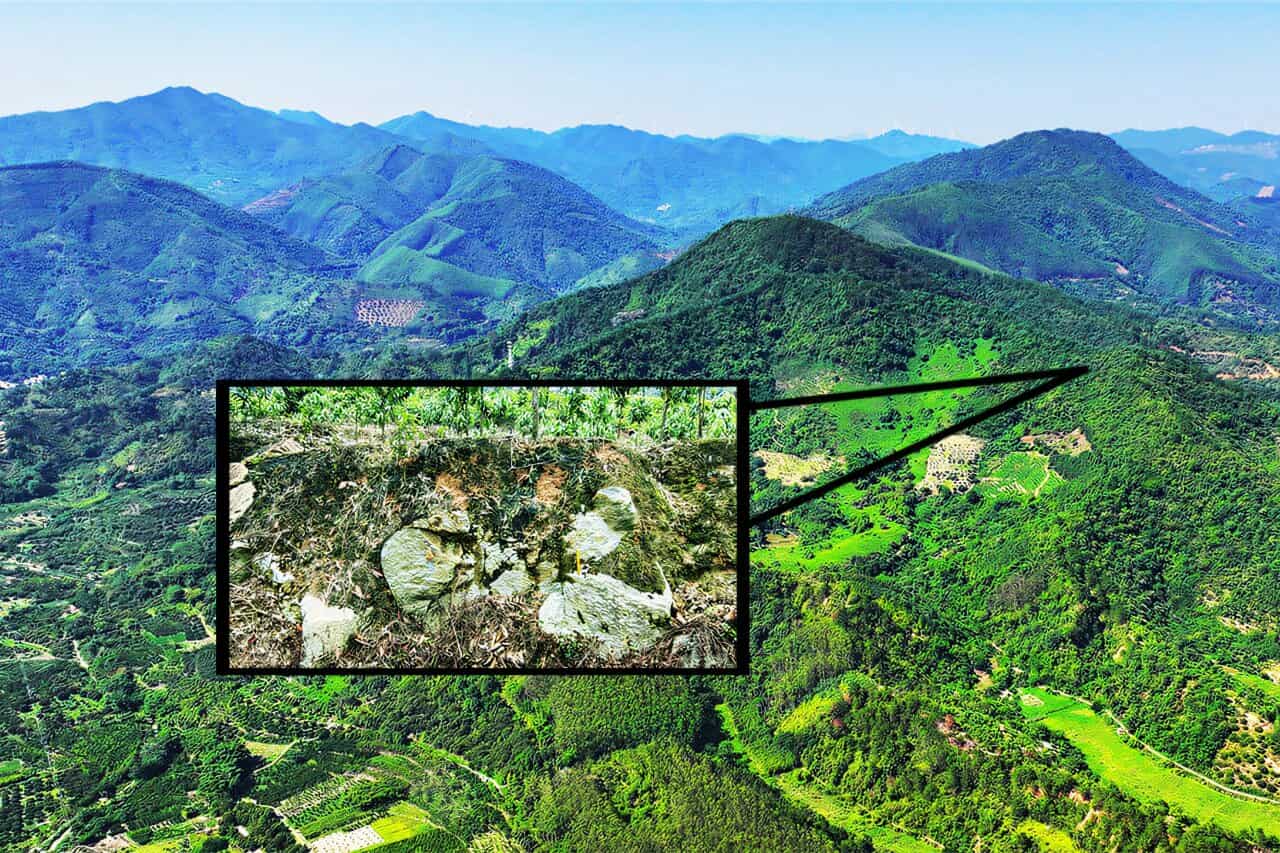
A newly discovered impact crater in China’s Guangdong Province, known as the Jinlin crater, has emerged as a significant find for researchers, challenging existing notions about recent extraterrestrial impacts on Earth. Measuring between 820 and 900 metres in diameter and reaching a depth of 90 metres, this crater is the largest known impact structure from the Holocene epoch, which began approximately 11,700 years ago.
Located near Zhaoqing City, the Jinlin crater remained hidden until scientists identified it as an impact structure, joining the ranks of about 200 confirmed impact craters globally. Its size is particularly noteworthy, surpassing the previous record holder, Russia’s 300-metre Macha crater.
Exceptional Preservation Amid Challenging Conditions
The discovery is surprising given the region’s challenging climate. Guangdong Province experiences regular monsoons and heavy rainfall, conditions that typically accelerate erosion and threaten the visibility of such geological features. Yet, the Jinlin crater has remained remarkably intact, shielded by thick layers of weathered granite that have preserved its structure against the elements.
Researchers have uncovered key evidence confirming the crater’s extraterrestrial origin. Within the granite, they found quartz fragments exhibiting planar deformation features, which serve as geological markers of impact events. These characteristics form under extreme pressure, estimated between 10 and 35 gigapascals, far exceeding the pressures generated by Earth’s geological processes.
Identifying the nature of the impactor is still ongoing. Preliminary findings suggest the object was a meteorite rather than a comet, as comets typically create craters at least 10 kilometres wide. However, researchers have yet to determine whether the meteorite was composed of iron or stone.
Implications for Earth’s Impact History
The discovery of the Jinlin crater challenges previous assumptions about the frequency and scale of impacts on Earth. Theoretically, all areas of the planet face equal odds of being struck by space objects. Nevertheless, geological differences lead to varying rates of erosion, resulting in some craters disappearing entirely while others, like Jinlin, endure.
This uneven preservation skews our understanding of impact history. Most confirmed craters are located in well-funded regions with active geological research programs. The Jinlin crater, located in a remote, forested area, suggests that many more impact structures may exist yet to be identified.
As researchers continue their investigations, the Jinlin crater may offer new insights into how frequently sizeable space rocks collide with Earth and the factors that influence the preservation or destruction of the evidence they leave behind. This significant find not only adds to the scientific community’s understanding but also raises intriguing questions about the Earth’s geological past and its interactions with celestial bodies.










Revolutionary Photonic Ski-Jump Could Miniaturize LiDAR Systems

Couples Detox from Plastics in New Netflix Doc: Can It Boost Fertility?

Aventon Launches Affordable Full-Suspension Electric Mountain Bike

Discover Eight Must-Try Restaurants This Spring Season

UC Irvine Team Unveils Innovative Ion Pump for Water Treatment

One-Third of Americans Trim Daily Expenses for Healthcare Needs

Apple Secures First Oscar in Three Years with F1: The Movie

Fourth Graders Celebrate St. Patrick’s Day with Creative Weather Drawings

Kim Kardashian Dazzles at Vanity Fair Oscars Party 2026

Nostradamus’ 2026 Predictions: Star Death and Dark Events Loom

Breakthroughs and Challenges Await Science in 2026

Electric Moto Influencer Surronster Arrested in Tijuana

OpenAI to Implement Age Verification for ChatGPT by December 2025

Discover the Top 10 Calorie Counting Apps of 2025

Recovering a Suspended TikTok Account: A Step-by-Step Guide

Bella Hadid Shares Health Update After Treatment for Lyme Disease

Backpack Drives Equip Students with Supplies for New School Year

Analysts Project Stronger Growth for Apple’s iPhone 17 Lineup
-
 Science8 months ago
Nostradamus’ 2026 Predictions: Star Death and Dark Events Loom
-
 Science8 months ago
Breakthroughs and Challenges Await Science in 2026
-
 Technology11 months ago
Electric Moto Influencer Surronster Arrested in Tijuana
-
 Technology9 months ago
OpenAI to Implement Age Verification for ChatGPT by December 2025
-
 Technology1 year ago
Discover the Top 10 Calorie Counting Apps of 2025
-
 Technology1 year ago
Recovering a Suspended TikTok Account: A Step-by-Step Guide
-
 Health11 months ago
Bella Hadid Shares Health Update After Treatment for Lyme Disease
-
 Education1 year ago
Backpack Drives Equip Students with Supplies for New School Year
-
 Health11 months ago
Analysts Project Stronger Growth for Apple’s iPhone 17 Lineup
-

 Health12 months ago
Japanese Study Finds Rose Oil Can Increase Brain Gray Matter
-

 Technology8 months ago
Top 10 Penny Stocks to Watch in 2026 for Strong Returns
-

 Science10 months ago
Starship V3 Set for 2026 Launch After Successful Final Test of Version 2