
Science
LSU Researchers Enhance Electron Microscope for Geological Studies

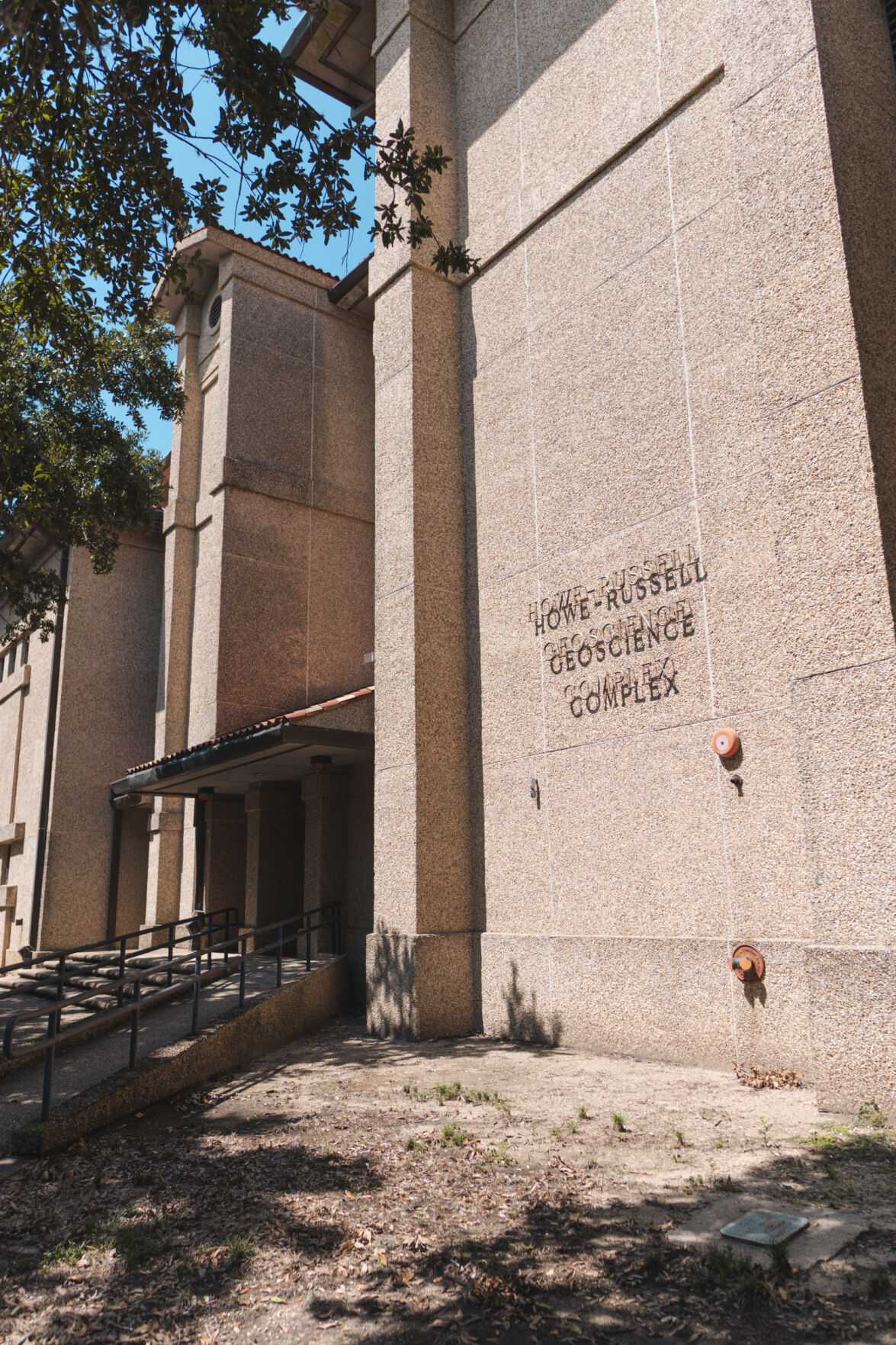
Two researchers at Louisiana State University (LSU) have successfully upgraded the university’s scanning electron microscope, significantly enhancing its capabilities for geological research. Brandon Shuck and Erini Poulaki led the initiative, securing $26,000 for the installation of the new AZtec software. This upgrade improves the microscope’s ability to gather energy-dispersive X-ray spectroscopy (EDS) and electron backscatter diffraction (EBSD) data, crucial for analyzing mineral compositions and structures.
The EDS technique allows researchers to conduct elemental analysis by firing a beam of electrons at samples, prompting them to emit characteristic X-rays. EBSD, on the other hand, examines the internal crystal structure of minerals. Poulaki explained, “Electrons hit the sample, and then the electrons are reflected on the sample and onto the EBSD detector. They have very specific patterns known as Kikuchi Bands.” This capability enables researchers to determine the orientation of mineral crystals, providing insights into potential misalignments or deformations within samples.
The upgraded software allows the geology department to utilize the scanning electron microscope more effectively, a move that has been long anticipated. Poulaki noted that the microscope had primarily been used by engineering departments, which typically focus on homogeneous metals. In contrast, geology research often involves heterogeneous rocks with diverse mineral compositions. “We needed a way to collect data on a very large area, considering the spatial extent of different minerals,” she added.
The enhancements are purely software-based, meaning the physical hardware of the microscope remains unchanged. Nonetheless, the software upgrade significantly boosts the department’s analytical capabilities. Shuck emphasized the critical nature of the upgrade, stating, “It sounds trivial. But this is the software that runs the acquisition, collects the data, and processes it. It was a very expensive piece of software.”
Initially, the researchers approached Oxford Instruments, the company behind the AZtec software, expecting a modest cost for the upgrade. However, the extensive data collection and processing capabilities quickly revealed a higher price tag. The upgraded microscope can now create detailed maps of heterogeneous minerals, a task that would have been impractical before the enhancements. Shuck remarked, “Without this software upgrade, you would have to manually move the microscope for 24 hours to collect data and then stitch it together, which wouldn’t work.”
To secure funding for the upgrades, Shuck prepared a proposal to the LSU Board of Regents, requesting to allocate resources from the equipment repair fund. This funding covered a significant portion of the software cost, with additional contributions from the geology and geophysics departments.
The scanning electron microscope has transitioned from a specialized tool with limited applications to a versatile instrument capable of daily data collection and analysis. Shuck stated, “For the geoscience department, it was basically a fancy piece of equipment that we couldn’t really use for our research applications. Now with this investment, it unlocks a lot of cool research potential.”
This software upgrade signifies a substantial investment in research capabilities at LSU, underscoring the university’s commitment to supporting advancements in geoscience and related fields.





Revolutionary Photonic Ski-Jump Could Miniaturize LiDAR Systems

Couples Detox from Plastics in New Netflix Doc: Can It Boost Fertility?

Aventon Launches Affordable Full-Suspension Electric Mountain Bike

Discover Eight Must-Try Restaurants This Spring Season

UC Irvine Team Unveils Innovative Ion Pump for Water Treatment

One-Third of Americans Trim Daily Expenses for Healthcare Needs

Apple Secures First Oscar in Three Years with F1: The Movie

Fourth Graders Celebrate St. Patrick’s Day with Creative Weather Drawings

Kim Kardashian Dazzles at Vanity Fair Oscars Party 2026

Nostradamus’ 2026 Predictions: Star Death and Dark Events Loom

Breakthroughs and Challenges Await Science in 2026

Electric Moto Influencer Surronster Arrested in Tijuana

OpenAI to Implement Age Verification for ChatGPT by December 2025

Discover the Top 10 Calorie Counting Apps of 2025

Recovering a Suspended TikTok Account: A Step-by-Step Guide

Bella Hadid Shares Health Update After Treatment for Lyme Disease

Backpack Drives Equip Students with Supplies for New School Year

Analysts Project Stronger Growth for Apple’s iPhone 17 Lineup
-
 Science8 months ago
Nostradamus’ 2026 Predictions: Star Death and Dark Events Loom
-
 Science8 months ago
Breakthroughs and Challenges Await Science in 2026
-
 Technology11 months ago
Electric Moto Influencer Surronster Arrested in Tijuana
-
 Technology9 months ago
OpenAI to Implement Age Verification for ChatGPT by December 2025
-
 Technology1 year ago
Discover the Top 10 Calorie Counting Apps of 2025
-
 Technology1 year ago
Recovering a Suspended TikTok Account: A Step-by-Step Guide
-
 Health11 months ago
Bella Hadid Shares Health Update After Treatment for Lyme Disease
-
 Education1 year ago
Backpack Drives Equip Students with Supplies for New School Year
-
 Health11 months ago
Analysts Project Stronger Growth for Apple’s iPhone 17 Lineup
-

 Health12 months ago
Japanese Study Finds Rose Oil Can Increase Brain Gray Matter
-

 Technology8 months ago
Top 10 Penny Stocks to Watch in 2026 for Strong Returns
-

 Science10 months ago
Starship V3 Set for 2026 Launch After Successful Final Test of Version 2