
Science
LANL Instruments Launch Aboard NASA Probe to Study the Sun

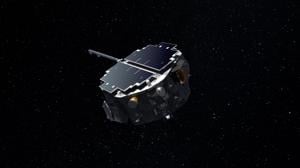
Scientists at Los Alamos National Laboratory (LANL) have developed two groundbreaking instruments now aboard a National Aeronautics and Space Administration (NASA) probe, aimed at enhancing our understanding of the sun and its protective heliosphere. The instruments were launched as part of the Interstellar Mapping and Acceleration Probe (IMAP), which took off in September 2023 and is on its way to the first Lagrange point, a gravitational balance point between the Earth and the sun.
The journey to this strategic location takes approximately four months, meaning that by mid-January, all instruments should be fully operational, marking the beginning of the scientific research phase. IMAP’s mission builds on previous data collected by NASA’s Interstellar Boundary Explorer (IBEX), which was launched in 2008. However, the IMAP-Hi instrument, developed at LANL, is designed to better filter out background noise, addressing gaps in the earlier mission’s findings.
Understanding the Heliopause
Galactic rays, which are highly charged particles, pose risks to human DNA, disrupt radio wave transmissions, and can damage satellites. The heliosheath, the outer edge of the heliosphere, serves as the first line of defense against these rays, reducing their intensity by a factor of ten. While other stars also produce similar protective bubbles, researchers are particularly focused on the sun’s invisible signature.
By employing instruments on the IMAP to track the solar wind—charged particles that flow from the sun—scientists can gauge the heliosphere’s boundaries. “The sun is the one star we’re close enough to study directly,” said Ruth Skoug, a LANL scientist. The two primary instruments, IMAP-Hi and the Solar Wind Electron instrument, have distinct functions. IMAP-Hi detects and tracks energetic neutral atoms, allowing for a deeper understanding of the heliosphere’s composition and the origins of these particles. Meanwhile, the Solar Wind Electron instrument monitors electrons emanating from the solar wind, helping to map the heliosphere’s size and shape as it interacts with the interstellar medium.
Innovative Technology at Work
LANL scientist Dan Reisenfeld likens the operation of these instruments to a bat using sonar to navigate its environment. “It sends out a sonar pulse and hits the wall of the cave… but for the heliosphere, we use the solar wind as that pulse,” Reisenfeld explained. This method provides critical data on how the heliosphere shifts throughout the sun’s approximately 11-year cycle, revealing moments when it becomes more or less protective.
Recently, the Solar Wind Electron instrument successfully tracked a significant solar storm that coincided with Veterans Day. This event made the northern lights visible at unusually low latitudes, including areas like Santa Fe. While such phenomena can be visually stunning, Skoug notes the potential hazards of solar storms, which can disrupt power systems and pose risks to astronauts in space.
“We’re going to do even better on the next storm, with all the instruments on,” Skoug stated, emphasizing the importance of understanding these solar events to mitigate their impacts on Earth and beyond. As the IMAP mission progresses, the data collected will provide invaluable insights into the sun’s behavior and its influence on our solar system.





Revolutionary Photonic Ski-Jump Could Miniaturize LiDAR Systems

Couples Detox from Plastics in New Netflix Doc: Can It Boost Fertility?

Aventon Launches Affordable Full-Suspension Electric Mountain Bike

Discover Eight Must-Try Restaurants This Spring Season

UC Irvine Team Unveils Innovative Ion Pump for Water Treatment

One-Third of Americans Trim Daily Expenses for Healthcare Needs

Apple Secures First Oscar in Three Years with F1: The Movie

Fourth Graders Celebrate St. Patrick’s Day with Creative Weather Drawings

Kim Kardashian Dazzles at Vanity Fair Oscars Party 2026

Nostradamus’ 2026 Predictions: Star Death and Dark Events Loom

Breakthroughs and Challenges Await Science in 2026

Electric Moto Influencer Surronster Arrested in Tijuana

OpenAI to Implement Age Verification for ChatGPT by December 2025

Discover the Top 10 Calorie Counting Apps of 2025

Bella Hadid Shares Health Update After Treatment for Lyme Disease

Analysts Project Stronger Growth for Apple’s iPhone 17 Lineup

Japanese Study Finds Rose Oil Can Increase Brain Gray Matter

Top 10 Penny Stocks to Watch in 2026 for Strong Returns
-
 Science3 months ago
Nostradamus’ 2026 Predictions: Star Death and Dark Events Loom
-
 Science3 months ago
Breakthroughs and Challenges Await Science in 2026
-
 Technology7 months ago
Electric Moto Influencer Surronster Arrested in Tijuana
-
 Technology4 months ago
OpenAI to Implement Age Verification for ChatGPT by December 2025
-
 Technology9 months ago
Discover the Top 10 Calorie Counting Apps of 2025
-
 Health7 months ago
Bella Hadid Shares Health Update After Treatment for Lyme Disease
-
 Health7 months ago
Analysts Project Stronger Growth for Apple’s iPhone 17 Lineup
-
 Health7 months ago
Japanese Study Finds Rose Oil Can Increase Brain Gray Matter
-
 Technology4 months ago
Top 10 Penny Stocks to Watch in 2026 for Strong Returns
-

 Science6 months ago
Starship V3 Set for 2026 Launch After Successful Final Test of Version 2
-

 Technology1 month ago
Nvidia GTC 2026: Major Announcements Expected for AI and Hardware
-

 Education7 months ago
Harvard Secures Court Victory Over Federal Funding Cuts