
Science
Innovative Origami Wheel Set to Transform Lunar Exploration

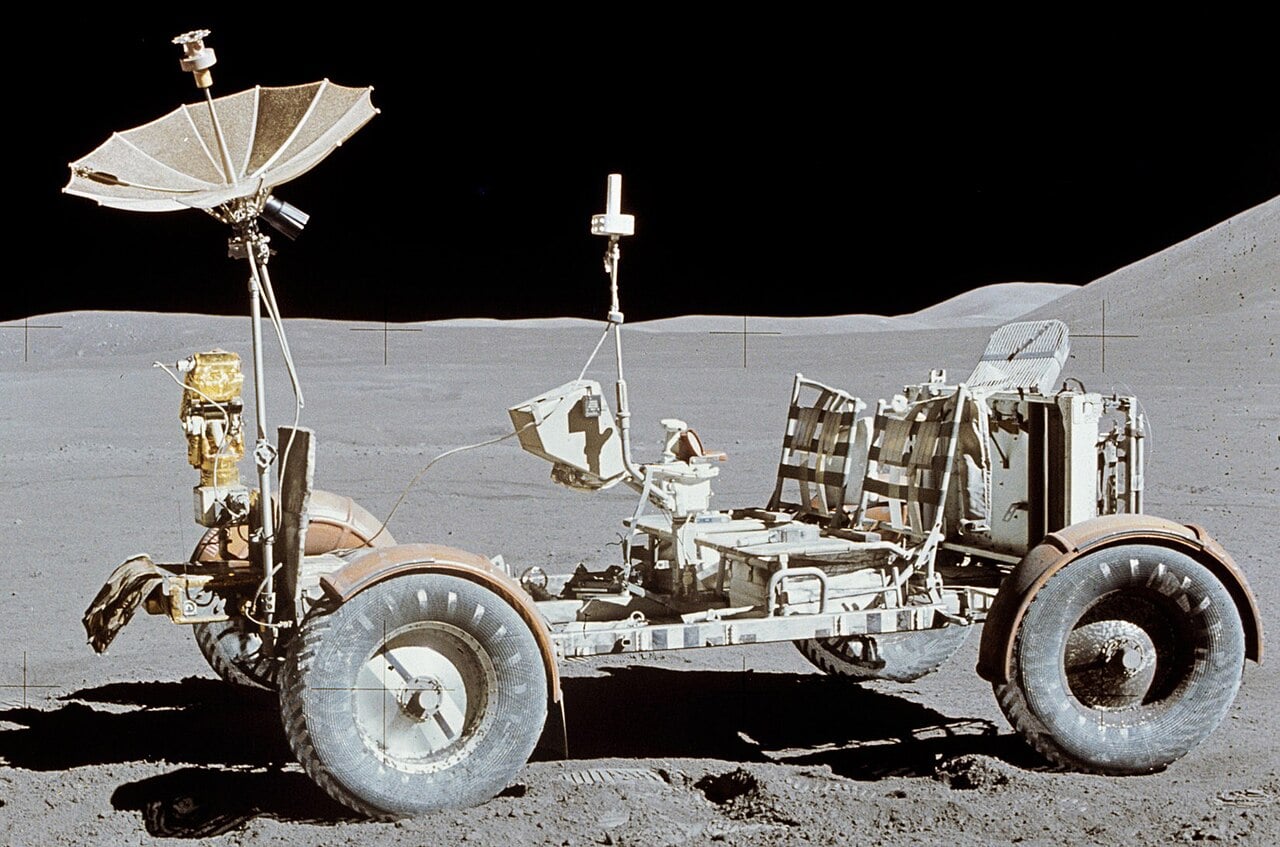
A groundbreaking development in lunar exploration has emerged from a research team led by Professor Dae-Young Lee at the Korea Advanced Institute of Science and Technology (KAIST). The team has designed a revolutionary wheel that can adapt its size to navigate the challenging terrain of the Moon, particularly in exploring the vast networks of lava tubes and deep pits that could serve as shelters for future lunar bases.
These lunar caves present significant scientific opportunities, offering protection against cosmic radiation and extreme temperature fluctuations. However, accessing these areas has proven difficult due to the steep and rugged terrain surrounding their entrances. Traditional small rovers, which are favored for their ability to mitigate mission risks through redundancy, struggle with obstacles larger than their wheel diameter. The new origami-inspired wheel, designed to expand from a compact 230 millimeters to 500 millimeters in diameter, aims to solve this issue.
Design Breakthrough from Historical Insights
The innovative design draws on historical principles, integrating concepts from Leonardo da Vinci’s self-supporting bridge designs with origami folding techniques. This approach allows the wheel to transform without the need for conventional mechanical joints, which are prone to failure in the harsh lunar environment. The wheel consists of an elastic metal frame and fabric tensioners that flex instead of pivot, ensuring durability in a setting characterized by abrasive dust and cold welding, which can damage traditional metal surfaces.
Rigorous testing has shown promising results for this new technology. The wheel has demonstrated superior traction on loose lunar soil and has withstood drop impacts equivalent to falling from a height of 100 meters in lunar gravity. This flexibility allows a rover equipped with these wheels to maintain a low profile during transport, while simultaneously gaining the climbing capability of a larger vehicle once deployed.
Significance for Future Lunar Missions
The potential of this technology extends beyond mere exploration. Dr. Chae Kyung Sim from the Korea Astronomy and Space Science Institute highlighted the scientific importance of lunar pits, referring to them as “natural geological heritages” that this new technology could help investigate. Furthermore, Dr. Jongtae Jang from the Korea Aerospace Research Institute pointed out that the wheel has been optimized using thermal models to endure temperature variations of up to 300 degrees Celsius between lunar day and night.
Despite the challenges that remain, particularly with communication and power systems, Professor Lee expressed optimism about the future of this technology. With further development, the team positions itself as a frontrunner in upcoming lunar exploration missions targeting the Moon’s enigmatic underground regions.
The advancements in wheel technology could significantly enhance the efficiency of lunar rovers, making it feasible to explore areas previously deemed inaccessible. This innovation represents a critical step forward in humanity’s quest to understand our closest celestial neighbor and its hidden wonders.







Revolutionary Photonic Ski-Jump Could Miniaturize LiDAR Systems

Couples Detox from Plastics in New Netflix Doc: Can It Boost Fertility?

Aventon Launches Affordable Full-Suspension Electric Mountain Bike

Discover Eight Must-Try Restaurants This Spring Season

UC Irvine Team Unveils Innovative Ion Pump for Water Treatment

One-Third of Americans Trim Daily Expenses for Healthcare Needs

Apple Secures First Oscar in Three Years with F1: The Movie

Fourth Graders Celebrate St. Patrick’s Day with Creative Weather Drawings

Kim Kardashian Dazzles at Vanity Fair Oscars Party 2026

Nostradamus’ 2026 Predictions: Star Death and Dark Events Loom

Breakthroughs and Challenges Await Science in 2026

Electric Moto Influencer Surronster Arrested in Tijuana

OpenAI to Implement Age Verification for ChatGPT by December 2025

Discover the Top 10 Calorie Counting Apps of 2025

Recovering a Suspended TikTok Account: A Step-by-Step Guide

Bella Hadid Shares Health Update After Treatment for Lyme Disease

Backpack Drives Equip Students with Supplies for New School Year

Analysts Project Stronger Growth for Apple’s iPhone 17 Lineup
-
 Science8 months ago
Nostradamus’ 2026 Predictions: Star Death and Dark Events Loom
-
 Science8 months ago
Breakthroughs and Challenges Await Science in 2026
-
 Technology11 months ago
Electric Moto Influencer Surronster Arrested in Tijuana
-
 Technology9 months ago
OpenAI to Implement Age Verification for ChatGPT by December 2025
-
 Technology1 year ago
Discover the Top 10 Calorie Counting Apps of 2025
-
 Technology1 year ago
Recovering a Suspended TikTok Account: A Step-by-Step Guide
-
 Health11 months ago
Bella Hadid Shares Health Update After Treatment for Lyme Disease
-
 Education1 year ago
Backpack Drives Equip Students with Supplies for New School Year
-
 Health11 months ago
Analysts Project Stronger Growth for Apple’s iPhone 17 Lineup
-

 Health12 months ago
Japanese Study Finds Rose Oil Can Increase Brain Gray Matter
-

 Technology8 months ago
Top 10 Penny Stocks to Watch in 2026 for Strong Returns
-

 Science10 months ago
Starship V3 Set for 2026 Launch After Successful Final Test of Version 2