
Science
Gravitational Wave Discovery Offers New Insights into Einstein’s Theory

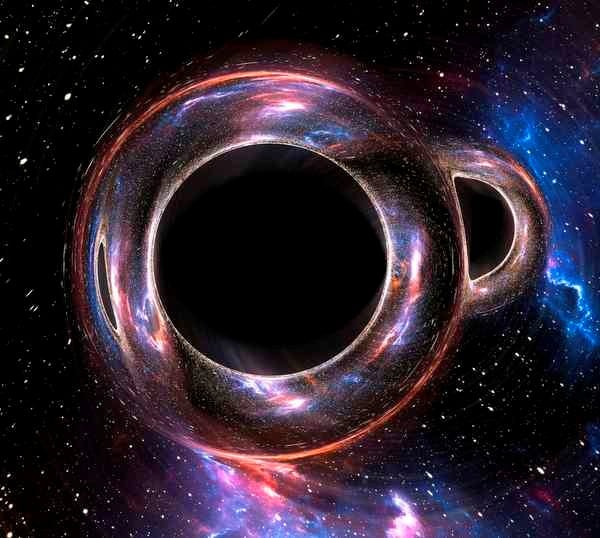
On January 14, 2025, researchers detected a remarkably clear gravitational wave, designated GW250114, marking a significant milestone in the study of the universe. This signal, which originated from the collision of two black holes deep in space, arrived at the twin Laser Interferometer Gravitational Wave Observatories (LIGO) in the United States. The clarity of this signal presents an unprecedented opportunity to explore and test the fundamental laws of physics, particularly Albert Einstein’s theory of general relativity.
The detection of GW250114 stands out not only for the event it represents but also for the quality of the signal. When black holes merge, they do not collide silently. Instead, the newly formed black hole emits gravitational waves that resonate at specific frequencies, akin to a bell being struck. These frequencies diminish over time, and each wave can be characterized by two numbers: the rate of oscillation and the decay rate.
What makes this discovery particularly intriguing is the ability to analyze multiple frequencies from the same event. By measuring two distinct tones from GW250114, researchers obtained independent assessments of the mass and spin of the resultant black hole. The team successfully measured two tones and constrained a third, all of which corresponded precisely with Einstein’s predictions. As a result, general relativity has passed another rigorous test.
Despite the validation of Einstein’s theory, physicists like Keefe Mitman remain cautious. They acknowledge that general relativity does not fully account for phenomena such as dark matter and dark energy, nor does it reconcile with the principles of quantum mechanics. The mathematical framework of general relativity begins to falter when confronted with quantum theories, suggesting that a more comprehensive understanding of the universe remains elusive.
The implications of GW250114 extend beyond confirming existing theories; it represents a beacon of possibility in the search for deeper truths about the cosmos. As detection technology becomes increasingly sophisticated, researchers are moving closer to uncovering the limitations of general relativity. The ongoing exploration promises to reveal profound insights into the universe’s fundamental workings.
In the meantime, GW250114 serves as both a testament to the strength of Einstein’s theory and a reminder of the mysteries that still challenge our understanding of the universe. The quest for knowledge continues, driven by curiosity and the unyielding desire to understand the nature of reality itself.












Revolutionary Photonic Ski-Jump Could Miniaturize LiDAR Systems

Couples Detox from Plastics in New Netflix Doc: Can It Boost Fertility?

Aventon Launches Affordable Full-Suspension Electric Mountain Bike

Discover Eight Must-Try Restaurants This Spring Season

UC Irvine Team Unveils Innovative Ion Pump for Water Treatment

One-Third of Americans Trim Daily Expenses for Healthcare Needs

Apple Secures First Oscar in Three Years with F1: The Movie

Fourth Graders Celebrate St. Patrick’s Day with Creative Weather Drawings

Kim Kardashian Dazzles at Vanity Fair Oscars Party 2026

Nostradamus’ 2026 Predictions: Star Death and Dark Events Loom

Breakthroughs and Challenges Await Science in 2026

Electric Moto Influencer Surronster Arrested in Tijuana

OpenAI to Implement Age Verification for ChatGPT by December 2025

Discover the Top 10 Calorie Counting Apps of 2025

Recovering a Suspended TikTok Account: A Step-by-Step Guide

Bella Hadid Shares Health Update After Treatment for Lyme Disease

Backpack Drives Equip Students with Supplies for New School Year

Analysts Project Stronger Growth for Apple’s iPhone 17 Lineup
-
 Science8 months ago
Nostradamus’ 2026 Predictions: Star Death and Dark Events Loom
-
 Science8 months ago
Breakthroughs and Challenges Await Science in 2026
-
 Technology11 months ago
Electric Moto Influencer Surronster Arrested in Tijuana
-
 Technology9 months ago
OpenAI to Implement Age Verification for ChatGPT by December 2025
-
 Technology1 year ago
Discover the Top 10 Calorie Counting Apps of 2025
-
 Technology1 year ago
Recovering a Suspended TikTok Account: A Step-by-Step Guide
-
 Health11 months ago
Bella Hadid Shares Health Update After Treatment for Lyme Disease
-
 Education1 year ago
Backpack Drives Equip Students with Supplies for New School Year
-
 Health11 months ago
Analysts Project Stronger Growth for Apple’s iPhone 17 Lineup
-

 Health12 months ago
Japanese Study Finds Rose Oil Can Increase Brain Gray Matter
-

 Technology8 months ago
Top 10 Penny Stocks to Watch in 2026 for Strong Returns
-

 Science10 months ago
Starship V3 Set for 2026 Launch After Successful Final Test of Version 2