
Science
Full Moon and Total Lunar Eclipse Illuminate the Night Sky

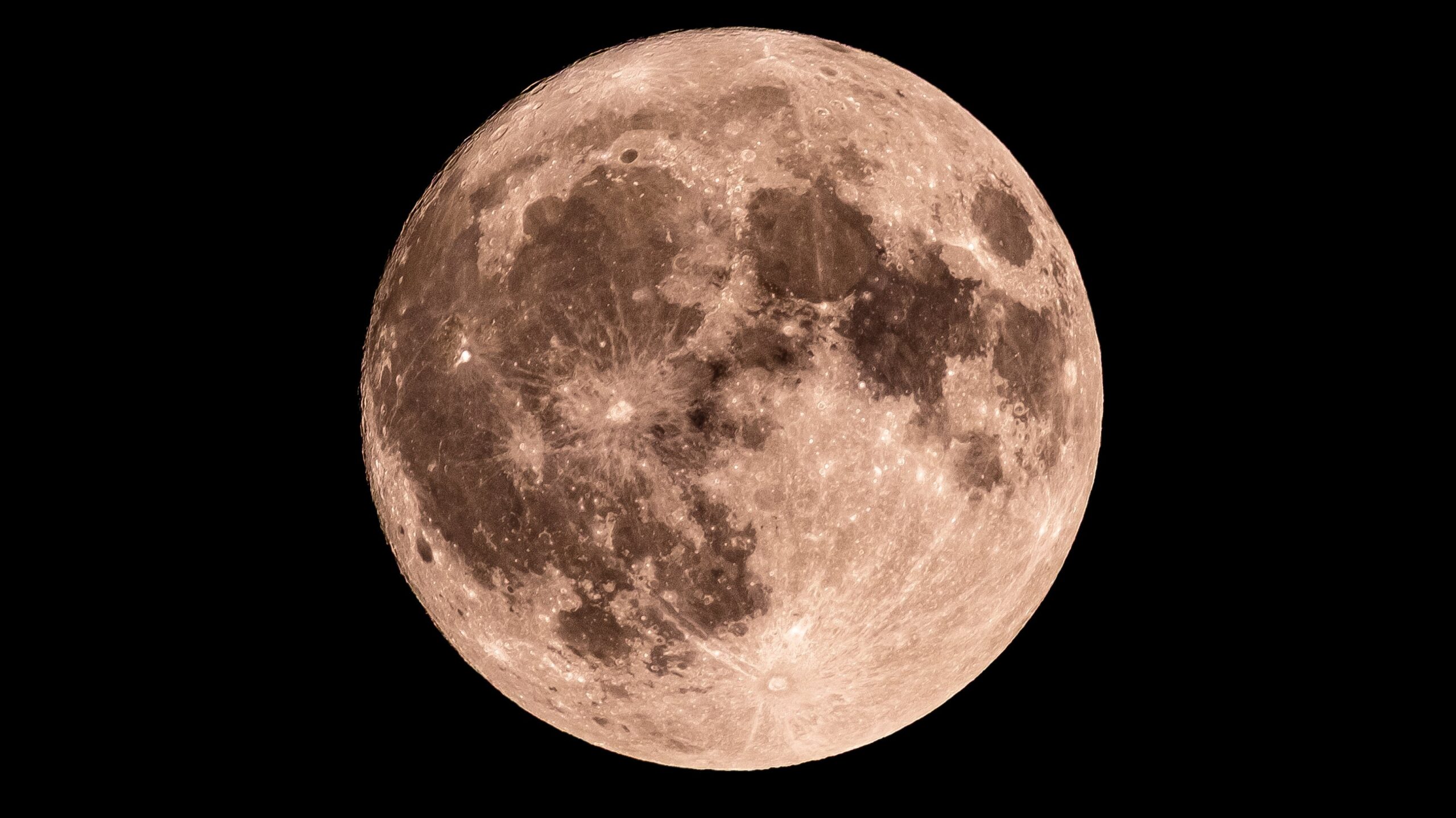
The night sky on September 7, 2025, will witness a captivating astronomical event as it features both a Full Moon and a total lunar eclipse. According to NASA’s Daily Moon Observation, the moon will be completely illuminated, providing a spectacular view for stargazers around the globe.
The September Full Moon, often referred to as the “Harvest Moon,” will shine brightly, enabling observers to see numerous surface features even without any equipment. Key landmarks on the moon’s surface include the Aristarchus Plateau, Copernicus Crater, and Mare Crisium. For those equipped with binoculars, the Grimaldi Basin and Gassendi Crater can be observed. Telescope users will have the opportunity to view the Fra Mauro Highlands, showcasing the moon’s varied terrain.
While the total lunar eclipse will coincide with this Full Moon, it will not be visible from the United States or many parts of the Americas. This eclipse occurs when the Earth passes directly between the sun and the moon, casting a shadow that can create a stunning red hue on the lunar surface, a phenomenon often called a “Blood Moon.”
Understanding Moon Phases
Moon phases are the result of the moon’s 29.5-day orbital cycle, which alters the angles between the Sun, Moon, and Earth. This cycle affects how much of the moon is illuminated from our perspective on Earth. We consistently see the same side of the moon, but the amount of illumination changes, leading to different phases, including new moons, half moons, and full moons.
There are eight primary moon phases, which follow a repeating cycle:
– **New Moon**: The moon is positioned between the Earth and the sun, making it invisible.
– **Waxing Crescent**: A small sliver of light appears on the right side in the Northern Hemisphere.
– **First Quarter**: Half of the moon is lit on the right side, resembling a half-moon.
– **Waxing Gibbous**: More than half of the moon is illuminated, but it is not yet full.
– **Full Moon**: The entire face of the moon is fully illuminated.
– **Waning Gibbous**: The illumination begins to decrease on the right side.
– **Last Quarter (or Third Quarter)**: Another half-moon phase, but now the left side is lit.
– **Waning Crescent**: A thin sliver of light remains on the left side before it goes dark again.
Looking ahead, the next Full Moon will occur on October 6, 2025. This cycle of lunar phases continues to captivate both amateur and professional astronomers alike, offering a window into the complex mechanics of our solar system.
As the night unfolds, enthusiasts and casual observers will have a unique opportunity to engage with the cosmos, making the September Full Moon and total lunar eclipse an event not to be missed.






Revolutionary Photonic Ski-Jump Could Miniaturize LiDAR Systems

Couples Detox from Plastics in New Netflix Doc: Can It Boost Fertility?

Aventon Launches Affordable Full-Suspension Electric Mountain Bike

Discover Eight Must-Try Restaurants This Spring Season

UC Irvine Team Unveils Innovative Ion Pump for Water Treatment

One-Third of Americans Trim Daily Expenses for Healthcare Needs

Apple Secures First Oscar in Three Years with F1: The Movie

Fourth Graders Celebrate St. Patrick’s Day with Creative Weather Drawings

Kim Kardashian Dazzles at Vanity Fair Oscars Party 2026

Nostradamus’ 2026 Predictions: Star Death and Dark Events Loom

Breakthroughs and Challenges Await Science in 2026

Electric Moto Influencer Surronster Arrested in Tijuana

OpenAI to Implement Age Verification for ChatGPT by December 2025

Discover the Top 10 Calorie Counting Apps of 2025

Recovering a Suspended TikTok Account: A Step-by-Step Guide

Bella Hadid Shares Health Update After Treatment for Lyme Disease

Backpack Drives Equip Students with Supplies for New School Year

Analysts Project Stronger Growth for Apple’s iPhone 17 Lineup
-
 Science8 months ago
Nostradamus’ 2026 Predictions: Star Death and Dark Events Loom
-
 Science8 months ago
Breakthroughs and Challenges Await Science in 2026
-
 Technology11 months ago
Electric Moto Influencer Surronster Arrested in Tijuana
-
 Technology9 months ago
OpenAI to Implement Age Verification for ChatGPT by December 2025
-
 Technology1 year ago
Discover the Top 10 Calorie Counting Apps of 2025
-
 Technology1 year ago
Recovering a Suspended TikTok Account: A Step-by-Step Guide
-
 Health11 months ago
Bella Hadid Shares Health Update After Treatment for Lyme Disease
-
 Education1 year ago
Backpack Drives Equip Students with Supplies for New School Year
-
 Health11 months ago
Analysts Project Stronger Growth for Apple’s iPhone 17 Lineup
-

 Health12 months ago
Japanese Study Finds Rose Oil Can Increase Brain Gray Matter
-

 Technology8 months ago
Top 10 Penny Stocks to Watch in 2026 for Strong Returns
-

 Science10 months ago
Starship V3 Set for 2026 Launch After Successful Final Test of Version 2