
Science
Curiosity Rover Explores Martian Ridge for Scientific Insights

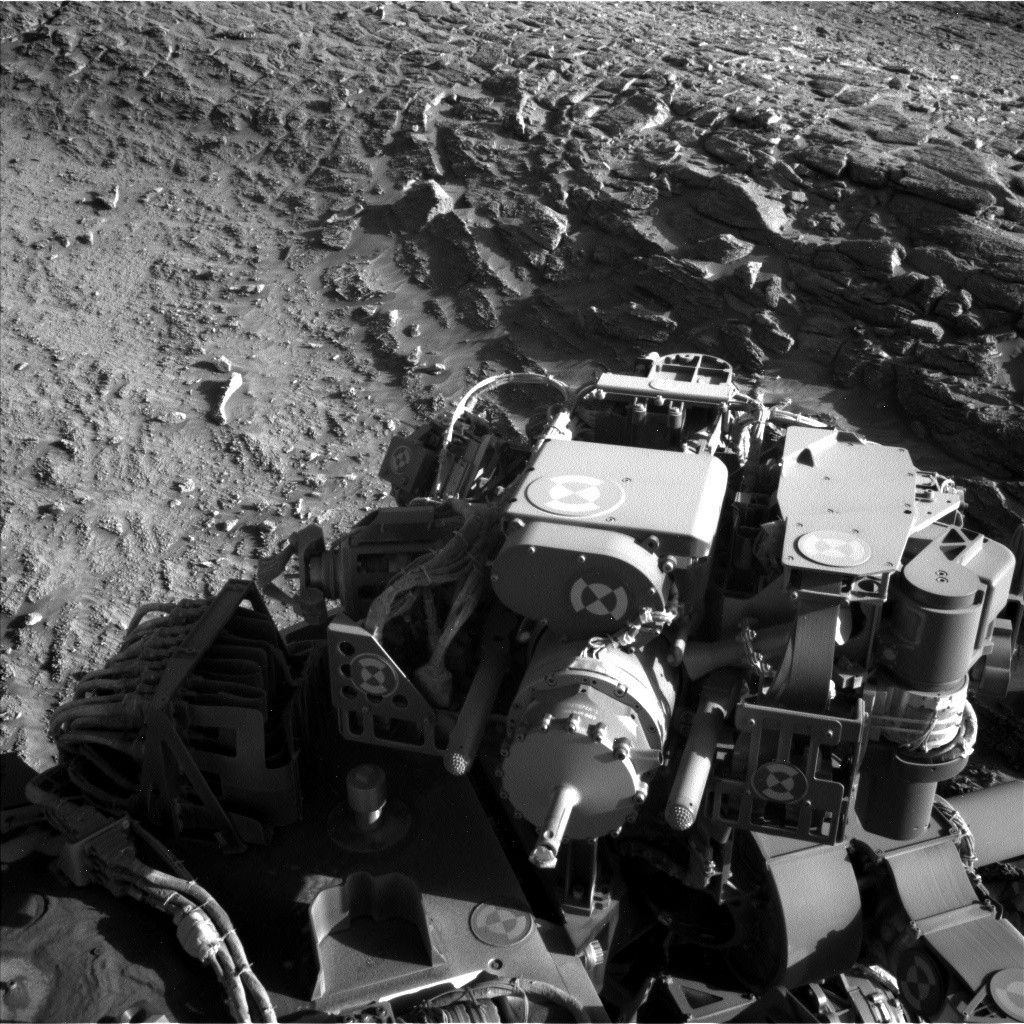
NASA’s Curiosity rover has successfully captured images while stationed at a fracture wall known as “Río Frío.” On August 19, 2025, during Sol 4634 of its mission, Curiosity utilized its Left Navigation Camera to document its surroundings, marking a significant moment in its exploration of the Martian terrain.
Curiosity’s efforts at Río Frío are part of a broader investigation into the unique geology of the region. The rover’s observations aim to uncover the internal structure and chemical composition of the ridges that dominate the boxwork terrain. These insights could illuminate the processes that have allowed these geological formations to stand out against surrounding landscapes.
Scientific Investigations and Findings
The science team has planned extensive imaging and analysis to deepen their understanding of this area. Large Mastcam mosaics will be created to document the ridge from its base to the summit, while a MAHLI mosaic will focus on the horizon of the wall. This horizon exhibits resistant nodules and smooth surfaces, which scientists believe may represent ancient mineral veins. The target for this analysis, dubbed “Jardín de las Delicias,” is anticipated to provide a wealth of data regarding Martian geology.
To further explore the chemical properties of these formations, the rover will conduct detailed analyses using the Alpha Particle X-ray Spectrometer (APXS) on a nodule-filled target named “Minimini.” Additionally, the SuperCam will analyze a vein at the site called “El Tapado.” This combination of visual and chemical investigations is crucial for building a comprehensive narrative about the ridge’s formation and history.
Ongoing Exploration
In addition to studying Río Frío, Curiosity’s mission includes imaging other noteworthy geological features nearby. The rover will capture images of the “Paniri” and “Mishe Mokwa” buttes using the Mastcam and ChemCam, respectively. This ongoing exploration is vital for understanding the Martian environment and the historical processes that have shaped it.
The rover’s suite of instruments, including the Dynamic Albedo of Neutrons (DAN), Radiation Assessment Detector (RAD), and Rover Environmental Monitoring Station (REMS), will continue to monitor environmental conditions. These instruments play a key role in ensuring that Curiosity can adapt its investigations to changing Martian conditions.
Curiosity’s next drive will take it toward a smaller ridge that runs perpendicular to Río Frío. The mission team, led by Michelle Minitti, Deputy Principal Investigator for the Mars Hand Lens Imager (MAHLI), remains committed to uncovering the secrets embedded within these Martian ridges, which may hold clues about the planet’s past.
As the rover continues its journey, the scientific community eagerly anticipates the discoveries that will emerge from this rich and diverse Martian landscape.






Revolutionary Photonic Ski-Jump Could Miniaturize LiDAR Systems

Couples Detox from Plastics in New Netflix Doc: Can It Boost Fertility?

Aventon Launches Affordable Full-Suspension Electric Mountain Bike

Discover Eight Must-Try Restaurants This Spring Season

UC Irvine Team Unveils Innovative Ion Pump for Water Treatment

One-Third of Americans Trim Daily Expenses for Healthcare Needs

Apple Secures First Oscar in Three Years with F1: The Movie

Fourth Graders Celebrate St. Patrick’s Day with Creative Weather Drawings

Kim Kardashian Dazzles at Vanity Fair Oscars Party 2026

Nostradamus’ 2026 Predictions: Star Death and Dark Events Loom

Breakthroughs and Challenges Await Science in 2026

Electric Moto Influencer Surronster Arrested in Tijuana

OpenAI to Implement Age Verification for ChatGPT by December 2025

Discover the Top 10 Calorie Counting Apps of 2025

Recovering a Suspended TikTok Account: A Step-by-Step Guide

Bella Hadid Shares Health Update After Treatment for Lyme Disease

Backpack Drives Equip Students with Supplies for New School Year

Analysts Project Stronger Growth for Apple’s iPhone 17 Lineup
-
 Science8 months ago
Nostradamus’ 2026 Predictions: Star Death and Dark Events Loom
-
 Science8 months ago
Breakthroughs and Challenges Await Science in 2026
-
 Technology11 months ago
Electric Moto Influencer Surronster Arrested in Tijuana
-
 Technology9 months ago
OpenAI to Implement Age Verification for ChatGPT by December 2025
-
 Technology1 year ago
Discover the Top 10 Calorie Counting Apps of 2025
-
 Technology1 year ago
Recovering a Suspended TikTok Account: A Step-by-Step Guide
-
 Health11 months ago
Bella Hadid Shares Health Update After Treatment for Lyme Disease
-
 Education1 year ago
Backpack Drives Equip Students with Supplies for New School Year
-
 Health12 months ago
Analysts Project Stronger Growth for Apple’s iPhone 17 Lineup
-

 Health12 months ago
Japanese Study Finds Rose Oil Can Increase Brain Gray Matter
-

 Technology8 months ago
Top 10 Penny Stocks to Watch in 2026 for Strong Returns
-

 Science10 months ago
Starship V3 Set for 2026 Launch After Successful Final Test of Version 2