
Science
COVID Lockdowns Prompt Rapid Beak Shape Changes in Urban Birds

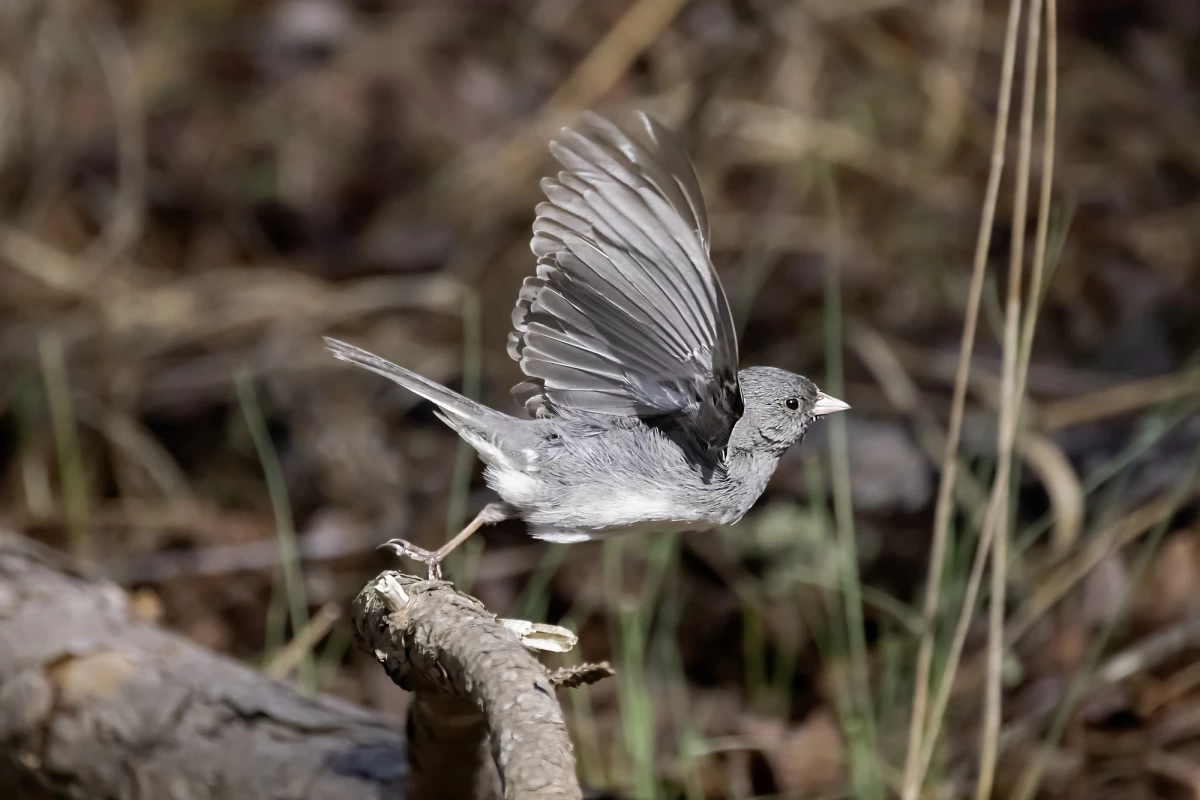
The COVID-19 lockdowns resulted in noticeable changes in the beak shape of urban birds in Los Angeles, according to a recent study conducted by researchers at the University of California Los Angeles (UCLA). The research indicates that during the period of reduced human activity, birds known as dark-eyed juncos (Junco hyemalis) developed longer, more slender beaks, aligning more closely with their wildland counterparts than with the shorter, thicker beaks typical of urban juncos.
The study tracked these juncos from 2018 to 2025, focusing on those hatched during the lockdown phase. The findings suggest a direct correlation between altered food availability and human presence, providing a rare opportunity to observe how quickly urban wildlife can adapt to significant environmental changes.
Rapid Adaptation to Environmental Changes
During the lockdowns, urban juncos faced a sharp decline in food sources, particularly organic waste, which is usually abundant in bustling city environments. As dining facilities closed and human activity diminished, these birds were compelled to adjust their diets, seeking out natural food sources in green spaces that were previously crowded with people.
“The most novel aspect of this study is the speed with which these changes are observed and, equally surprising, their reversibility when human activity is restored,” stated Inmaculada Álvarez-Manzaneda Salcedo, a professor of ecology at the University of Granada. This insight underscores the potential for urban wildlife to respond dynamically to shifts in their environment, particularly when external pressures are suddenly removed.
The findings highlight a unique opportunity created by the COVID-19 restrictions, which acted as a large-scale natural experiment. Researchers were able to isolate the effects of human presence from the myriad environmental pressures typically found in urban settings. This clear “on-off switch” scenario is rarely available for study, making the results particularly significant.
Implications for Urban Wildlife and Future Research
The changes in beak shape observed during the lockdown period were not permanent. As human activity resumed and food waste returned, the adaptations seen in the juncos began to fade in subsequent generations. Urban juncos generally possess shorter, thicker beaks, a trait believed to help them access human-associated food sources. The temporary shift towards longer beaks suggests that these birds can quickly adapt to changing conditions, potentially favoring traits that align with more natural diets.
“Changes in diet may have favored a beak shape more suited to this new type of food,” explained Graciela Gómez Nicola, a professor at the Complutense University of Madrid who reviewed the findings. The study emphasizes that while rapid physical changes can occur, they do not necessarily indicate evolutionary progress; rather, they may arise from existing variations within the population.
The researchers also considered the possibility that juncos from surrounding wildland areas might have entered the quieter city and interbred with urban populations. Although this explanation is deemed unlikely due to the consistency of observed changes, further research tracking genetic and behavioral patterns over multiple generations is needed to explore this hypothesis fully.
The implications of this study extend beyond just the juncos. It serves as a reminder of how closely urban wildlife is intertwined with human behavior. When cities emptied, the ecological landscape shifted markedly. These findings, published in the journal Proceedings of the National Academy of Sciences, illustrate that biological traits can adjust rapidly to environmental changes and highlight how urban ecosystems may facilitate evolutionary processes over the long term.
As cities continue to evolve, further research will be essential to understand the ongoing adaptations of urban wildlife in response to human activities and environmental pressures.





Revolutionary Photonic Ski-Jump Could Miniaturize LiDAR Systems

Couples Detox from Plastics in New Netflix Doc: Can It Boost Fertility?

Aventon Launches Affordable Full-Suspension Electric Mountain Bike

Discover Eight Must-Try Restaurants This Spring Season

UC Irvine Team Unveils Innovative Ion Pump for Water Treatment

One-Third of Americans Trim Daily Expenses for Healthcare Needs

Apple Secures First Oscar in Three Years with F1: The Movie

Fourth Graders Celebrate St. Patrick’s Day with Creative Weather Drawings

Kim Kardashian Dazzles at Vanity Fair Oscars Party 2026

Nostradamus’ 2026 Predictions: Star Death and Dark Events Loom

Breakthroughs and Challenges Await Science in 2026

Electric Moto Influencer Surronster Arrested in Tijuana

OpenAI to Implement Age Verification for ChatGPT by December 2025

Discover the Top 10 Calorie Counting Apps of 2025

Bella Hadid Shares Health Update After Treatment for Lyme Disease

Analysts Project Stronger Growth for Apple’s iPhone 17 Lineup

Japanese Study Finds Rose Oil Can Increase Brain Gray Matter

Top 10 Penny Stocks to Watch in 2026 for Strong Returns
-
 Science3 months ago
Nostradamus’ 2026 Predictions: Star Death and Dark Events Loom
-
 Science3 months ago
Breakthroughs and Challenges Await Science in 2026
-
 Technology7 months ago
Electric Moto Influencer Surronster Arrested in Tijuana
-
 Technology4 months ago
OpenAI to Implement Age Verification for ChatGPT by December 2025
-
 Technology9 months ago
Discover the Top 10 Calorie Counting Apps of 2025
-
 Health7 months ago
Bella Hadid Shares Health Update After Treatment for Lyme Disease
-
 Health7 months ago
Analysts Project Stronger Growth for Apple’s iPhone 17 Lineup
-
 Health7 months ago
Japanese Study Finds Rose Oil Can Increase Brain Gray Matter
-
 Technology4 months ago
Top 10 Penny Stocks to Watch in 2026 for Strong Returns
-

 Science6 months ago
Starship V3 Set for 2026 Launch After Successful Final Test of Version 2
-

 Technology1 month ago
Nvidia GTC 2026: Major Announcements Expected for AI and Hardware
-

 Education7 months ago
Harvard Secures Court Victory Over Federal Funding Cuts