
Science
ContentMap Revolutionizes Data Clarity Amid Growing Complexity

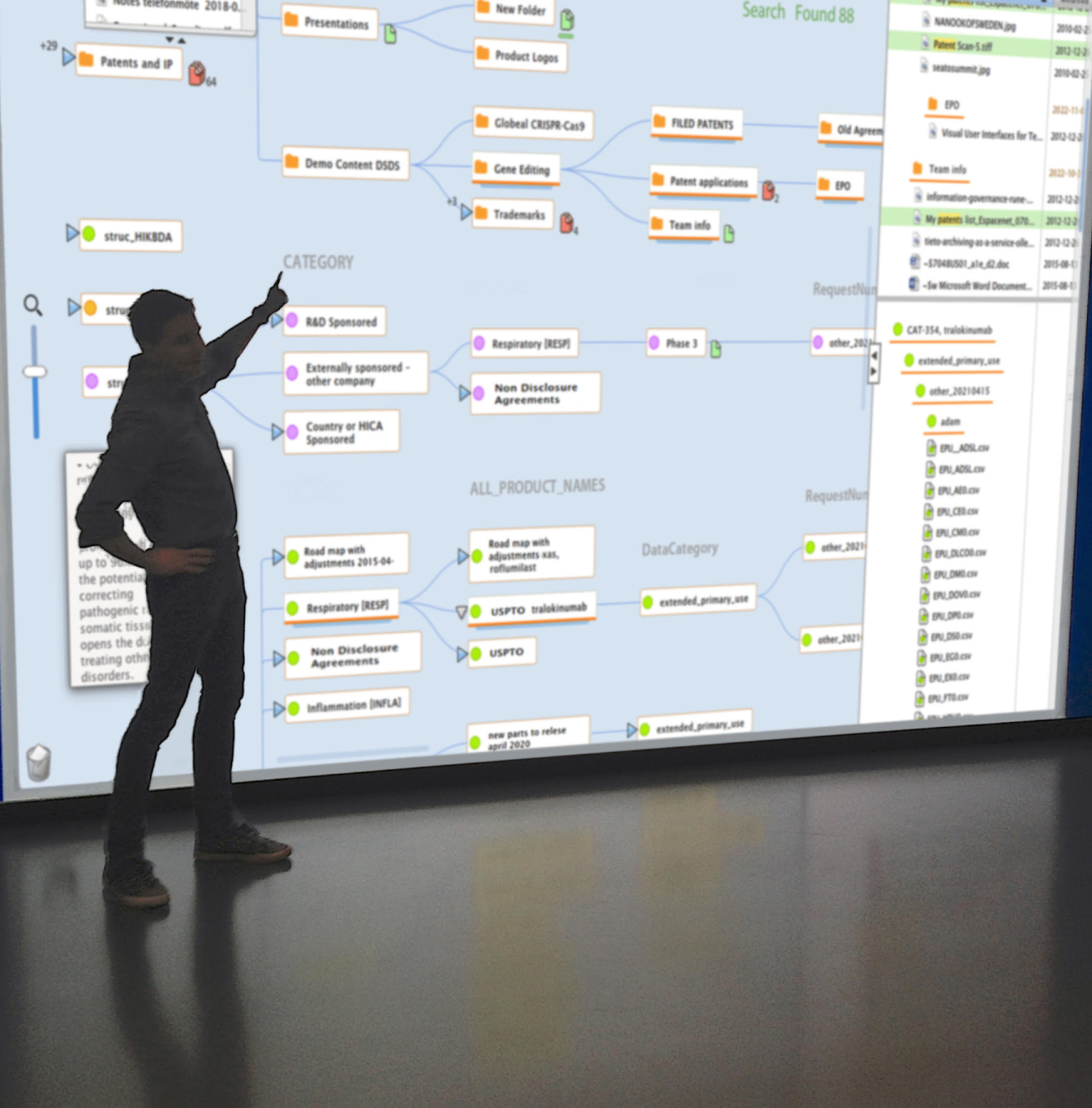
Organizations face an unprecedented challenge in managing vast amounts of complex data, a situation exacerbated by the COVID-19 pandemic. During this crisis, many entities struggled to interpret critical information swiftly, often with lives at stake. In response, Tomas Hultgren, founder of ContentMap, developed a platform aimed at visualizing fragmented data to foster faster decision-making and clearer understanding.
Hultgren notes that traditional data structures were ill-equipped to handle the urgent demands of the pandemic. “Innovation was not optional; it was critical,” he states. As organizations scrambled to analyze data, research indicated that approximately 80% of enterprise data remains unstructured, complicating analysis and validation. This fragmentation results in significant operational inefficiencies, with estimates suggesting that 25% of all documents are lost and never recovered.
The challenges are particularly pronounced in sectors like pharmaceuticals, where clinical trials can generate millions of data points across various research phases. Hultgren emphasizes that simply providing this data in spreadsheet format assumes that users can easily discern meaningful patterns. “These are not just numbers,” he explains, highlighting that these data points influence patient outcomes and drug safety decisions.
A recent study revealed that around 22% of professionals spend half a working day each week searching for information, while more than 10% dedicate up to one and a half workdays. In regulated environments such as pharmaceuticals, these inefficiencies can delay analysis and complicate regulatory submissions. Hultgren underscores that the pandemic revealed the inadequacies of existing data structures for crisis-level decision-making.
ContentMap’s approach is to transform unstructured data into visual, navigable environments that align with human cognitive processes. Instead of relying on traditional lists or dashboards, the platform utilizes artificial intelligence to map relationships within data, allowing users to explore context and connections across various information ecosystems. “The brain processes visuals faster than text,” Hultgren states. “When information is structured visually, patterns emerge more naturally, and context becomes easier to retain.”
The challenges of data interpretation are not limited to healthcare. In defense and security, modern systems integrate diverse data streams from drones, satellites, and other sources, generating overwhelming volumes of metadata. Hultgren notes that these operations require real-time interpretation for effective situational awareness. When data is siloed or presented in simplified formats, the ability to identify relationships between events diminishes.
As data volumes continue to grow, the urgency to address these challenges intensifies. Forecasts indicate that global data production and consumption will escalate sharply. Hultgren argues that while generative AI has accelerated content creation, it has also contributed to the information crisis by inundating organizations with data beyond human processing capabilities. “AI is extraordinary at generating information, but the real breakthrough lies in recognizing patterns inside chaos,” he explains.
Moving forward, Hultgren believes that organizations should focus on navigating existing insights rather than merely generating new ones. Technologies that help organize and visualize information can serve as cognitive infrastructure, supporting professionals in high-stakes industries. This shift reframes information management as a human-centered challenge, emphasizing the importance of human expertise in fields like pharmaceuticals and defense.
Hultgren concludes that the pressing question for organizations is no longer about how much data can be stored but rather whether they can discern what truly matters within it. In a world increasingly shaped by crisis, speed, and AI, this ability to navigate complex data has never been more crucial.


Revolutionary Photonic Ski-Jump Could Miniaturize LiDAR Systems

Couples Detox from Plastics in New Netflix Doc: Can It Boost Fertility?

Aventon Launches Affordable Full-Suspension Electric Mountain Bike

Discover Eight Must-Try Restaurants This Spring Season

UC Irvine Team Unveils Innovative Ion Pump for Water Treatment

One-Third of Americans Trim Daily Expenses for Healthcare Needs

Apple Secures First Oscar in Three Years with F1: The Movie

Fourth Graders Celebrate St. Patrick’s Day with Creative Weather Drawings

Kim Kardashian Dazzles at Vanity Fair Oscars Party 2026

Nostradamus’ 2026 Predictions: Star Death and Dark Events Loom

Breakthroughs and Challenges Await Science in 2026

Electric Moto Influencer Surronster Arrested in Tijuana

OpenAI to Implement Age Verification for ChatGPT by December 2025

Discover the Top 10 Calorie Counting Apps of 2025

Recovering a Suspended TikTok Account: A Step-by-Step Guide

Bella Hadid Shares Health Update After Treatment for Lyme Disease

Backpack Drives Equip Students with Supplies for New School Year

Analysts Project Stronger Growth for Apple’s iPhone 17 Lineup
-
 Science8 months ago
Nostradamus’ 2026 Predictions: Star Death and Dark Events Loom
-
 Science8 months ago
Breakthroughs and Challenges Await Science in 2026
-
 Technology11 months ago
Electric Moto Influencer Surronster Arrested in Tijuana
-
 Technology9 months ago
OpenAI to Implement Age Verification for ChatGPT by December 2025
-
 Technology1 year ago
Discover the Top 10 Calorie Counting Apps of 2025
-
 Technology1 year ago
Recovering a Suspended TikTok Account: A Step-by-Step Guide
-
 Health11 months ago
Bella Hadid Shares Health Update After Treatment for Lyme Disease
-
 Education1 year ago
Backpack Drives Equip Students with Supplies for New School Year
-
 Health11 months ago
Analysts Project Stronger Growth for Apple’s iPhone 17 Lineup
-

 Health12 months ago
Japanese Study Finds Rose Oil Can Increase Brain Gray Matter
-

 Technology8 months ago
Top 10 Penny Stocks to Watch in 2026 for Strong Returns
-

 Science10 months ago
Starship V3 Set for 2026 Launch After Successful Final Test of Version 2