
Science
Abrasion Transforms Common Tools into Catalysts for Chemistry

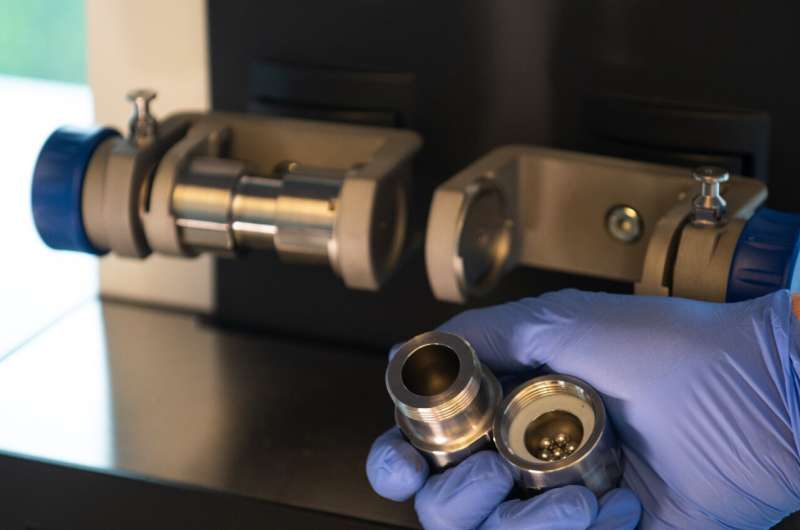
The chemical industry is undergoing a significant transformation, as new research from the Okinawa Institute of Science and Technology (OIST) reveals that abrasion can enhance mechanochemical catalysis. Published in Angewandte Chemie, this study illustrates how common grinding tools can unexpectedly activate chemical reactions, prompting a reevaluation of established methodologies.
Revolutionizing Mechanochemical Reactions
Mechanochemistry, a growing field within chemical synthesis, utilizes mechanical force to mix reagents, reducing the need for solvents and increasing sustainability. Traditionally, researchers believed that adding solid, insoluble materials like metal oxides or piezoelectric substances activated catalysts. However, this new research indicates that the wear from grinding balls, typically made of stainless steel, plays a critical role in the reaction process.
The study highlights that abrasion from these materials can produce metallic contaminants that enhance the efficiency of chemical reactions. The researchers focused on cross-coupling reactions, which are vital for synthesizing various chemicals. They discovered that reactions conducted in a stainless-steel environment yielded successful results, while those performed in ceramic containers with ceramic balls failed to achieve the same outcomes.
Key Findings and Implications
Analysis revealed that the stainless-steel grinding balls released iron, chromium, and other metals into the reaction mixture. This contamination activated a stable nickel pre-catalyst, transforming it into an active catalyst. The research team employed various microscopic and spectroscopic techniques to study these reactions, demonstrating the importance of both additives and equipment in mechanochemical processes.
“This research changes the way we think about mechanochemical catalysts,”
said Professor Julia Khusnutdinova, head of OIST’s Coordination Chemistry and Catalysis Unit. “It highlights the importance of both the additives we use and the equipment itself in driving mechanochemical reactions, helping us to consider the hidden influences that may play a part in our reaction mechanisms.”
First author Thomas Hasiweder emphasized that researchers should consider the impact of abrasion on chemical reactions. “We have proven that abrasion can play an important role in mechanochemical catalysis,” he noted.
While the study warns of potential complexities associated with mechanochemical mechanisms, it also opens up new possibilities for cost-effective catalysis. The researchers plan to explore the scope of reactions where abrasion plays a significant role, aiming to develop simple protocols for a range of mechanochemical syntheses.
Professor Khusnutdinova expressed optimism about future research: “With this knowledge, we can create simple cheap protocols for a wide range of mechanochemical syntheses, opening up new avenues to essential agrochemicals, drugs, and beyond.” This research not only enhances understanding within the field but also paves the way for greener chemical production methods.
For further details, refer to the study: Thomas J. Hasiweder et al, “Mechanically Induced Nickel‐Catalyst Activation in Cross‐Coupling Reactions by Abrasion,” Angewandte Chemie International Edition (2025), DOI: 10.1002/anie.202520572.







Revolutionary Photonic Ski-Jump Could Miniaturize LiDAR Systems

Couples Detox from Plastics in New Netflix Doc: Can It Boost Fertility?

Aventon Launches Affordable Full-Suspension Electric Mountain Bike

Discover Eight Must-Try Restaurants This Spring Season

UC Irvine Team Unveils Innovative Ion Pump for Water Treatment

One-Third of Americans Trim Daily Expenses for Healthcare Needs

Apple Secures First Oscar in Three Years with F1: The Movie

Fourth Graders Celebrate St. Patrick’s Day with Creative Weather Drawings

Kim Kardashian Dazzles at Vanity Fair Oscars Party 2026

Nostradamus’ 2026 Predictions: Star Death and Dark Events Loom

Breakthroughs and Challenges Await Science in 2026

Electric Moto Influencer Surronster Arrested in Tijuana

OpenAI to Implement Age Verification for ChatGPT by December 2025

Discover the Top 10 Calorie Counting Apps of 2025

Recovering a Suspended TikTok Account: A Step-by-Step Guide

Bella Hadid Shares Health Update After Treatment for Lyme Disease

Backpack Drives Equip Students with Supplies for New School Year

Analysts Project Stronger Growth for Apple’s iPhone 17 Lineup
-
 Science8 months ago
Nostradamus’ 2026 Predictions: Star Death and Dark Events Loom
-
 Science8 months ago
Breakthroughs and Challenges Await Science in 2026
-
 Technology11 months ago
Electric Moto Influencer Surronster Arrested in Tijuana
-
 Technology9 months ago
OpenAI to Implement Age Verification for ChatGPT by December 2025
-
 Technology1 year ago
Discover the Top 10 Calorie Counting Apps of 2025
-
 Technology1 year ago
Recovering a Suspended TikTok Account: A Step-by-Step Guide
-
 Health11 months ago
Bella Hadid Shares Health Update After Treatment for Lyme Disease
-
 Education1 year ago
Backpack Drives Equip Students with Supplies for New School Year
-
 Health12 months ago
Analysts Project Stronger Growth for Apple’s iPhone 17 Lineup
-

 Health12 months ago
Japanese Study Finds Rose Oil Can Increase Brain Gray Matter
-

 Technology8 months ago
Top 10 Penny Stocks to Watch in 2026 for Strong Returns
-

 Science10 months ago
Starship V3 Set for 2026 Launch After Successful Final Test of Version 2