
Health
Budget Amazfit Active Max Surpasses Garmin in Snowboarding Test

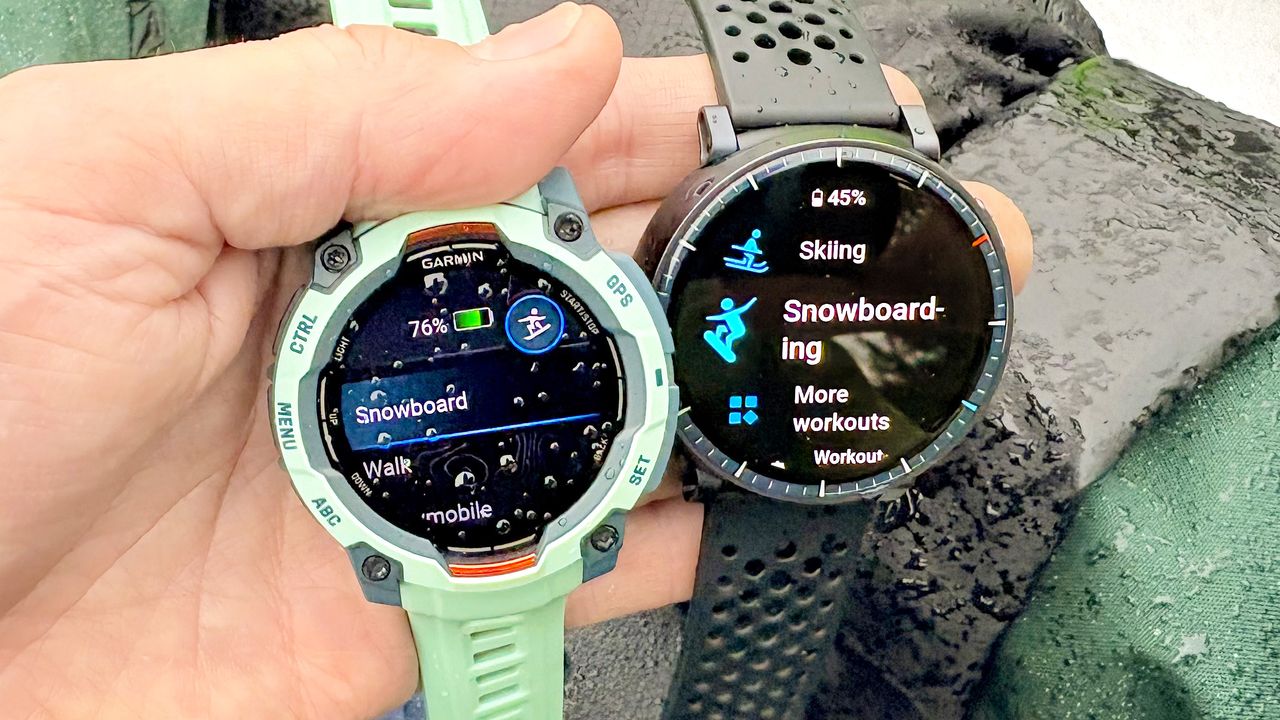
Outdoor enthusiasts often seek reliable technology to enhance their adventures. Recently, a comparison between the budget-friendly Amazfit Active Max and the premium Garmin Instinct 3 provided surprising insights into smartwatch performance for snowboarding. The test took place at Blackcomb Mountain in British Columbia, Canada, as both devices tracked various metrics during a day on the slopes.
The Garmin Instinct 3, priced at $449, is known for its durability and precision. It features a rugged design, aimed at extreme sports enthusiasts, and comes equipped with advanced tracking capabilities. In contrast, the Amazfit Active Max, launched in 2026 and retailing at a much lower price of $169, has gained a reputation for providing impressive specifications at a fraction of the cost.
Performance Comparison on the Slopes
The testing day began under perfect conditions, with soft snow and intermittent sunshine, providing an ideal setting for evaluating both devices. Wearing the Amazfit Active Max on the left wrist and the Garmin Instinct 3 on the right, data was collected using both smartwatches alongside Strava and the Slopes app on an iPhone 16 Plus.
The results revealed that the Amazfit Active Max recorded almost all the same metrics as the Garmin Instinct 3, including total descent, maximum speed, and riding time. While the Active Max reported slightly less total descent, this discrepancy may stem from its single-band GPS antenna, less sophisticated than the multi-band antennas found in the Garmin and the smartphone. Interestingly, both devices captured identical maximum speeds and similar average moving speeds.
Understanding the Metrics
The question of how many runs were completed—eight, ten, or eleven—depended on how each tracking method categorized a run. For instance, a break taken halfway down the slope could be counted as one or two runs, depending on the device’s tracking logic. The Amazfit Active Max and Strava tended to categorize runs differently than the Garmin Instinct 3 and Slopes.
Both devices produced nearly identical readings for average and maximum heart rates throughout the day. Interestingly, the Active Max calculated a higher number of calories burned, though this metric is often viewed with skepticism.
Ultimately, the performance of the Amazfit Active Max in a real-world, high-energy environment demonstrated its capability to match the performance of the rugged Garmin Instinct 3. The data collected was reliable, even with minor discrepancies. While the post-ride map generated by Amazfit was not as interactive as Garmin’s, it still provided a clear overview of the runs completed.
The test confirmed that a budget smartwatch could indeed rival a more expensive model in outdoor adventure scenarios. The Amazfit Active Max impressed with its performance and functionality, reinforcing the brand’s reputation for producing quality devices at accessible price points.
For those seeking an affordable option without sacrificing essential features, the Amazfit Active Max stands out as a viable alternative to the more established Garmin offerings. As outdoor technology continues to evolve, the competition between budget and premium brands will likely drive further advancements in smartwatch capabilities.












Revolutionary Photonic Ski-Jump Could Miniaturize LiDAR Systems

Couples Detox from Plastics in New Netflix Doc: Can It Boost Fertility?

Aventon Launches Affordable Full-Suspension Electric Mountain Bike

Discover Eight Must-Try Restaurants This Spring Season

UC Irvine Team Unveils Innovative Ion Pump for Water Treatment

One-Third of Americans Trim Daily Expenses for Healthcare Needs

Apple Secures First Oscar in Three Years with F1: The Movie

Fourth Graders Celebrate St. Patrick’s Day with Creative Weather Drawings

Kim Kardashian Dazzles at Vanity Fair Oscars Party 2026

Nostradamus’ 2026 Predictions: Star Death and Dark Events Loom

Breakthroughs and Challenges Await Science in 2026

Electric Moto Influencer Surronster Arrested in Tijuana

OpenAI to Implement Age Verification for ChatGPT by December 2025

Discover the Top 10 Calorie Counting Apps of 2025

Recovering a Suspended TikTok Account: A Step-by-Step Guide

Bella Hadid Shares Health Update After Treatment for Lyme Disease

Backpack Drives Equip Students with Supplies for New School Year

Analysts Project Stronger Growth for Apple’s iPhone 17 Lineup
-
 Science8 months ago
Nostradamus’ 2026 Predictions: Star Death and Dark Events Loom
-
 Science8 months ago
Breakthroughs and Challenges Await Science in 2026
-
 Technology11 months ago
Electric Moto Influencer Surronster Arrested in Tijuana
-
 Technology9 months ago
OpenAI to Implement Age Verification for ChatGPT by December 2025
-
 Technology1 year ago
Discover the Top 10 Calorie Counting Apps of 2025
-
 Technology1 year ago
Recovering a Suspended TikTok Account: A Step-by-Step Guide
-
 Health11 months ago
Bella Hadid Shares Health Update After Treatment for Lyme Disease
-
 Education1 year ago
Backpack Drives Equip Students with Supplies for New School Year
-
 Health11 months ago
Analysts Project Stronger Growth for Apple’s iPhone 17 Lineup
-

 Health12 months ago
Japanese Study Finds Rose Oil Can Increase Brain Gray Matter
-

 Technology8 months ago
Top 10 Penny Stocks to Watch in 2026 for Strong Returns
-

 Science10 months ago
Starship V3 Set for 2026 Launch After Successful Final Test of Version 2