
Top Stories
Researchers Unveil Mechanism Behind Cholera’s Virulence

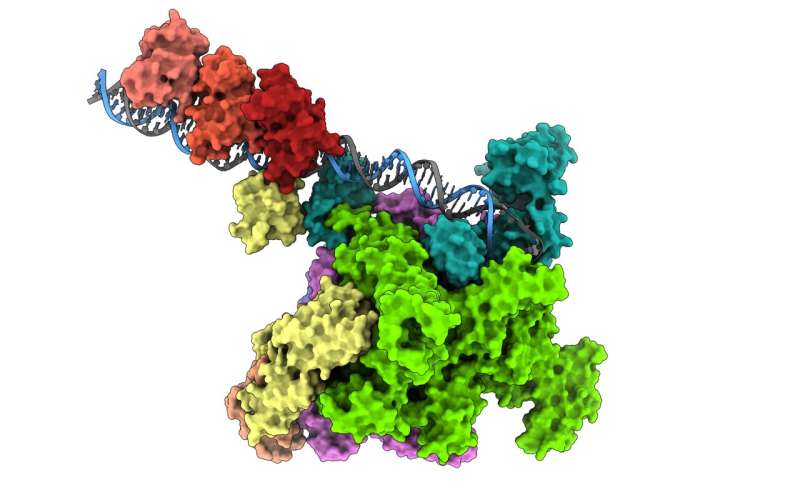
Cholera, a disease caused by the bacterium Vibrio cholerae, poses a significant global public health threat. Recent research published on January 15, 2026, reveals critical insights into how this pathogen activates its virulence. An international team from the Institute for Research in Biomedicine (IRB Barcelona), along with partners from IBMB-CSIC, EMBL Heidelberg, and the University of Detroit Mercy, has provided a long-sought structural explanation for the regulatory mechanisms that enable this bacterium to colonize the human gut and produce the toxin responsible for severe diarrhea.
Cholera is responsible for approximately 1.3 to 4 million cases globally each year, leading to tens of thousands of deaths, particularly in areas with inadequate access to safe sanitation. The World Health Organization (WHO) classified cholera as a Grade 3 emergency in 2023, the highest level of alert, highlighting the urgency of addressing outbreaks exacerbated by conflict, climate change, and population displacement.
The study published in Science Advances investigates the proteins ToxR and TcpP, which are essential transcription factors in Vibrio cholerae. These proteins respond to environmental cues, such as bile salts and low oxygen levels in the human small intestine. Once activated, ToxR and TcpP bind to bacterial DNA, triggering a cascade that results in the production of the cholera toxin and the Toxin Co-regulated Pilus, which helps the bacteria adhere to intestinal walls.
Despite the recognition of these proteins as key regulators, a comprehensive understanding of their interaction with the cell’s transcription machinery had been lacking. Using advanced techniques like single-particle cryo-electron microscopy (cryo-EM), the research team has now elucidated the molecular architecture of this critical interaction.
Dr. Miquel Coll, the former head of the Structural Biology of Protein & Nucleic Acid Complexes and Molecular Machines lab at IRB Barcelona, emphasized the significance of this discovery: “Understanding this interaction at the molecular level gives us a new way to think about how bacterial virulence is controlled.”
The study reveals that, unlike many bacterial regulators that induce conformational changes in RNA polymerase to initiate transcription, ToxR and TcpP stabilize the transcription machinery. They anchor a specific part of the enzyme, the alpha-CTD domain, directly onto the DNA without altering its shape. This stability is crucial for the activation of virulence genes.
The researchers identified a single amino acid, phenylalanine, as a critical link between the sensor proteins and RNA polymerase. According to Dr. Adrià Alcaide, the study’s first author, “If only this amino acid is mutated, the entire activation process fails, making the bacteria harmless.”
The implications of these findings extend beyond understanding cholera’s virulence. Severe cholera can lead to life-threatening dehydration within hours, especially in vulnerable populations like children and the elderly. Effective treatment with rehydration therapy and antibiotics can significantly lower mortality rates.
Moreover, the study’s observations of structural similarities between the active sites of RNA polymerase in V. cholerae and E. coli suggest that existing antibiotics targeting bacterial polymerase may be repurposed or optimized to combat cholera effectively.
This groundbreaking research not only sheds light on the molecular mechanisms driving cholera virulence but also opens up new avenues for developing strategic therapies to combat this enduring global health crisis. The ongoing collaboration among international scientific institutions underscores the importance of collective efforts in understanding and addressing infectious diseases.
For more information, refer to the publication: Adrià Alcaide-Jiménez et al, Structures of Vibrio cholerae transcription complexes reveal how ToxR and TcpP recruit the RNA polymerase and activate virulence genes., Science Advances (2026). DOI: 10.1126/sciadv.adx9680.











Revolutionary Photonic Ski-Jump Could Miniaturize LiDAR Systems

Couples Detox from Plastics in New Netflix Doc: Can It Boost Fertility?

Aventon Launches Affordable Full-Suspension Electric Mountain Bike

Discover Eight Must-Try Restaurants This Spring Season

UC Irvine Team Unveils Innovative Ion Pump for Water Treatment

One-Third of Americans Trim Daily Expenses for Healthcare Needs

Apple Secures First Oscar in Three Years with F1: The Movie

Fourth Graders Celebrate St. Patrick’s Day with Creative Weather Drawings

Kim Kardashian Dazzles at Vanity Fair Oscars Party 2026

Nostradamus’ 2026 Predictions: Star Death and Dark Events Loom

Breakthroughs and Challenges Await Science in 2026

Electric Moto Influencer Surronster Arrested in Tijuana

OpenAI to Implement Age Verification for ChatGPT by December 2025

Discover the Top 10 Calorie Counting Apps of 2025

Recovering a Suspended TikTok Account: A Step-by-Step Guide

Bella Hadid Shares Health Update After Treatment for Lyme Disease

Backpack Drives Equip Students with Supplies for New School Year

Analysts Project Stronger Growth for Apple’s iPhone 17 Lineup
-
 Science8 months ago
Nostradamus’ 2026 Predictions: Star Death and Dark Events Loom
-
 Science8 months ago
Breakthroughs and Challenges Await Science in 2026
-
 Technology11 months ago
Electric Moto Influencer Surronster Arrested in Tijuana
-
 Technology9 months ago
OpenAI to Implement Age Verification for ChatGPT by December 2025
-
 Technology1 year ago
Discover the Top 10 Calorie Counting Apps of 2025
-
 Technology1 year ago
Recovering a Suspended TikTok Account: A Step-by-Step Guide
-
 Health11 months ago
Bella Hadid Shares Health Update After Treatment for Lyme Disease
-
 Education1 year ago
Backpack Drives Equip Students with Supplies for New School Year
-
 Health12 months ago
Analysts Project Stronger Growth for Apple’s iPhone 17 Lineup
-

 Health12 months ago
Japanese Study Finds Rose Oil Can Increase Brain Gray Matter
-

 Technology8 months ago
Top 10 Penny Stocks to Watch in 2026 for Strong Returns
-

 Science10 months ago
Starship V3 Set for 2026 Launch After Successful Final Test of Version 2