
Technology
Uber Launches Self-Driving Taxis in Dallas, Expanding Robotaxi Fleet

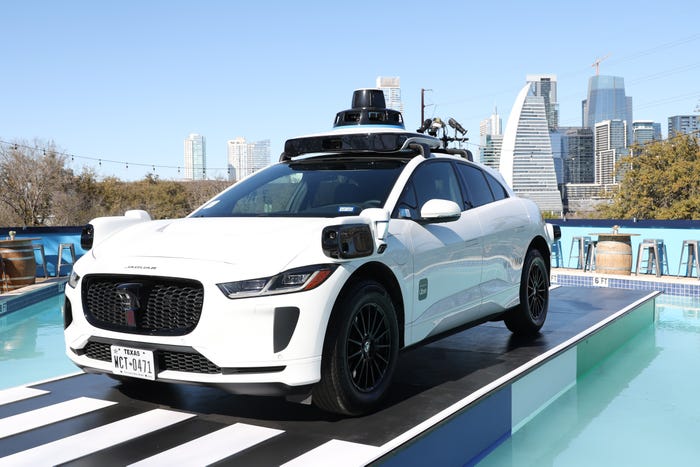
Uber has announced the launch of self-driving taxis in Dallas, marking a significant expansion in its robotaxi operations across the United States. This initiative, revealed on March 6, 2024, follows partnerships with various autonomous vehicle companies, including the startup Avride, which will provide the technology for the fleet.
The new Dallas robotaxi fleet comprises Hyundai Ioniq 5 electric vehicles, equipped with Avride’s self-driving technology. For the time being, these vehicles will feature human safety drivers in the driver’s seat, ensuring passenger security as the technology is tested in a real-world environment. Uber stated that fully autonomous operations will be implemented “sometime in the future,” indicating a phased approach to their rollout.
Expansion of Autonomous Ride-Hailing Services
With this launch, Dallas becomes the third U.S. city to offer Uber’s autonomous ride-hailing options, following Austin and Atlanta. The company is actively competing in the burgeoning robotaxi market, which has seen substantial advancements in recent months. In conjunction with its announcement, Uber emphasized that riders using the app may receive either a robotaxi or a traditional human-operated vehicle, providing flexibility for customers during the transition period.
Meanwhile, Uber’s competitor, Waymo—owned by Google—has also accelerated its rollout of autonomous ride-hailing services. Recently, Waymo expanded its presence into Dallas, Miami, Houston, San Antonio, and Orlando, in addition to its existing operations in major cities like San Francisco and Los Angeles. Just days ago, Waymo confirmed the commencement of driverless operations in Dallas, further intensifying the competitive landscape for autonomous taxis.
Strategic Partnerships and Global Reach
After initially attempting to develop its own robotaxi vehicles, Uber has shifted its strategy to collaborate with established autonomous vehicle firms. This approach has enabled Uber to leverage existing technology while focusing on its core business of ride-hailing. In addition to Avride and Waymo, Uber has also formed partnerships with Chinese robotaxi companies such as Pony.AI and WeRide. In a recent development, the company launched fully driverless WeRide robotaxis on its app in Abu Dhabi.
As the robotaxi race escalates, Uber is positioning itself as a key player in the evolving transport landscape. The collaboration with Avride represents a step toward broader adoption of self-driving technology, reflecting a growing trend in urban mobility solutions. With increasing consumer interest in autonomous vehicles, the successful implementation of these services could significantly reshape the future of ride-hailing.
As cities like Dallas embrace this innovative technology, the implications for urban transport and mobility will continue to unfold in the coming years.













Enhance Your Sleep: Experts Share Lighting Tips for Better Circadian Rhythm

NASA’s Artemis II Rehearsal Faces Record Cold on Florida Coast

Special Education Students Thrive at Wilmington’s Brew and Bake Cafe

Helena High School Retires Richard Fitts’ Jersey Number in Tribute

Dean Kamen Placed on Leave by FIRST Amid Epstein Revelations

J.E. Stokes Medical Centre Welcomes New Physician to North Shore

Asana Emphasizes Shared Memory for Effective AI Integration

Aurora Schools Contract Criticized for Lack of Academic Standards

Join the Fight Against Cancer at 24th Annual Candler Clays

Nostradamus’ 2026 Predictions: Star Death and Dark Events Loom

OpenAI to Implement Age Verification for ChatGPT by December 2025

Discover the Top 10 Calorie Counting Apps of 2025

Bella Hadid Shares Health Update After Treatment for Lyme Disease

Analysts Project Stronger Growth for Apple’s iPhone 17 Lineup

Electric Moto Influencer Surronster Arrested in Tijuana

Harvard Secures Court Victory Over Federal Funding Cuts

Erin Bates Shares Recovery Update Following Sepsis Complications

Discover How to Reverse Image Search Using ChatGPT Effortlessly
-
 Science1 month ago
Nostradamus’ 2026 Predictions: Star Death and Dark Events Loom
-
 Technology2 months ago
OpenAI to Implement Age Verification for ChatGPT by December 2025
-
 Technology7 months ago
Discover the Top 10 Calorie Counting Apps of 2025
-
 Health5 months ago
Bella Hadid Shares Health Update After Treatment for Lyme Disease
-
 Health5 months ago
Analysts Project Stronger Growth for Apple’s iPhone 17 Lineup
-
 Technology5 months ago
Electric Moto Influencer Surronster Arrested in Tijuana
-
 Education5 months ago
Harvard Secures Court Victory Over Federal Funding Cuts
-
 Health5 months ago
Erin Bates Shares Recovery Update Following Sepsis Complications
-
 Technology6 months ago
Discover How to Reverse Image Search Using ChatGPT Effortlessly
-

 Technology7 months ago
Meta Initiates $60B AI Data Center Expansion, Starting in Ohio
-

 Science4 months ago
Starship V3 Set for 2026 Launch After Successful Final Test of Version 2
-

 Technology7 months ago
Recovering a Suspended TikTok Account: A Step-by-Step Guide