
Technology
Tesla Accelerates Plans for Robotaxi Service in San Francisco

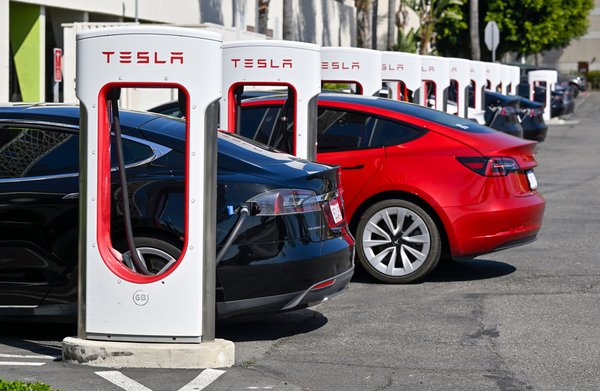
Tesla is moving forward with plans to launch its self-driving ride-hailing service in the San Francisco area, which includes locations from Marin to San Jose. While the company is reportedly fast-tracking this initiative, passengers should not expect a fully autonomous ride just yet, as human drivers will still be behind the wheel during the initial phase.
This development comes as Tesla continues to refine its self-driving technology. The company aims to enhance its ride-hailing service by integrating advanced algorithms and real-time data to improve passenger safety and experience. As a leader in electric vehicles, Tesla’s entry into the autonomous ride-hailing market could significantly reshape urban transportation.
Service Launch and Operational Details
Tesla plans to initiate its robotaxi service in early 2024, with the San Francisco Bay Area serving as a key testing ground. The service is poised to allow customers to request rides via Tesla’s app, similar to existing ride-hailing platforms. However, the presence of human drivers means that the service will not be fully autonomous at launch.
The company’s approach reflects its commitment to safety and regulatory compliance as it navigates the complexities of self-driving legislation. According to Tesla’s CEO, Elon Musk, the goal is to transition to a fully autonomous fleet as soon as it is deemed safe and legally permissible.
This initiative is part of a broader trend in the automotive industry, where companies are racing to develop and deploy self-driving technologies. Tesla’s move to introduce a robotaxi service could put pressure on competitors, including traditional ride-hailing companies and other tech firms exploring similar services.
Market Implications and Future Prospects
The launch of Tesla’s robotaxi service could have far-reaching implications for both the ride-hailing market and the broader transportation landscape. With the potential to reduce traffic congestion and lower transportation costs, such services may appeal to a wide range of consumers.
Moreover, if successful, Tesla’s initiative could serve as a model for other cities and countries looking to adopt autonomous vehicle technology. The company’s ability to effectively integrate its electric vehicle fleet with advanced software is likely to be a critical factor in its success.
As the launch date approaches, stakeholders will be closely monitoring how Tesla navigates regulatory challenges and public acceptance of its robotaxi service. The company faces the dual challenge of ensuring safety while also meeting the high expectations associated with its brand.
In conclusion, Tesla’s plans for a self-driving ride-hailing service in San Francisco mark a significant step in the evolution of urban transportation. While the transition to fully autonomous vehicles will take time, the initial phase of the robotaxi service is poised to capture the attention of consumers and industry experts alike.









Revolutionary Photonic Ski-Jump Could Miniaturize LiDAR Systems

Couples Detox from Plastics in New Netflix Doc: Can It Boost Fertility?

Aventon Launches Affordable Full-Suspension Electric Mountain Bike

Discover Eight Must-Try Restaurants This Spring Season

UC Irvine Team Unveils Innovative Ion Pump for Water Treatment

One-Third of Americans Trim Daily Expenses for Healthcare Needs

Apple Secures First Oscar in Three Years with F1: The Movie

Fourth Graders Celebrate St. Patrick’s Day with Creative Weather Drawings

Kim Kardashian Dazzles at Vanity Fair Oscars Party 2026

Nostradamus’ 2026 Predictions: Star Death and Dark Events Loom

Breakthroughs and Challenges Await Science in 2026

Electric Moto Influencer Surronster Arrested in Tijuana

OpenAI to Implement Age Verification for ChatGPT by December 2025

Discover the Top 10 Calorie Counting Apps of 2025

Recovering a Suspended TikTok Account: A Step-by-Step Guide

Bella Hadid Shares Health Update After Treatment for Lyme Disease

Backpack Drives Equip Students with Supplies for New School Year

Analysts Project Stronger Growth for Apple’s iPhone 17 Lineup
-
 Science8 months ago
Nostradamus’ 2026 Predictions: Star Death and Dark Events Loom
-
 Science8 months ago
Breakthroughs and Challenges Await Science in 2026
-
 Technology11 months ago
Electric Moto Influencer Surronster Arrested in Tijuana
-
 Technology9 months ago
OpenAI to Implement Age Verification for ChatGPT by December 2025
-
 Technology1 year ago
Discover the Top 10 Calorie Counting Apps of 2025
-
 Technology1 year ago
Recovering a Suspended TikTok Account: A Step-by-Step Guide
-
 Health11 months ago
Bella Hadid Shares Health Update After Treatment for Lyme Disease
-
 Education1 year ago
Backpack Drives Equip Students with Supplies for New School Year
-
 Health12 months ago
Analysts Project Stronger Growth for Apple’s iPhone 17 Lineup
-

 Health12 months ago
Japanese Study Finds Rose Oil Can Increase Brain Gray Matter
-

 Technology8 months ago
Top 10 Penny Stocks to Watch in 2026 for Strong Returns
-

 Science10 months ago
Starship V3 Set for 2026 Launch After Successful Final Test of Version 2