
Technology
Police Crush Confiscated E-Bikes in Crackdown on Illegal Use

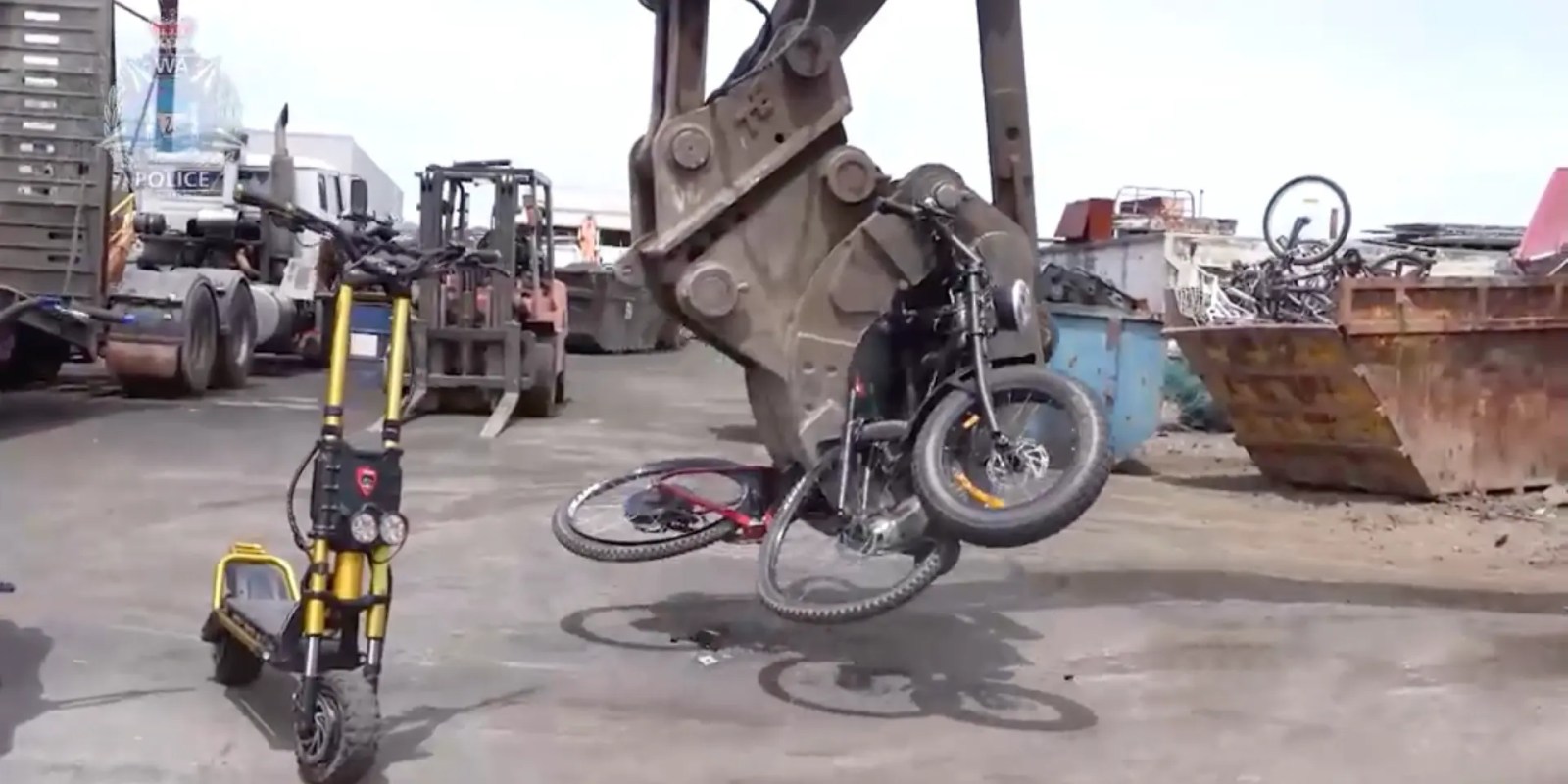
Police in Western Australia have intensified their enforcement of regulations surrounding electric bikes and scooters, leading to the destruction of numerous confiscated devices. Under a recent initiative named Operation Moorhead, authorities have seized and crushed electric scooters and off-road electric bikes due to concerns about illegal and reckless usage. Footage released by the WA Police shows an excavator crushing these devices, which were loaded into a dumpster for disposal.
The operation, which started on January 5, 2023, was launched in response to increasing community complaints about “dangerous and antisocial” riding behavior. Officers targeted individuals allegedly using high-powered e-bikes and scooters illegally on public roads, particularly in the suburb of Joondalup. Many of the confiscated devices were found to be equipped with motors that exceeded legal limits, with some resembling light electric motorcycles rather than traditional bicycles.
According to police reports, the majority of riders involved were under 18 years of age. They allegedly engaged in reckless behavior, including throwing objects at pedestrians and vehicles while sharing videos of their stunts on social media. In total, authorities seized 36 micromobility devices and charged 25 juveniles aged between 11 and 16, along with four adults, for various traffic-related offenses. Fortunately, no injuries were reported, but police officials indicated that this was largely a matter of luck.
Acting Inspector Scott Gillis of the WA Police described the footage reviewed by officers as “disturbing.” He highlighted one incident involving a 12-year-old riding an electric bike capable of reaching speeds of 80 km/h (50 mph). Gillis emphasized that such powerful devices should not be in the hands of children, particularly when used in public areas.
The crackdown is part of a broader initiative by the WA Police, which has confirmed that officers across Western Australia will now actively target unlawful micromobility usage. This includes high-powered electric dirt bikes and scooters that do not comply with legal definitions for bicycles or personal mobility devices. Police have stated that illegal devices will be seized and destroyed rather than facing traditional traffic citations.
As part of ongoing efforts to enhance public safety, Western Australia plans to implement a ban on children under 16 from riding or storing electric micromobility devices at public schools beginning this year. Police are collaborating with schools to educate families ahead of the 2026 school year, noting that some parents may not fully understand how their children are using these machines.
The decision to destroy confiscated e-bikes represents a significant stance by law enforcement, reflecting a growing concern about the misuse of powerful micromobility devices. As electric bikes gain popularity worldwide, this situation illustrates how swiftly public perception can shift when safety and legality are compromised, particularly in conjunction with the influence of social media.
The warning from police has been clear: if illegal e-rideables are found in the community, they will be seized and destroyed. This firm approach underlines the necessity for awareness and compliance with local laws regarding micromobility devices, emphasizing the importance of responsible usage for the safety of all road users.













Virtu Marks 25 Years of Joy in Bucktown with Community Celebration

Flapper Skate Populations Show Signs of Recovery in Scotland

New Treatment Options for Menopause Symptoms Launch in 2023

Grok AI Faces Deepfake Backlash Amid Tech Updates and Legal Issues

Trump Declares U.S. Control of Greenland “Unacceptable” Ahead of Talks

Players Find Sneaky Way to Achieve ‘Death From Above’ in Arc Raiders

Study Reveals Biostimulant Seed Treatments Fail to Boost Soybean Yields

Medical Students Gain Insight on End-of-Life Care Practices

Police Crush Confiscated E-Bikes in Crackdown on Illegal Use

Nostradamus’ 2026 Predictions: Star Death and Dark Events Loom

OpenAI to Implement Age Verification for ChatGPT by December 2025

Discover the Top 10 Calorie Counting Apps of 2025

Bella Hadid Shares Health Update After Treatment for Lyme Disease

Analysts Project Stronger Growth for Apple’s iPhone 17 Lineup

Erin Bates Shares Recovery Update Following Sepsis Complications

Electric Moto Influencer Surronster Arrested in Tijuana

Discover How to Reverse Image Search Using ChatGPT Effortlessly

Meta Initiates $60B AI Data Center Expansion, Starting in Ohio
-
 Science2 weeks ago
Nostradamus’ 2026 Predictions: Star Death and Dark Events Loom
-
 Technology1 month ago
OpenAI to Implement Age Verification for ChatGPT by December 2025
-
 Technology6 months ago
Discover the Top 10 Calorie Counting Apps of 2025
-
 Health4 months ago
Bella Hadid Shares Health Update After Treatment for Lyme Disease
-
 Health4 months ago
Analysts Project Stronger Growth for Apple’s iPhone 17 Lineup
-
 Health4 months ago
Erin Bates Shares Recovery Update Following Sepsis Complications
-
 Technology4 months ago
Electric Moto Influencer Surronster Arrested in Tijuana
-
 Technology5 months ago
Discover How to Reverse Image Search Using ChatGPT Effortlessly
-
 Technology6 months ago
Meta Initiates $60B AI Data Center Expansion, Starting in Ohio
-

 Education4 months ago
Harvard Secures Court Victory Over Federal Funding Cuts
-

 Technology6 months ago
Recovering a Suspended TikTok Account: A Step-by-Step Guide
-

 Technology2 months ago
Discover 2025’s Top GPUs for Exceptional 4K Gaming Performance