
Technology
Navigating Legal Challenges as Lunar Nuclear Projects Advance

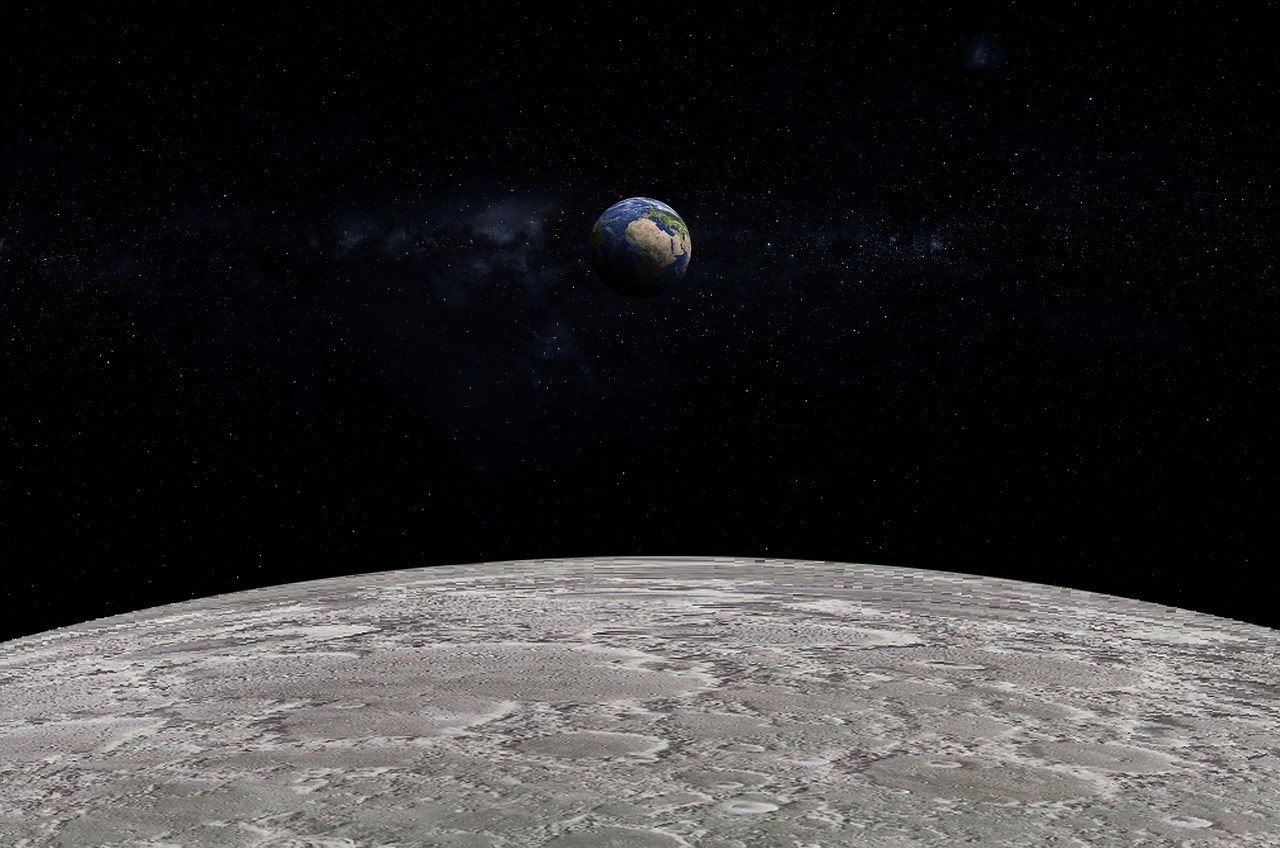
The announcement of Russia’s Selena Project marks a significant step forward in lunar exploration. This initiative aims to establish a nuclear power plant on the Moon by 2035 as part of the joint Russo-Chinese International Lunar Research Station program. While the project showcases remarkable engineering advancements, it also raises critical legal questions about the governance of space activities and the implications of deploying autonomous technologies in extraterrestrial environments.
As humanity transitions from temporary lunar visits to establishing permanent infrastructure, we face what is termed a “Jurisdictional Overlap.” The outdated provisions of the 1967 Outer Space Treaty (OST) are increasingly at odds with contemporary issues surrounding data sovereignty and the liabilities associated with artificial intelligence (AI). If these gaps are not addressed, the Moon risks becoming a legal black site, devoid of clear governance.
Conflicting Articles: Sovereignty Issues
The inherent contradiction within the OST creates significant legal friction. Article II prohibits national appropriation of celestial bodies, asserting that the Moon belongs to all of humanity. In contrast, Article VIII grants nations jurisdiction over their registered objects and personnel. This disparity leads to what is known as the Legal Enclave problem.
Should a Russian nuclear reactor on the Moon be managed by autonomous AI, the question arises: does this make the surrounding lunar territory a de facto extension of Russian sovereignty? This scenario is not merely theoretical. If the data from a multinational crew’s health and biometric information is governed by Russian Federal Law No. 152-FZ, which mandates that personal data be processed within Russian territory, it could potentially convert a shared lunar environment into a sovereign data colony.
Addressing the Liability Gap
The design of the Selena Project introduces further complications related to liability. The 1972 Liability Convention distinguishes between Absolute Liability for damage occurring on Earth and Fault-Based Liability for incidents in space. The challenge arises when evaluating damage caused by an AI system, particularly if an incident results from an unpredictable algorithmic error.
The traditional concept of fault hinges on human intent or negligence, making it difficult for claimants to prove accountability in cases where damage—such as a radiological leak—occurs due to AI malfunction. Current regulations allow states to argue that such unforeseen errors do not constitute fault, potentially shielding them from responsibility in the event of a lunar disaster. The pressing need for a Strict Liability standard for autonomous systems in space cannot be overstated, as states already bear international responsibility under Article VI of the OST, yet there remains no clear mechanism for holding algorithms accountable.
The implications of these legal gaps go beyond theoretical discussions. As AI systems operate within complex environments, the Moon must be viewed as a critical data ecosystem. A nuclear reactor functioning on the lunar surface represents a high-stakes Internet of Things (IoT) device, where a cyber breach could lead to catastrophic consequences. Such an event would not only disrupt operations but could also render vast areas uninhabitable for extended periods, violating Article IX of the OST, which mandates the avoidance of harmful contamination.
The intersection of space law and technology law is rapidly evolving, signaling the emergence of what may be termed Cislunar Cyber Law. In this new paradigm, the integrity of digital defenses becomes as crucial as that of physical safety equipment.
Future Directions: A New Legal Framework
Given the current legal void surrounding data privacy and algorithmic accountability in cislunar space, reliance on the goodwill of nations is insufficient. The pressing question is not whether we will apply laws on the Moon, but how we can ensure the protection of this new digital frontier. A comprehensive legal framework is necessary—one that extends beyond traditional weapon limitations to encompass data governance, AI regulation, and the management of nuclear technologies.
As the vacuum of space becomes increasingly populated with human endeavors, the challenge remains: will this new domain be governed by the rule of law or dominated by those with the most technological power?
Vishal Sharma, an advocate for AI governance specializing in data privacy and cyber law, emphasizes the urgency of addressing these issues. With academic credentials in engineering and law from NALSAR University, he advocates for a collaborative approach to create a robust legal infrastructure that can effectively manage the complexities of our emerging lunar civilization.







Revolutionary Photonic Ski-Jump Could Miniaturize LiDAR Systems

Couples Detox from Plastics in New Netflix Doc: Can It Boost Fertility?

Aventon Launches Affordable Full-Suspension Electric Mountain Bike

Discover Eight Must-Try Restaurants This Spring Season

UC Irvine Team Unveils Innovative Ion Pump for Water Treatment

One-Third of Americans Trim Daily Expenses for Healthcare Needs

Apple Secures First Oscar in Three Years with F1: The Movie

Fourth Graders Celebrate St. Patrick’s Day with Creative Weather Drawings

Kim Kardashian Dazzles at Vanity Fair Oscars Party 2026

Nostradamus’ 2026 Predictions: Star Death and Dark Events Loom

Breakthroughs and Challenges Await Science in 2026

Electric Moto Influencer Surronster Arrested in Tijuana

OpenAI to Implement Age Verification for ChatGPT by December 2025

Discover the Top 10 Calorie Counting Apps of 2025

Recovering a Suspended TikTok Account: A Step-by-Step Guide

Bella Hadid Shares Health Update After Treatment for Lyme Disease

Backpack Drives Equip Students with Supplies for New School Year

Analysts Project Stronger Growth for Apple’s iPhone 17 Lineup
-
 Science8 months ago
Nostradamus’ 2026 Predictions: Star Death and Dark Events Loom
-
 Science8 months ago
Breakthroughs and Challenges Await Science in 2026
-
 Technology11 months ago
Electric Moto Influencer Surronster Arrested in Tijuana
-
 Technology9 months ago
OpenAI to Implement Age Verification for ChatGPT by December 2025
-
 Technology1 year ago
Discover the Top 10 Calorie Counting Apps of 2025
-
 Technology1 year ago
Recovering a Suspended TikTok Account: A Step-by-Step Guide
-
 Health11 months ago
Bella Hadid Shares Health Update After Treatment for Lyme Disease
-
 Education1 year ago
Backpack Drives Equip Students with Supplies for New School Year
-
 Health12 months ago
Analysts Project Stronger Growth for Apple’s iPhone 17 Lineup
-

 Health12 months ago
Japanese Study Finds Rose Oil Can Increase Brain Gray Matter
-

 Technology8 months ago
Top 10 Penny Stocks to Watch in 2026 for Strong Returns
-

 Science10 months ago
Starship V3 Set for 2026 Launch After Successful Final Test of Version 2