
Technology
Minnesota Counties Show Surprising Gig Broadband Access Rankings

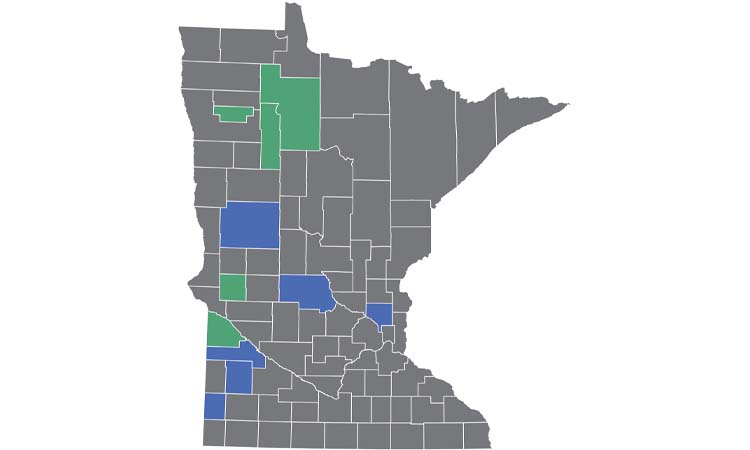
Access to fast, reliable internet is essential for businesses, regardless of their location. In Minnesota, a recent analysis of broadband access reveals that several counties outside the Twin Cities metropolitan area are outperforming their urban counterparts in providing gigabit internet services. According to data from the state gathered in 2024, these findings highlight the ongoing disparities in internet access across the region.
Gigabit broadband is defined as internet service that delivers speeds of 1 gigabit per second (Gbps), which is considered the current standard for high-speed internet. The rankings show that some rural areas are making significant strides in connectivity, while certain metro areas lag behind. Notably, Anoka County, part of the Twin Cities, ranks as one of the lowest in the state, with only 17% access to gig broadband, placing it seventh from the bottom.
Broadband Access Rankings Across Minnesota
The data reveals a diverse landscape of broadband access throughout Minnesota. The analysis, conducted by the Blandin Foundation and Treacy Information, highlights counties such as Clay and Becker, which are leading the state in gigabit access. These areas exemplify the successful deployment of broadband infrastructure that supports local businesses and communities.
In contrast, urban areas like Anoka must address the challenges that have contributed to their low rankings. The findings suggest that while urban centers have traditionally been viewed as more connected, the reality is that some rural counties are rapidly advancing in broadband access, creating a competitive advantage for businesses in those regions.
The Importance of Reliable Broadband for Rural Businesses
For rural businesses, access to high-speed internet is not just a luxury but a necessity. Reliable broadband allows these companies to operate efficiently and compete in an increasingly digital marketplace. With many services and communication tools relying on high-speed internet, the lack of connectivity can hinder growth and innovation.
The disparities in broadband access between rural and urban areas raise important questions about infrastructure investment and policy priorities in Minnesota. As the state continues to develop its digital economy, addressing these gaps will be crucial for ensuring that all businesses, regardless of their location, have the opportunity to thrive.
The 2024 data serves as a call to action for policymakers and stakeholders to invest in broadband initiatives that enhance accessibility and affordability. By prioritizing these efforts, Minnesota can foster an inclusive digital landscape that benefits all residents and businesses across the state.













Revolutionary Photonic Ski-Jump Could Miniaturize LiDAR Systems

Couples Detox from Plastics in New Netflix Doc: Can It Boost Fertility?

Aventon Launches Affordable Full-Suspension Electric Mountain Bike

Discover Eight Must-Try Restaurants This Spring Season

UC Irvine Team Unveils Innovative Ion Pump for Water Treatment

One-Third of Americans Trim Daily Expenses for Healthcare Needs

Apple Secures First Oscar in Three Years with F1: The Movie

Fourth Graders Celebrate St. Patrick’s Day with Creative Weather Drawings

Kim Kardashian Dazzles at Vanity Fair Oscars Party 2026

Nostradamus’ 2026 Predictions: Star Death and Dark Events Loom

Breakthroughs and Challenges Await Science in 2026

Electric Moto Influencer Surronster Arrested in Tijuana

OpenAI to Implement Age Verification for ChatGPT by December 2025

Discover the Top 10 Calorie Counting Apps of 2025

Recovering a Suspended TikTok Account: A Step-by-Step Guide

Bella Hadid Shares Health Update After Treatment for Lyme Disease

Backpack Drives Equip Students with Supplies for New School Year

Analysts Project Stronger Growth for Apple’s iPhone 17 Lineup
-
 Science8 months ago
Nostradamus’ 2026 Predictions: Star Death and Dark Events Loom
-
 Science8 months ago
Breakthroughs and Challenges Await Science in 2026
-
 Technology11 months ago
Electric Moto Influencer Surronster Arrested in Tijuana
-
 Technology9 months ago
OpenAI to Implement Age Verification for ChatGPT by December 2025
-
 Technology1 year ago
Discover the Top 10 Calorie Counting Apps of 2025
-
 Technology1 year ago
Recovering a Suspended TikTok Account: A Step-by-Step Guide
-
 Health11 months ago
Bella Hadid Shares Health Update After Treatment for Lyme Disease
-
 Education1 year ago
Backpack Drives Equip Students with Supplies for New School Year
-
 Health11 months ago
Analysts Project Stronger Growth for Apple’s iPhone 17 Lineup
-

 Health12 months ago
Japanese Study Finds Rose Oil Can Increase Brain Gray Matter
-

 Technology8 months ago
Top 10 Penny Stocks to Watch in 2026 for Strong Returns
-

 Science10 months ago
Starship V3 Set for 2026 Launch After Successful Final Test of Version 2