
Technology
Minimalist App To To-Do Boosts Task Completion Rates Significantly

Task management systems often promise increased productivity, but many users find themselves overwhelmed by complex features. A recent personal experiment revealed how a minimalist app, To To-Do, helped improve task completion rates significantly compared to the popular tool Todoist.
Over the course of one week, the user transitioned from a carefully curated setup in Todoist to the straightforward interface of To To-Do. With only essential features, such as task organization by dates, the app encouraged a more focused approach to productivity. The results were striking: the user completed 84% of tasks in To To-Do, compared to only 49% in Todoist.
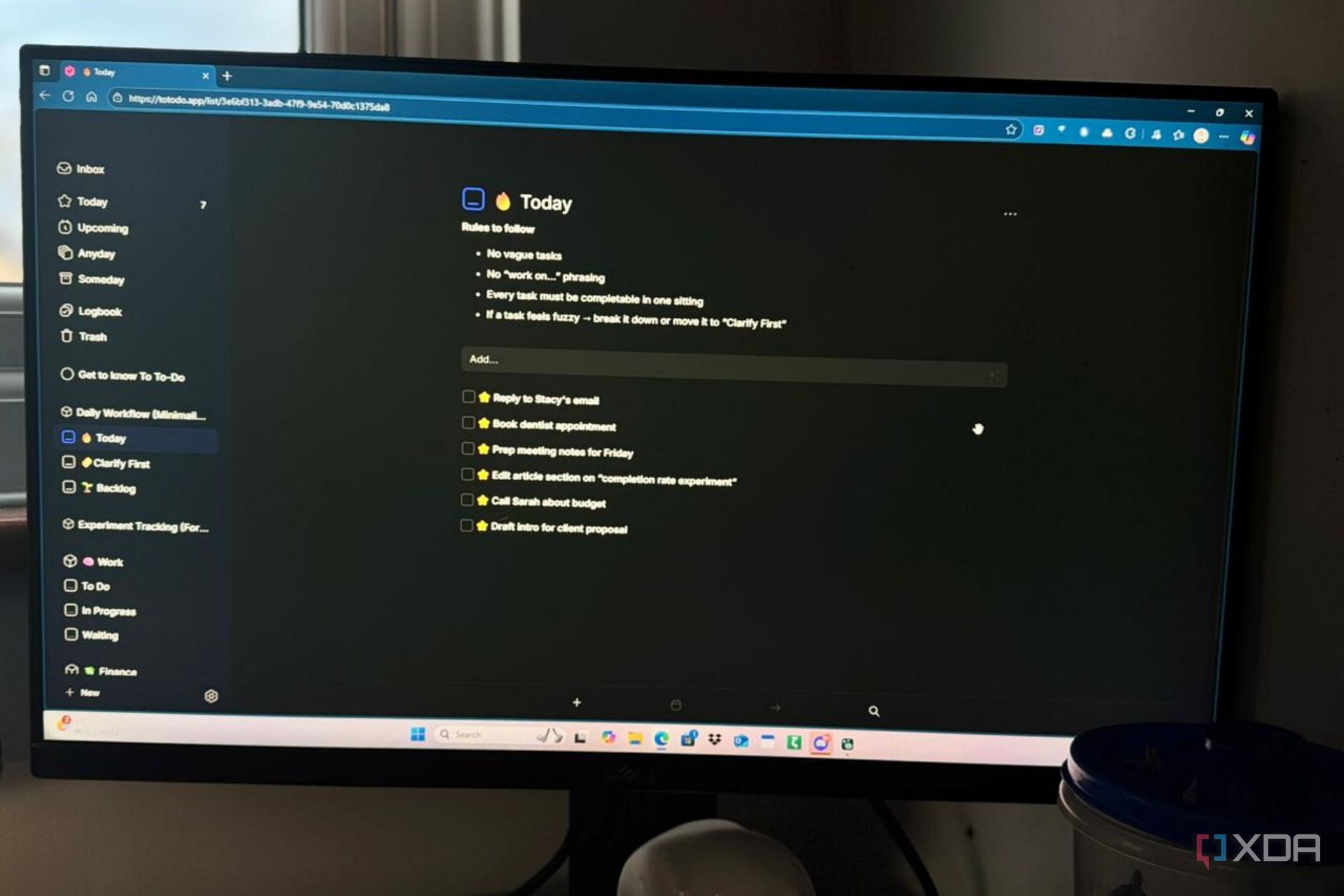
In the Todoist week, 47 tasks were created, with only 23 tasks completed. Conversely, in the To To-Do week, 31 tasks were created, leading to a total of 26 completed tasks. The main difference lay not just in quantity but in the quality of tasks. The user noted a tendency to create vague placeholder tasks in Todoist, such as “Think about presentation structure,” which were less actionable. To To-Do’s minimalist design encouraged clearer task definitions, such as “Draft intro for client proposal.”
How Simplicity Drives Productivity
The user found that the simplicity of To To-Do forced a reevaluation of task clarity. Without the temptation of extensive organizational features, there was a newfound urgency to define what needed to be accomplished. The app utilizes a straightforward interface that displays tasks chronologically, with sections labeled “Today,” “Upcoming,” “Anyday,” and “Someday.” This approach removes unnecessary distractions, allowing users to focus solely on their tasks.
To To-Do also synchronizes across devices and operates offline, which enhances usability. Tasks captured on a mobile device during commutes are immediately accessible on a desktop. This seamless experience mitigates the reliance on sticky notes or scattered documents.
For users opting for the paid plan, additional features such as an email-to-task conversion are available, streamlining the process of turning meeting requests or client emails into actionable tasks. While this feature was not tested during the trial, it reflects the app’s commitment to maintaining simplicity while adding value.
Collaboration and Usability
While some may argue that a lack of features limits potential, To To-Do offers uncomplicated collaboration options. Users can easily share projects or lists via email, enabling straightforward teamwork without the complexity of configuring permissions. This simplicity was tested with both a grocery list and a work project, and the experience was noted as seamless.
For individuals managing everyday tasks—like scheduling doctor appointments or completing expense reports—the minimalist approach proves effective. It eliminates the illusion that complex organization equates to progress.
The app’s ability to convert simple tasks into projects allows users to expand their lists without overwhelming complexity. If a task evolves, it can be easily turned into a project with a few clicks, maintaining clarity and focus.
The introduction of AI assistance for task planning in the paid plan raises questions about the necessity of additional features. The core experience is designed to be uncomplicated, and while some users may benefit from AI, the manual approach fosters greater engagement for others.
The user’s temptation to revert to Todoist midway through the experiment highlighted a common dilemma. It was not due to a lack of functionality in To To-Do, but rather the comfort of familiar organizational systems. This realization points to a broader truth about productivity tools: they should facilitate work rather than become a means of avoiding it.
To To-Do has now become the primary tool for personal task management, while Todoist remains a resource for project management involving external stakeholders. The minimalist approach has altered the user’s engagement with both tools. Tasks are now more clearly defined, and unnecessary categorization has been eliminated.
Ultimately, the experiment reinforces a valuable lesson in productivity. Sometimes, the most effective tools are those that strip away complexity, allowing users to confront their tasks directly. To To-Do exemplifies how a clean interface and clear thinking can yield better results than a meticulously organized system.


Revolutionary Photonic Ski-Jump Could Miniaturize LiDAR Systems

Couples Detox from Plastics in New Netflix Doc: Can It Boost Fertility?

Aventon Launches Affordable Full-Suspension Electric Mountain Bike

Discover Eight Must-Try Restaurants This Spring Season

UC Irvine Team Unveils Innovative Ion Pump for Water Treatment

One-Third of Americans Trim Daily Expenses for Healthcare Needs

Apple Secures First Oscar in Three Years with F1: The Movie

Fourth Graders Celebrate St. Patrick’s Day with Creative Weather Drawings

Kim Kardashian Dazzles at Vanity Fair Oscars Party 2026

Nostradamus’ 2026 Predictions: Star Death and Dark Events Loom

Breakthroughs and Challenges Await Science in 2026

Electric Moto Influencer Surronster Arrested in Tijuana

OpenAI to Implement Age Verification for ChatGPT by December 2025

Discover the Top 10 Calorie Counting Apps of 2025

Recovering a Suspended TikTok Account: A Step-by-Step Guide

Bella Hadid Shares Health Update After Treatment for Lyme Disease

Backpack Drives Equip Students with Supplies for New School Year

Analysts Project Stronger Growth for Apple’s iPhone 17 Lineup
-
 Science8 months ago
Nostradamus’ 2026 Predictions: Star Death and Dark Events Loom
-
 Science8 months ago
Breakthroughs and Challenges Await Science in 2026
-
 Technology11 months ago
Electric Moto Influencer Surronster Arrested in Tijuana
-
 Technology9 months ago
OpenAI to Implement Age Verification for ChatGPT by December 2025
-
 Technology1 year ago
Discover the Top 10 Calorie Counting Apps of 2025
-
 Technology1 year ago
Recovering a Suspended TikTok Account: A Step-by-Step Guide
-
 Health11 months ago
Bella Hadid Shares Health Update After Treatment for Lyme Disease
-
 Education1 year ago
Backpack Drives Equip Students with Supplies for New School Year
-
 Health12 months ago
Analysts Project Stronger Growth for Apple’s iPhone 17 Lineup
-

 Health12 months ago
Japanese Study Finds Rose Oil Can Increase Brain Gray Matter
-

 Technology8 months ago
Top 10 Penny Stocks to Watch in 2026 for Strong Returns
-

 Science10 months ago
Starship V3 Set for 2026 Launch After Successful Final Test of Version 2