
Technology
Can AI Companionship Bring Joy or Risk Isolation?

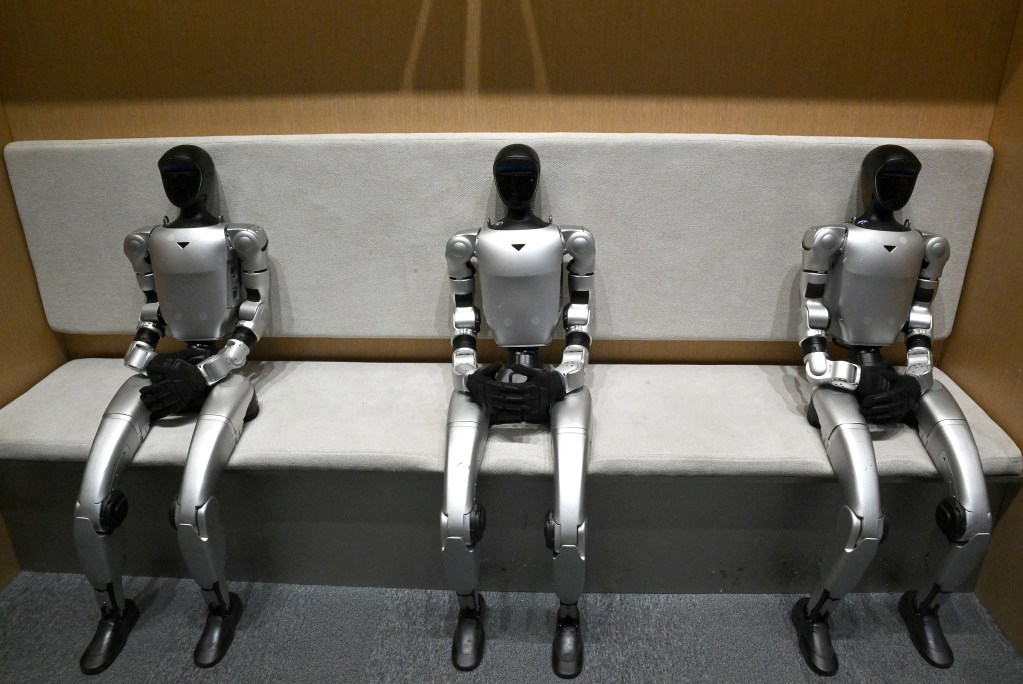
As technology evolves, an increasing number of people are seeking companionship from AI chatbots, avatars, and robots. This trend raises questions about the implications of forming relationships with artificial entities. In 2016, Amazon founder Jeff Bezos revealed that over 250,000 individuals had proposed to their Alexa devices. By 2026, the phenomenon has expanded, with marriage ceremonies involving AI becoming more common worldwide.
The American Marriage Ministries now provides guidelines for human-AI weddings, suggesting ways to incorporate AI into ceremonies, such as having it read poetry or create holographic slideshows for couples. As a law professor who studies the intersections of technology and social structures, I see the allure of AI companions. They can offer an idealized presence—more comforting, attractive, and readily available than their human counterparts. These digital partners do not demand control of the remote or engage in arguments.
Changing Perspectives on Relationships
During the COVID-19 pandemic, people adapted to virtual interactions, making the shift to chatting with AI less drastic. Many now find comfort in conversing with their AI companions about daily grievances, ordering meals, or discussing varied topics from music to quantum physics. AI can even facilitate romantic illusions, such as creating social media posts that depict couples vacationing together in exotic locations.
Interest in human-AI relationships has led to new business opportunities, including specialized wedding venues and therapists focusing on human-robot intimacy. A 2024 survey by the Institute for Family Studies and YouGov indicated that 25% of young adults in the U.S. believe AI relationships could eventually replace traditional ones. Additionally, nearly 20% of adults reported engaging in romantic conversations with AI, with the figure rising to 33% among men aged 18 to 30.
Some individuals even create AI replicas of deceased partners, like Suzanne Somers‘ widower, Alan Hamel, who developed an AI model of his late wife, allowing him to maintain a semblance of their relationship.
Legal and Ethical Challenges
Currently, marriage to a chatbot or robot is not legally recognized in the United States. The conversation around legalizing such unions evokes comparisons to the historical movements for interracial and same-sex marriage. As family law begins to grapple with the concept of human-AI relationships, new challenges arise, including whether a chatbot could claim a share of marital assets in the event of a divorce.
Research from Indiana University’s Kinsey Institute highlights a growing concern: 60% of singles view AI relationships as akin to cheating. As spousal involvement with AI continues to escalate, some partners cite these relationships as a reason for divorce, complaining about the time and money their loved ones invest in AI companions.
In response to the rising complexities, states like Idaho and Utah have enacted laws declaring that AI cannot be classified as a person, thereby preventing marriage. Yet, the administration of former President Donald Trump aimed to limit state-level regulation of AI, which could undermine these laws. At least 36 attorneys general have expressed their opposition, arguing that unregulated AI poses risks to citizens.
While AI companions may offer comfort, they also carry the potential for isolation and significant risks. In one tragic case, an AI interaction reportedly led a teenage boy in California to take his own life. Furthermore, since AI companions connect to home networks, they have access to personal and financial information, which could be vulnerable to exploitation by developers or hackers.
The dependency on AI companions raises ethical concerns. When companies change or discontinue AI services, users may experience profound grief. A Japanese man who married a holographic avatar returned home one day to find an error message due to the service being cut off, leading him to feel as if he had lost a spouse. Similar reactions followed the decision by Luka, the parent company of Replika, to alter the personalities of its romantic chatbots, which left users mourning the loss of their companions.
In light of these developments, UK attorney Giulia Trojano has proposed the introduction of a formal right against erasure, requiring developers to either keep AI companions unchanged or allow for the transfer of their personalities to other platforms. With each state having laws that regulate human marriage, protective legislation is needed to address the nuances of human-AI relationships, privacy rights, and the potential for emotional harm. Without such measures, relationships with AI may lack the permanence promised by traditional vows, instead being contingent on the whims of the developers who create them.
As society navigates this new terrain, the question remains: can human-AI relationships offer genuine companionship, or do they risk further isolating individuals in an increasingly digital world? Lori Andrews, a professor emerita at Chicago-Kent College of Law, emphasizes the need for clear regulations to protect individuals engaged in these modern unions.










Revolutionary Photonic Ski-Jump Could Miniaturize LiDAR Systems

Couples Detox from Plastics in New Netflix Doc: Can It Boost Fertility?

Aventon Launches Affordable Full-Suspension Electric Mountain Bike

Discover Eight Must-Try Restaurants This Spring Season

UC Irvine Team Unveils Innovative Ion Pump for Water Treatment

One-Third of Americans Trim Daily Expenses for Healthcare Needs

Apple Secures First Oscar in Three Years with F1: The Movie

Fourth Graders Celebrate St. Patrick’s Day with Creative Weather Drawings

Kim Kardashian Dazzles at Vanity Fair Oscars Party 2026

Nostradamus’ 2026 Predictions: Star Death and Dark Events Loom

Breakthroughs and Challenges Await Science in 2026

Electric Moto Influencer Surronster Arrested in Tijuana

OpenAI to Implement Age Verification for ChatGPT by December 2025

Discover the Top 10 Calorie Counting Apps of 2025

Recovering a Suspended TikTok Account: A Step-by-Step Guide

Bella Hadid Shares Health Update After Treatment for Lyme Disease

Backpack Drives Equip Students with Supplies for New School Year

Analysts Project Stronger Growth for Apple’s iPhone 17 Lineup
-
 Science8 months ago
Nostradamus’ 2026 Predictions: Star Death and Dark Events Loom
-
 Science8 months ago
Breakthroughs and Challenges Await Science in 2026
-
 Technology11 months ago
Electric Moto Influencer Surronster Arrested in Tijuana
-
 Technology9 months ago
OpenAI to Implement Age Verification for ChatGPT by December 2025
-
 Technology1 year ago
Discover the Top 10 Calorie Counting Apps of 2025
-
 Technology1 year ago
Recovering a Suspended TikTok Account: A Step-by-Step Guide
-
 Health11 months ago
Bella Hadid Shares Health Update After Treatment for Lyme Disease
-
 Education1 year ago
Backpack Drives Equip Students with Supplies for New School Year
-
 Health11 months ago
Analysts Project Stronger Growth for Apple’s iPhone 17 Lineup
-

 Health12 months ago
Japanese Study Finds Rose Oil Can Increase Brain Gray Matter
-

 Technology8 months ago
Top 10 Penny Stocks to Watch in 2026 for Strong Returns
-

 Science10 months ago
Starship V3 Set for 2026 Launch After Successful Final Test of Version 2