
Science
Study Reveals Origins of Kissing Traced to 21 Million Years Ago

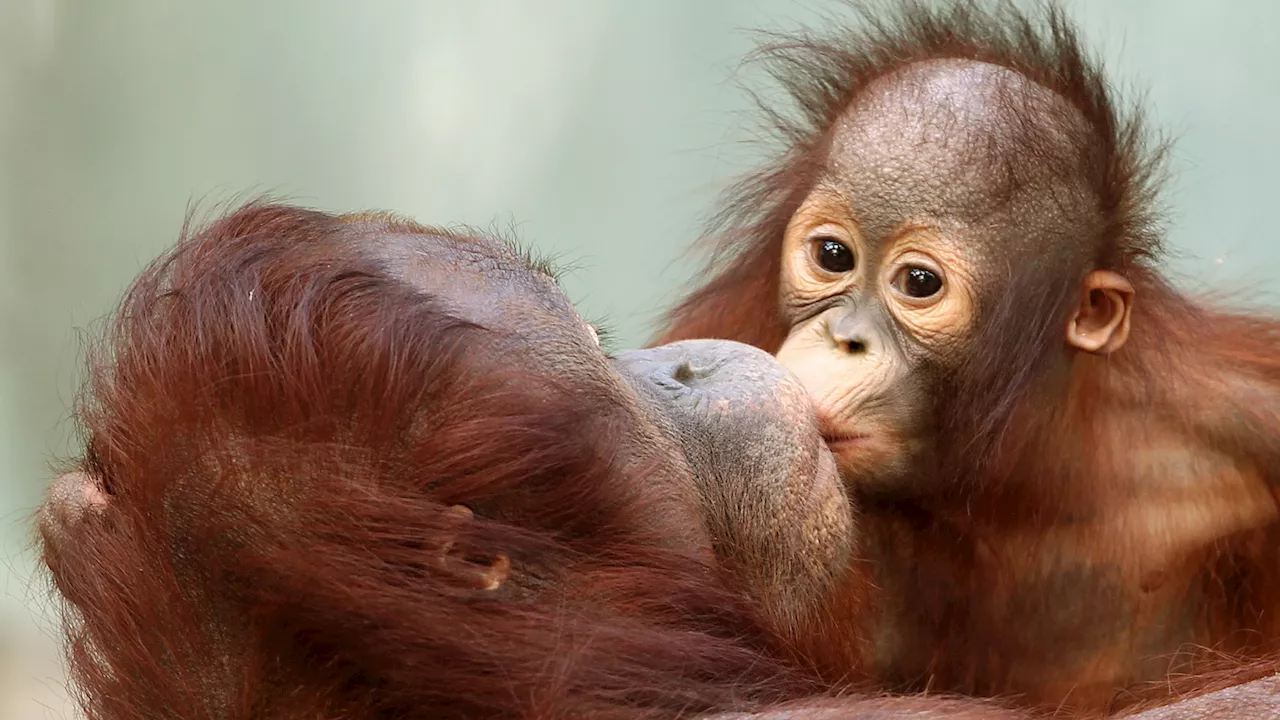
A new study published on March 15, 2024, suggests that the origins of kissing can be traced back approximately 21.5 to 16.9 million years ago, long before the existence of modern humans. This research, conducted by a team led by Matilda Brindle, an evolutionary biologist at Oxford University, marks the first comprehensive exploration of the evolutionary history of kissing.
Kissing is often viewed through a cultural lens, with discussions spanning literature, psychology, and history. However, until now, its biological and evolutionary significance had not been thoroughly examined. As Brindle noted, “These are deep-rooted evolutionary behaviors.” The findings are detailed in the Journal of the Human Behavior and Evolution Society.
To define kissing for their research, the team established a clear criterion: it involves “non-agonistic interaction” characterized by oral-oral contact with movement of the lips and no food transfer. This definition allowed the researchers to analyze behaviors across different species without attributing human characteristics to them.
The study involved gathering data on kissing behaviors among primates and applying phylogenetic methods to reconstruct the evolutionary past of this intimate act. Researchers concluded that kissing likely originated in “most extant large apes” and may have also been practiced by Neanderthals.
Brindle explained, “We paired our data on observations of kissing in living primates with information on the genetic relationships between the primates, and we basically then tracked back through evolution.” This approach shed light on how kissing could have been a shared activity among early human ancestors.
Moreover, the study supports the hypothesis that early humans and Neanderthals engaged in kissing. This aligns with earlier findings indicating that both groups exchanged “commensal oral microbes,” suggesting a shared intimacy. Brindle remarked, “Given that humans and Neanderthals were interbreeding and sharing saliva, and that both humans and Neanderthals are known to kiss, we suggest that it kind of tips the scale toward that idea that humans and Neanderthals might have been kissing each other.” She described this insight as a “much more romantic spin on human-Neanderthal relationships.”
Beyond its roots, the study highlights that kissing possesses a “strong phylogenetic signal” among Afro-Eurasian monkeys and apes, indicating that it was a common trait among their ancestors. Brindle noted, “We know that humans, bonobos, and chimpanzees all kiss. These are incredibly closely related to one another, so it makes sense that the ancestor that those species all share also kissed.”
While the exact evolutionary function of kissing remains unclear, Brindle and her colleagues hope their study encourages readers to appreciate kissing’s significance. Citing actress Ingrid Bergman, she reflected, “A kiss is more than a lovely trick designed by nature to stop speech when words become superfluous.”
Brindle concluded by emphasizing that kissing is not exclusive to humans; it occurs across various animal species. “We found polar bears kiss each other. It just puts humans firmly in the middle of all the other animals rather than this idea that we’re somehow above them or different,” she said.
This study opens new avenues for understanding human behavior and its evolutionary context, highlighting the deep connections that exist within the animal kingdom.

Revolutionary Photonic Ski-Jump Could Miniaturize LiDAR Systems

Couples Detox from Plastics in New Netflix Doc: Can It Boost Fertility?

Aventon Launches Affordable Full-Suspension Electric Mountain Bike

Discover Eight Must-Try Restaurants This Spring Season

UC Irvine Team Unveils Innovative Ion Pump for Water Treatment

One-Third of Americans Trim Daily Expenses for Healthcare Needs

Apple Secures First Oscar in Three Years with F1: The Movie

Fourth Graders Celebrate St. Patrick’s Day with Creative Weather Drawings

Kim Kardashian Dazzles at Vanity Fair Oscars Party 2026

Nostradamus’ 2026 Predictions: Star Death and Dark Events Loom

Breakthroughs and Challenges Await Science in 2026

Electric Moto Influencer Surronster Arrested in Tijuana

OpenAI to Implement Age Verification for ChatGPT by December 2025

Discover the Top 10 Calorie Counting Apps of 2025

Recovering a Suspended TikTok Account: A Step-by-Step Guide

Bella Hadid Shares Health Update After Treatment for Lyme Disease

Backpack Drives Equip Students with Supplies for New School Year

Analysts Project Stronger Growth for Apple’s iPhone 17 Lineup
-
 Science8 months ago
Nostradamus’ 2026 Predictions: Star Death and Dark Events Loom
-
 Science8 months ago
Breakthroughs and Challenges Await Science in 2026
-
 Technology11 months ago
Electric Moto Influencer Surronster Arrested in Tijuana
-
 Technology8 months ago
OpenAI to Implement Age Verification for ChatGPT by December 2025
-
 Technology1 year ago
Discover the Top 10 Calorie Counting Apps of 2025
-
 Technology1 year ago
Recovering a Suspended TikTok Account: A Step-by-Step Guide
-
 Health11 months ago
Bella Hadid Shares Health Update After Treatment for Lyme Disease
-
 Education1 year ago
Backpack Drives Equip Students with Supplies for New School Year
-
 Health11 months ago
Analysts Project Stronger Growth for Apple’s iPhone 17 Lineup
-

 Health11 months ago
Japanese Study Finds Rose Oil Can Increase Brain Gray Matter
-

 Technology8 months ago
Top 10 Penny Stocks to Watch in 2026 for Strong Returns
-

 Science10 months ago
Starship V3 Set for 2026 Launch After Successful Final Test of Version 2