
Science
Study Reveals Baby Dinosaurs Were Key Prey for Late Jurassic Predators


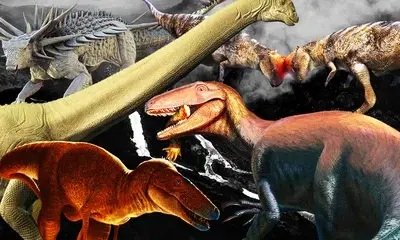
New research led by a team from University College London (UCL) has unveiled that baby dinosaurs, particularly very young sauropods, played a crucial role in sustaining predators during the Late Jurassic period. This finding significantly alters our understanding of the food web dynamics in that era.
The study indicates that these young sauropods, known for their long necks and tails, were not just minor participants in the ecosystem but rather constituted a primary food source for various predators. As adults, these plant-eaters grew to be the largest terrestrial animals in history, but their juveniles were particularly vulnerable and became prime targets for carnivorous dinosaurs.
Researchers constructed a detailed food web to illustrate the interactions between different species during the Late Jurassic, approximately 150 million years ago. The analysis highlighted how the absence of these young sauropods would have led to a significant disruption in the predator-prey balance.
Insights from the Research
The research team, which included experts in paleobiology and ecology, utilized fossil evidence and modern ecological principles to analyze the dietary habits of Late Jurassic predators. They found that various carnivorous species, including theropods, relied heavily on the availability of juvenile dinosaurs. The study emphasizes that without the presence of these young sauropods, many predators would have faced substantial challenges in finding sufficient food.
According to the lead researcher, Dr. Emily Jones from UCL, “This research provides new insights into the complexities of Jurassic ecosystems. Understanding the role of juvenile dinosaurs in predator diets helps us appreciate the intricate relationships that existed millions of years ago.”
The study also highlights the adaptability and survival strategies of both predators and prey. While adult sauropods were formidable due to their size, their young were often left unprotected, making them easy targets for hungry carnivores. This dynamic illustrates the harsh realities of survival in prehistoric times.
Implications for Paleontology
The findings have significant implications for paleontological research and the reconstruction of ancient ecosystems. They challenge previous assumptions that young dinosaurs were less critical to the food web. Instead, this study indicates that they were essential in maintaining the ecological balance of their environments.
Researchers hope that this new perspective will inspire further studies into the dietary habits of other prehistoric species. By understanding these relationships, scientists can glean more about the evolutionary pressures that shaped the behaviors and adaptations of dinosaurs over millions of years.
As paleontology continues to evolve, studies like this one serve as vital contributions to our understanding of life on Earth during the Late Jurassic period. The work of the UCL team underscores the importance of examining the past to inform our comprehension of ecological systems today.





Revolutionary Photonic Ski-Jump Could Miniaturize LiDAR Systems

Couples Detox from Plastics in New Netflix Doc: Can It Boost Fertility?

Aventon Launches Affordable Full-Suspension Electric Mountain Bike

Discover Eight Must-Try Restaurants This Spring Season

UC Irvine Team Unveils Innovative Ion Pump for Water Treatment

One-Third of Americans Trim Daily Expenses for Healthcare Needs

Apple Secures First Oscar in Three Years with F1: The Movie

Fourth Graders Celebrate St. Patrick’s Day with Creative Weather Drawings

Kim Kardashian Dazzles at Vanity Fair Oscars Party 2026

Nostradamus’ 2026 Predictions: Star Death and Dark Events Loom

Breakthroughs and Challenges Await Science in 2026

Electric Moto Influencer Surronster Arrested in Tijuana

OpenAI to Implement Age Verification for ChatGPT by December 2025

Discover the Top 10 Calorie Counting Apps of 2025

Recovering a Suspended TikTok Account: A Step-by-Step Guide

Bella Hadid Shares Health Update After Treatment for Lyme Disease

Backpack Drives Equip Students with Supplies for New School Year

Analysts Project Stronger Growth for Apple’s iPhone 17 Lineup
-
 Science8 months ago
Nostradamus’ 2026 Predictions: Star Death and Dark Events Loom
-
 Science8 months ago
Breakthroughs and Challenges Await Science in 2026
-
 Technology11 months ago
Electric Moto Influencer Surronster Arrested in Tijuana
-
 Technology9 months ago
OpenAI to Implement Age Verification for ChatGPT by December 2025
-
 Technology1 year ago
Discover the Top 10 Calorie Counting Apps of 2025
-
 Technology1 year ago
Recovering a Suspended TikTok Account: A Step-by-Step Guide
-
 Health11 months ago
Bella Hadid Shares Health Update After Treatment for Lyme Disease
-
 Education1 year ago
Backpack Drives Equip Students with Supplies for New School Year
-
 Health12 months ago
Analysts Project Stronger Growth for Apple’s iPhone 17 Lineup
-

 Health12 months ago
Japanese Study Finds Rose Oil Can Increase Brain Gray Matter
-

 Technology8 months ago
Top 10 Penny Stocks to Watch in 2026 for Strong Returns
-

 Science10 months ago
Starship V3 Set for 2026 Launch After Successful Final Test of Version 2