
Science
Scientists Discover Heat-Resistant “Fire Amoeba” in California

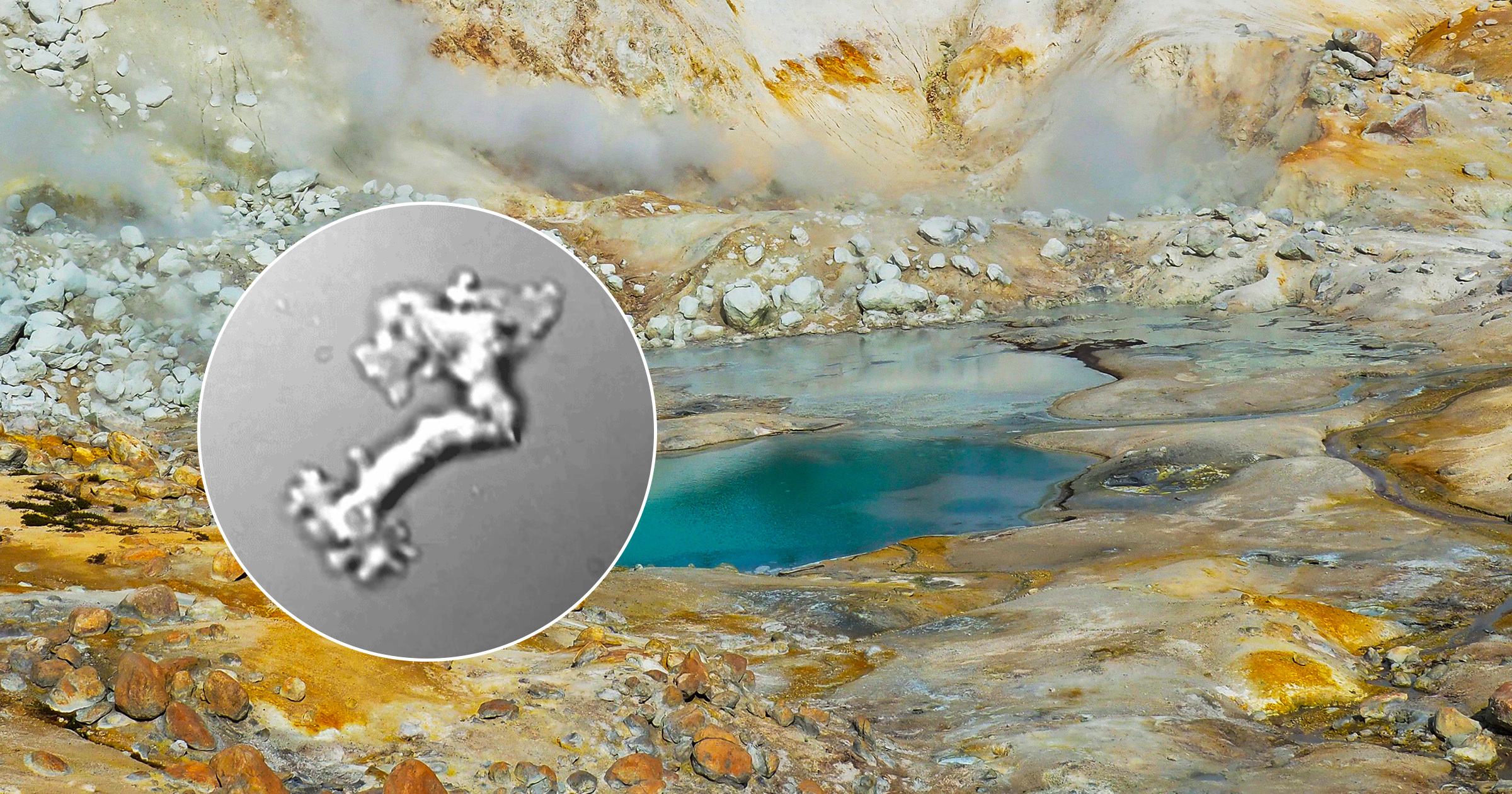
Researchers have identified a remarkable organism capable of thriving in extreme heat: a newly discovered single-celled organism, named Incendiamoeba cascadensis, or “fire amoeba.” This organism was found in the boiling waters of Lassen Volcanic National Park in California, where temperatures can soar to a searing 464 degrees Fahrenheit. The discovery, reported in the journal Nature, challenges previous understandings of the limits of life on Earth.
The fire amoeba has demonstrated an astonishing ability to divide at temperatures reaching 145.4 degrees Fahrenheit, setting a new record for eukaryotic organisms. Prior to this finding, the maximum temperature limit for complex life forms, such as fungi and red algae, was believed to be between 131 and 140 degrees Fahrenheit. Angela Oliverio, a microbiologist at Syracuse University and co-author of the study, emphasized the significance of this discovery, stating, “We need to rethink what’s possible for a eukaryotic cell in a significant way.”
New Insights into Life’s Extremes
The fire amoeba was located in a seemingly unremarkable stream of hot spring water that is pH neutral, contrasting sharply with the highly acidic pools common in the park. Researchers initially found no signs of life in the water samples until they introduced nutrients and gradually increased the temperature. At 134.6 degrees Fahrenheit, the amoeba began to exhibit movement and replication, defying expectations.
As the temperature increased to 145.4 degrees Fahrenheit, the amoeba continued to thrive and divide. However, when temperatures reached 158 degrees Fahrenheit, the organism entered a dormant state known as encystment, forming a protective shell to withstand harsh conditions. When temperatures cool, the amoeba can return to its active state, allowing it to grow and reproduce.
The study also involved genomic analysis, revealing a wealth of genes related to proteostasis, genome stability, and environmental sensing. This genetic information sheds light on the mechanisms that enable the fire amoeba to survive in such extreme conditions.
Implications for Future Research
The discovery of Incendiamoeba cascadensis opens up new avenues for research into high-temperature eukaryotes. Historically, scientists have focused primarily on prokaryotes, including bacteria and archaea, when studying extremophiles. The fire amoeba’s unique properties may lead to insights into how eukaryotic cells can maintain integrity and functionality at elevated temperatures.
Moreover, the proteins derived from the fire amoeba could have significant applications in biotechnology, particularly in developing thermostable proteins. This potential has exciting implications for various industries that rely on biological processes.
Additionally, the findings raise compelling questions about the possibility of life beyond Earth. Scientists speculate that similar microorganisms could exist in extreme environments on other planets, such as the ancient riverbeds and ice caps of Mars. The resilience of life, as noted by actor Jeff Goldblum in the film Jurassic Park, suggests that “life finds a way.”
Overall, the discovery of the fire amoeba not only expands our understanding of life’s limits but also underscores the potential for finding new life forms in extreme environments. Researchers, including co-author Beryl Rappaport, remain optimistic about the possibilities. “We looked in one stream. Maybe we got extremely lucky, but we really don’t think that’s the case,” Rappaport stated, indicating that further exploration may yield even more extraordinary findings.











Revolutionary Photonic Ski-Jump Could Miniaturize LiDAR Systems

Couples Detox from Plastics in New Netflix Doc: Can It Boost Fertility?

Aventon Launches Affordable Full-Suspension Electric Mountain Bike

Discover Eight Must-Try Restaurants This Spring Season

UC Irvine Team Unveils Innovative Ion Pump for Water Treatment

One-Third of Americans Trim Daily Expenses for Healthcare Needs

Apple Secures First Oscar in Three Years with F1: The Movie

Fourth Graders Celebrate St. Patrick’s Day with Creative Weather Drawings

Kim Kardashian Dazzles at Vanity Fair Oscars Party 2026

Nostradamus’ 2026 Predictions: Star Death and Dark Events Loom

Breakthroughs and Challenges Await Science in 2026

Electric Moto Influencer Surronster Arrested in Tijuana

OpenAI to Implement Age Verification for ChatGPT by December 2025

Discover the Top 10 Calorie Counting Apps of 2025

Recovering a Suspended TikTok Account: A Step-by-Step Guide

Bella Hadid Shares Health Update After Treatment for Lyme Disease

Backpack Drives Equip Students with Supplies for New School Year

Analysts Project Stronger Growth for Apple’s iPhone 17 Lineup
-
 Science8 months ago
Nostradamus’ 2026 Predictions: Star Death and Dark Events Loom
-
 Science8 months ago
Breakthroughs and Challenges Await Science in 2026
-
 Technology11 months ago
Electric Moto Influencer Surronster Arrested in Tijuana
-
 Technology9 months ago
OpenAI to Implement Age Verification for ChatGPT by December 2025
-
 Technology1 year ago
Discover the Top 10 Calorie Counting Apps of 2025
-
 Technology1 year ago
Recovering a Suspended TikTok Account: A Step-by-Step Guide
-
 Health11 months ago
Bella Hadid Shares Health Update After Treatment for Lyme Disease
-
 Education1 year ago
Backpack Drives Equip Students with Supplies for New School Year
-
 Health11 months ago
Analysts Project Stronger Growth for Apple’s iPhone 17 Lineup
-

 Health12 months ago
Japanese Study Finds Rose Oil Can Increase Brain Gray Matter
-

 Technology8 months ago
Top 10 Penny Stocks to Watch in 2026 for Strong Returns
-

 Science10 months ago
Starship V3 Set for 2026 Launch After Successful Final Test of Version 2