
Science
Robots Achieve Milestone, Learning 1,000 Tasks in Just One Day

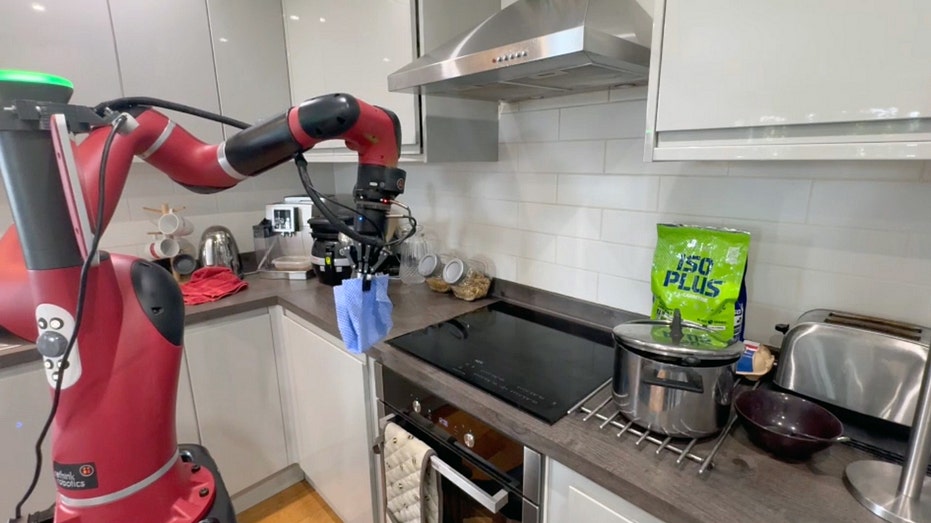
Researchers have reached a significant milestone in robotics by teaching a robot to learn 1,000 different physical tasks in just one day, using only a single demonstration for each task. This breakthrough, reported in the journal Science Robotics, marks a notable advancement in the efficiency of robotic learning, addressing a long-standing limitation in the field.
Transforming Robot Learning
The research team, comprised of experts in robotics and artificial intelligence, developed a method that allows robots to learn faster and with less data. Traditionally, teaching robots has been a slow and tedious process, often requiring hundreds or even thousands of demonstrations for even simple tasks. This inefficiency has limited the flexibility and adaptability of robots in real-world environments.
By employing a technique known as Multi-Task Trajectory Transfer, the researchers enabled the robot to break down tasks into manageable phases. For instance, one phase involves aligning with an object, while another focuses on the interaction itself. Utilizing a form of artificial intelligence called imitation learning, the robot can learn from human demonstrations and apply knowledge from previously learned tasks to new ones. This retrieval-based approach allows the robot to generalize its learning rather than starting from scratch for each task.
Real-World Testing and Implications
What sets this research apart from previous studies is its emphasis on real-world applications. The robot was tested in actual environments with real objects, facing genuine challenges and constraints. This practical approach not only demonstrates the robot’s ability to learn efficiently but also highlights its capacity to handle new object instances it had not encountered before.
This advancement in robot learning processes suggests that a future filled with adaptable, intelligent machines may be closer than previously thought. As robots become more efficient learners, they can potentially operate outside of controlled environments, making them suitable for a variety of applications, including healthcare, logistics, and home assistance.
In the long term, this shift could lead to robots that can learn new tasks from simple demonstrations, reducing the need for extensive programming and specialized code. Such progress signals a transformative moment in artificial intelligence, moving away from mere mechanical repetition toward systems that mimic human learning patterns.
While the development does not imply that humanoid robots will soon be commonplace, it represents genuine progress in addressing the challenges that have historically limited robotics. As machines begin to learn more like humans, the conversation around their capabilities is evolving. The focus is shifting from mere repetition of tasks to the ability to adapt and learn in real-time.
As this technology continues to develop, it prompts questions about the roles and responsibilities of robots in everyday life. What tasks would individuals trust a robot to handle? The answers to these questions will shape the future of robotics and its integration into society.
The implications of this research are profound, suggesting a future where robots can seamlessly integrate into daily routines, enhancing efficiency and convenience. As we stand on the brink of this new era, the potential for robots to learn and adapt like humans opens up exciting possibilities for the future.






Enhance Your Sleep: Experts Share Lighting Tips for Better Circadian Rhythm

NASA’s Artemis II Rehearsal Faces Record Cold on Florida Coast

Special Education Students Thrive at Wilmington’s Brew and Bake Cafe

Helena High School Retires Richard Fitts’ Jersey Number in Tribute

Dean Kamen Placed on Leave by FIRST Amid Epstein Revelations

J.E. Stokes Medical Centre Welcomes New Physician to North Shore

Asana Emphasizes Shared Memory for Effective AI Integration

Aurora Schools Contract Criticized for Lack of Academic Standards

Join the Fight Against Cancer at 24th Annual Candler Clays

Nostradamus’ 2026 Predictions: Star Death and Dark Events Loom

OpenAI to Implement Age Verification for ChatGPT by December 2025

Discover the Top 10 Calorie Counting Apps of 2025

Bella Hadid Shares Health Update After Treatment for Lyme Disease

Analysts Project Stronger Growth for Apple’s iPhone 17 Lineup

Electric Moto Influencer Surronster Arrested in Tijuana

Harvard Secures Court Victory Over Federal Funding Cuts

Erin Bates Shares Recovery Update Following Sepsis Complications

Discover How to Reverse Image Search Using ChatGPT Effortlessly
-
 Science1 month ago
Nostradamus’ 2026 Predictions: Star Death and Dark Events Loom
-
 Technology2 months ago
OpenAI to Implement Age Verification for ChatGPT by December 2025
-
 Technology7 months ago
Discover the Top 10 Calorie Counting Apps of 2025
-
 Health5 months ago
Bella Hadid Shares Health Update After Treatment for Lyme Disease
-
 Health5 months ago
Analysts Project Stronger Growth for Apple’s iPhone 17 Lineup
-
 Technology5 months ago
Electric Moto Influencer Surronster Arrested in Tijuana
-
 Education5 months ago
Harvard Secures Court Victory Over Federal Funding Cuts
-
 Health5 months ago
Erin Bates Shares Recovery Update Following Sepsis Complications
-
 Technology6 months ago
Discover How to Reverse Image Search Using ChatGPT Effortlessly
-

 Technology7 months ago
Meta Initiates $60B AI Data Center Expansion, Starting in Ohio
-

 Science4 months ago
Starship V3 Set for 2026 Launch After Successful Final Test of Version 2
-

 Technology7 months ago
Recovering a Suspended TikTok Account: A Step-by-Step Guide