
Science
Researchers Map Sun’s Hidden Magnetic Interior Using 30 Years of Data

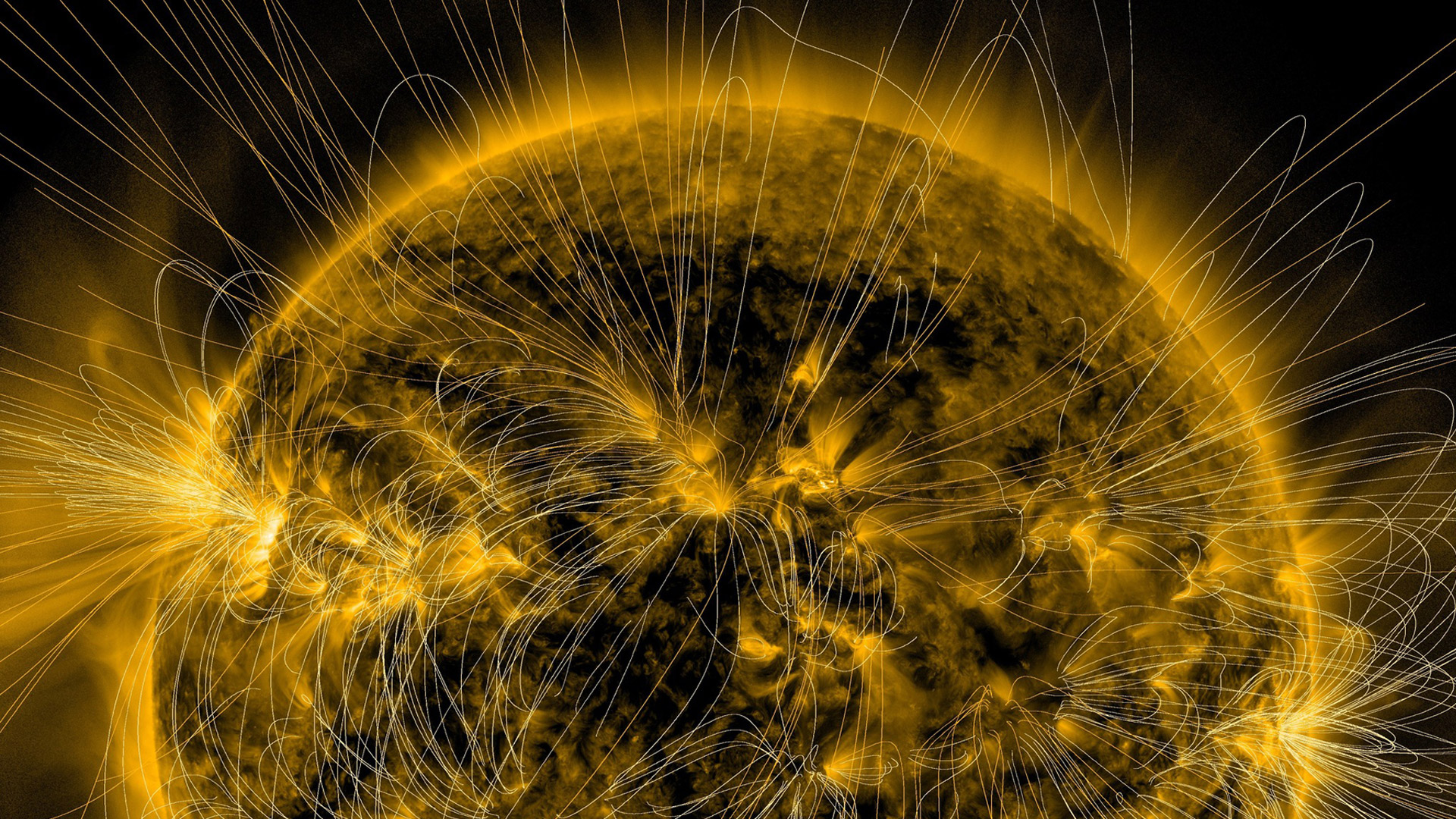
For the first time, scientists have reconstructed a three-dimensional map of the sun’s internal magnetic field using nearly three decades of satellite data. This breakthrough allows researchers to track the evolution of solar magnetism beneath the sun’s surface, providing new insights into the processes that drive solar activity.
Understanding the sun’s magnetic behavior has long puzzled scientists. Dark spots emerge and vanish while massive bursts of energy disrupt satellites and power systems on Earth. While the fundamental role of magnetism has been known, the intricate dynamics occurring deep within the sun remained largely speculative due to the limitations of observational techniques.
The recent study, published in The Astrophysical Journal Letters, employs a novel approach that integrates actual observations with advanced modeling. Researchers collected daily magnetic field maps from solar satellites spanning from 1996 to 2025. These maps recorded the location and evolution of magnetic fields on the sun’s surface.
Instead of relying on theoretical models, the researchers developed a detailed three-dimensional simulation of the sun’s internal magnetic mechanisms. They used the gathered surface data to adjust the model continuously, ensuring physical consistency. This innovative technique enabled scientists to infer the magnetic structures and flows hidden beneath the sun’s surface that could produce the observed patterns.
To validate their model, the researchers tested its ability to reconstruct past solar cycles, which last approximately 11 years and signify variations in solar activity. The model successfully replicated multiple solar cycles recorded during the satellite era, accurately reflecting the migration of sunspots from higher latitudes to the solar equator, which is a key indicator of solar cycle progression.
“Our data-driven model successfully reproduces key observational features, such as the surface butterfly diagram, accurate polar field evolution, and axial dipole moment,” the study authors noted.
A significant aspect of the research is its predictive capability. After ceasing the input of new data at specific intervals, the model was able to forecast major solar activity features up to three to four years in advance. The researchers highlighted the strong correlation between the simulated toroidal field and sunspot numbers, establishing their model as a robust predictive framework for solar cycles.
This advancement shifts the paradigm of solar research. Instead of viewing the sun’s interior as an enigma, scientists can now indirectly and continuously monitor its magnetic dynamics. Improved forecasting of solar activity holds the potential to protect satellites, mitigate risks to navigation systems, and provide power grid operators with timely warnings of geomagnetic disturbances.
Despite its potential, the model relies heavily on consistent, long-term satellite missions to maintain its effectiveness. Future research aims to enhance this technique further, with aspirations to predict not only when solar activity will peak but also where active regions on the sun’s surface are likely to emerge.
This innovative study marks a significant step forward in solar physics, enabling a deeper understanding of the sun’s complex behavior and its impact on Earth.







Revolutionary Photonic Ski-Jump Could Miniaturize LiDAR Systems

Couples Detox from Plastics in New Netflix Doc: Can It Boost Fertility?

Aventon Launches Affordable Full-Suspension Electric Mountain Bike

Discover Eight Must-Try Restaurants This Spring Season

UC Irvine Team Unveils Innovative Ion Pump for Water Treatment

One-Third of Americans Trim Daily Expenses for Healthcare Needs

Apple Secures First Oscar in Three Years with F1: The Movie

Fourth Graders Celebrate St. Patrick’s Day with Creative Weather Drawings

Kim Kardashian Dazzles at Vanity Fair Oscars Party 2026

Nostradamus’ 2026 Predictions: Star Death and Dark Events Loom

Breakthroughs and Challenges Await Science in 2026

Electric Moto Influencer Surronster Arrested in Tijuana

OpenAI to Implement Age Verification for ChatGPT by December 2025

Discover the Top 10 Calorie Counting Apps of 2025

Recovering a Suspended TikTok Account: A Step-by-Step Guide

Bella Hadid Shares Health Update After Treatment for Lyme Disease

Backpack Drives Equip Students with Supplies for New School Year

Analysts Project Stronger Growth for Apple’s iPhone 17 Lineup
-
 Science8 months ago
Nostradamus’ 2026 Predictions: Star Death and Dark Events Loom
-
 Science8 months ago
Breakthroughs and Challenges Await Science in 2026
-
 Technology11 months ago
Electric Moto Influencer Surronster Arrested in Tijuana
-
 Technology9 months ago
OpenAI to Implement Age Verification for ChatGPT by December 2025
-
 Technology1 year ago
Discover the Top 10 Calorie Counting Apps of 2025
-
 Technology1 year ago
Recovering a Suspended TikTok Account: A Step-by-Step Guide
-
 Health11 months ago
Bella Hadid Shares Health Update After Treatment for Lyme Disease
-
 Education1 year ago
Backpack Drives Equip Students with Supplies for New School Year
-
 Health12 months ago
Analysts Project Stronger Growth for Apple’s iPhone 17 Lineup
-

 Health12 months ago
Japanese Study Finds Rose Oil Can Increase Brain Gray Matter
-

 Technology8 months ago
Top 10 Penny Stocks to Watch in 2026 for Strong Returns
-

 Science10 months ago
Starship V3 Set for 2026 Launch After Successful Final Test of Version 2