
Science
Researchers Unveil Stronger Plastic with Unique Properties

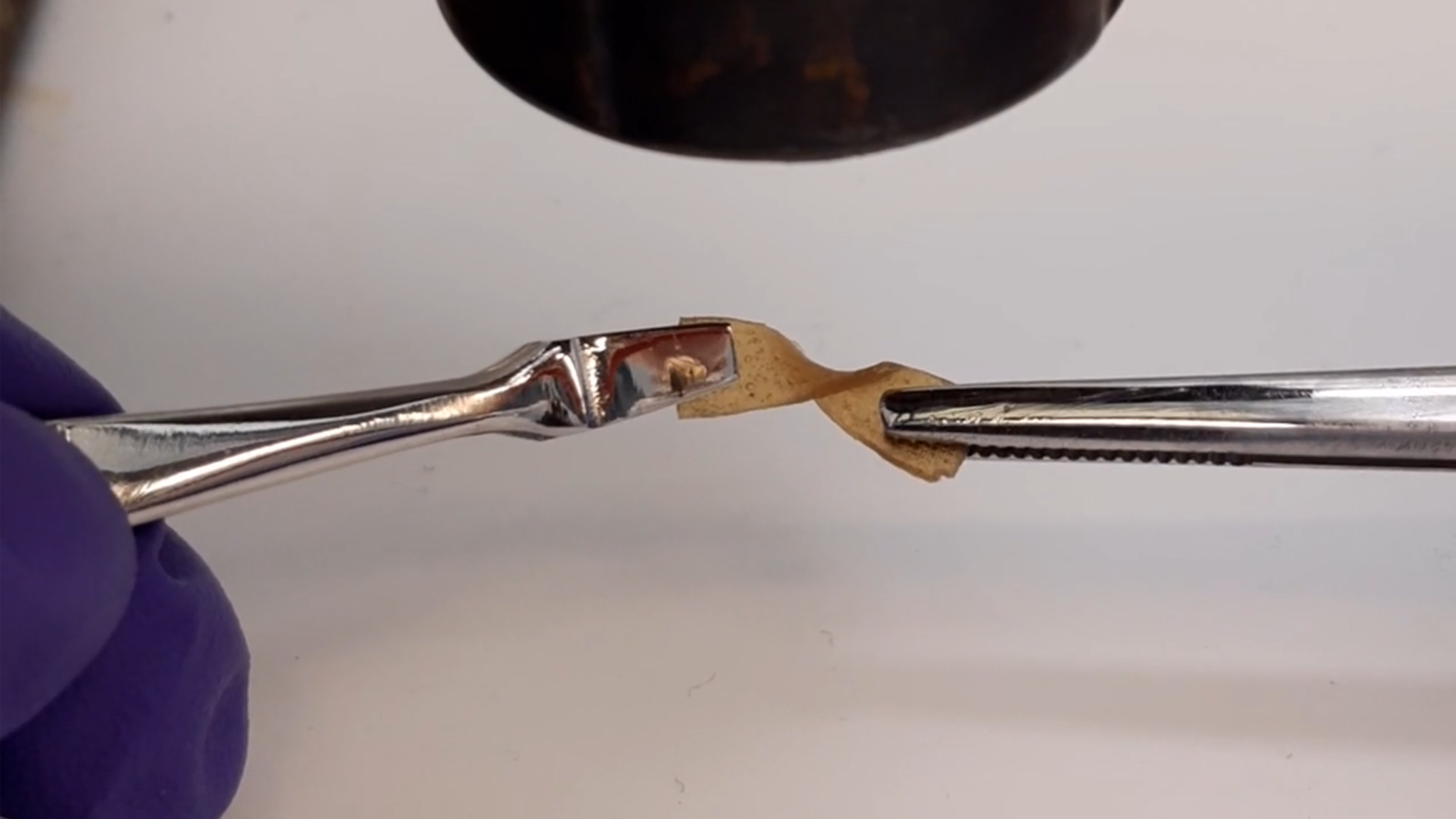
Researchers at Wageningen University have made a significant advancement in material science with the discovery of a new class of polymers known as compleximers. These polymers are the first organic materials recognized for forming strong ionic glasses, challenging conventional understandings of polymer behavior.
When polymers undergo changes from a glassy state—a hard, non-ordered solid—to a liquid, they experience various relaxation processes. Among these, alpha relaxations play a crucial role, primarily influencing the melting process. Traditionally, the glass transition temperature is defined as a specific point; however, this can be misleading, as polymers transition across a range of temperatures. The findings regarding compleximers, detailed in an open-access research article, indicate that their glass transition range exceeds 60 °C, which is notably longer than many conventional polymers.
The unique properties of compleximers arise from their backbone structures, which are based on acrylate and methacrylate compounds modified with ionic and hydrophobic groups. This design prevents water from infiltrating the material and altering its properties. The resulting glass is not only solvent-resistant but also retains strength at room temperature. Researchers demonstrated that the material can be softened using a hot air gun, reshaped, and then cooled to form a hard, non-malleable solid.
Despite their promising characteristics, the exact applications for these strong ionic glasses remain unclear. The researchers express hope that compleximers could lead to the production of more easily repairable objects. Furthermore, the intriguing glass transition process raises questions about the potential reversibility of material aging, opening avenues for further exploration.
This discovery could have significant implications for various industries, including packaging, construction, and consumer goods, where durable and adaptable materials are crucial. As the field of polymer science continues to evolve, the impact of compleximers may pave the way for innovative products that combine strength and flexibility in unprecedented ways.

Revolutionary Photonic Ski-Jump Could Miniaturize LiDAR Systems

Couples Detox from Plastics in New Netflix Doc: Can It Boost Fertility?

Aventon Launches Affordable Full-Suspension Electric Mountain Bike

Discover Eight Must-Try Restaurants This Spring Season

UC Irvine Team Unveils Innovative Ion Pump for Water Treatment

One-Third of Americans Trim Daily Expenses for Healthcare Needs

Apple Secures First Oscar in Three Years with F1: The Movie

Fourth Graders Celebrate St. Patrick’s Day with Creative Weather Drawings

Kim Kardashian Dazzles at Vanity Fair Oscars Party 2026

Nostradamus’ 2026 Predictions: Star Death and Dark Events Loom

Breakthroughs and Challenges Await Science in 2026

Electric Moto Influencer Surronster Arrested in Tijuana

OpenAI to Implement Age Verification for ChatGPT by December 2025

Discover the Top 10 Calorie Counting Apps of 2025

Recovering a Suspended TikTok Account: A Step-by-Step Guide

Bella Hadid Shares Health Update After Treatment for Lyme Disease

Backpack Drives Equip Students with Supplies for New School Year

Analysts Project Stronger Growth for Apple’s iPhone 17 Lineup
-
 Science7 months ago
Nostradamus’ 2026 Predictions: Star Death and Dark Events Loom
-
 Science7 months ago
Breakthroughs and Challenges Await Science in 2026
-
 Technology11 months ago
Electric Moto Influencer Surronster Arrested in Tijuana
-
 Technology8 months ago
OpenAI to Implement Age Verification for ChatGPT by December 2025
-
 Technology1 year ago
Discover the Top 10 Calorie Counting Apps of 2025
-
 Technology1 year ago
Recovering a Suspended TikTok Account: A Step-by-Step Guide
-
 Health11 months ago
Bella Hadid Shares Health Update After Treatment for Lyme Disease
-
 Education1 year ago
Backpack Drives Equip Students with Supplies for New School Year
-
 Health11 months ago
Analysts Project Stronger Growth for Apple’s iPhone 17 Lineup
-

 Technology8 months ago
Top 10 Penny Stocks to Watch in 2026 for Strong Returns
-

 Health11 months ago
Japanese Study Finds Rose Oil Can Increase Brain Gray Matter
-

 Science10 months ago
Starship V3 Set for 2026 Launch After Successful Final Test of Version 2