
Science
Researchers Uncover RNA Secrets in Virus Genome Packaging

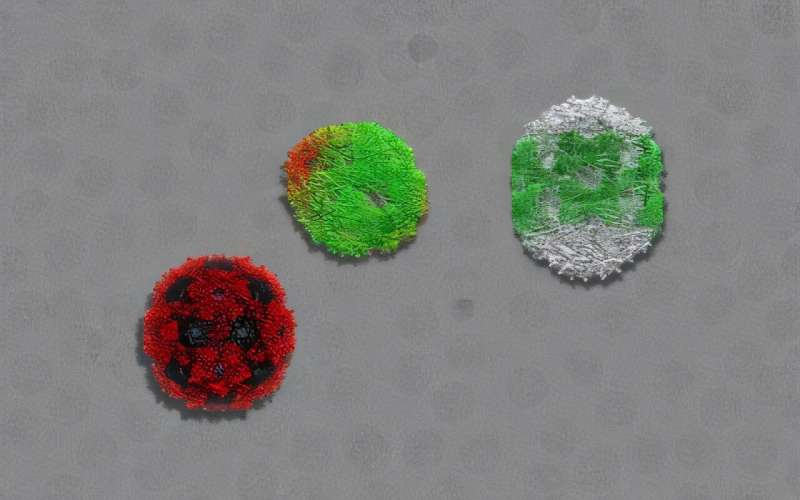
Researchers at San Diego State University and Michigan State University have made significant strides in understanding how viruses package their genetic material. This breakthrough, published in the Proceedings of the National Academy of Sciences on August 15, 2025, could pave the way for advancements in antiviral treatments and gene therapies.
The study reveals that viruses utilize a combination of molecular properties to selectively gather their own RNA into protective protein shells known as capsids. These capsids serve not only as a defense mechanism for the viral genetic material but also play a crucial role in the virus’s ability to infiltrate host cells. Remarkably, certain viruses achieve this packaging with over 99% accuracy.
Kristin Parent, director of MSU’s Cryo-EM Facility and co-author of the study, emphasized the health implications of this research. “Synthetic capsids can be used to create antivirals that target RNA packaging, which can impact humans, plant and animal agriculture, as well as veterinary medicine,” she stated.
Exploring Viral Mechanisms
The collaboration between MSU and the Garmann lab at San Diego State University provided insights into the intricate molecular processes behind viral replication and infection. According to Rees Garmann, an assistant professor at SDSU and senior author of the paper, “Some RNA viruses are built from fewer than 200 molecules, yet they are able to accomplish remarkable feats, like replicating in astronomical numbers and building precise nanoscale structures.”
To highlight the prevalence of viruses, Parent noted that if someone were to take two handfuls of water from Lake Michigan, they would be holding more viruses than there are humans on Earth. The research focused on a specific phage called MS2, which targets E. coli bacteria. This phage injects its genetic material into the bacterium, hijacking the host’s cellular machinery to produce viral copies. Viral coat proteins then encase the RNA, forming a capsid that safeguards the genetic material.
The study sought to determine how the MS2 phage efficiently identifies and packages its genome, especially given the presence of the host’s competing genetic material. Parent remarked that “around 99% of the particles we’re seeing at the end are perfectly formed viral copies, so it’s a high-fidelity process.”
RNA’s Unique Role
Unlike DNA, which is structured as a double helix, RNA is typically single-stranded and can form complex shapes like loops and hairpins. Earlier research suggested that a specific structure known as the TR stem-loop served as a packaging signal for MS2. To explore other factors influencing packaging, the researchers systematically altered the MS2 genome, creating RNA constructs with varying shapes, lengths, and sequences.
By analyzing the capsid packaging outcomes from these modifications, the team uncovered unique results, including viral particles that were too small or possessed inefficient shapes. Their findings indicate that MS2 coat proteins are highly capable of selectively packaging viral RNA, and that a diverse set of RNA properties—beyond just the TR stem-loop—plays a significant role in this process.
Through this research, the team is reshaping our understanding of viral RNA packaging mechanisms. The potential applications of synthetic capsids extend to gene editing, vaccines, and the next generation of RNA-based therapeutics, promising exciting developments in the field of molecular biology.
Further information on this study can be found in the publication by Amineh Rastandeh et al., titled “Measuring the selective packaging of RNA molecules by viral coat proteins in cells,” in the Proceedings of the National Academy of Sciences, DOI: 10.1073/pnas.2505190122.






Revolutionary Photonic Ski-Jump Could Miniaturize LiDAR Systems

Couples Detox from Plastics in New Netflix Doc: Can It Boost Fertility?

Aventon Launches Affordable Full-Suspension Electric Mountain Bike

Discover Eight Must-Try Restaurants This Spring Season

UC Irvine Team Unveils Innovative Ion Pump for Water Treatment

One-Third of Americans Trim Daily Expenses for Healthcare Needs

Apple Secures First Oscar in Three Years with F1: The Movie

Fourth Graders Celebrate St. Patrick’s Day with Creative Weather Drawings

Kim Kardashian Dazzles at Vanity Fair Oscars Party 2026

Nostradamus’ 2026 Predictions: Star Death and Dark Events Loom

Breakthroughs and Challenges Await Science in 2026

Electric Moto Influencer Surronster Arrested in Tijuana

OpenAI to Implement Age Verification for ChatGPT by December 2025

Discover the Top 10 Calorie Counting Apps of 2025

Recovering a Suspended TikTok Account: A Step-by-Step Guide

Bella Hadid Shares Health Update After Treatment for Lyme Disease

Backpack Drives Equip Students with Supplies for New School Year

Analysts Project Stronger Growth for Apple’s iPhone 17 Lineup
-
 Science8 months ago
Nostradamus’ 2026 Predictions: Star Death and Dark Events Loom
-
 Science8 months ago
Breakthroughs and Challenges Await Science in 2026
-
 Technology11 months ago
Electric Moto Influencer Surronster Arrested in Tijuana
-
 Technology9 months ago
OpenAI to Implement Age Verification for ChatGPT by December 2025
-
 Technology1 year ago
Discover the Top 10 Calorie Counting Apps of 2025
-
 Technology1 year ago
Recovering a Suspended TikTok Account: A Step-by-Step Guide
-
 Health11 months ago
Bella Hadid Shares Health Update After Treatment for Lyme Disease
-
 Education1 year ago
Backpack Drives Equip Students with Supplies for New School Year
-
 Health11 months ago
Analysts Project Stronger Growth for Apple’s iPhone 17 Lineup
-

 Health12 months ago
Japanese Study Finds Rose Oil Can Increase Brain Gray Matter
-

 Technology8 months ago
Top 10 Penny Stocks to Watch in 2026 for Strong Returns
-

 Science10 months ago
Starship V3 Set for 2026 Launch After Successful Final Test of Version 2