
Science
Researchers Enhance Pile Foundation Predictions Using Deep Learning

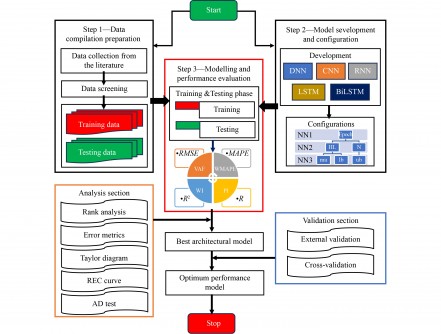
Researchers from the Department of Civil Engineering at SRM Institute of Science and Technology, along with collaborators from National Institute of Technology Patna, Thammasat University, and Rajasthan Technical University, have developed a novel approach to predict the bearing capacity of pile foundations using advanced deep learning techniques. Their study, titled “Prediction of Bearing Capacity of Pile Foundation Using Deep Learning Approaches“, was recently published in the journal Frontiers in Structural and Civil Engineering.
Accurate prediction of pile foundation bearing capacity is essential in construction engineering for ensuring structural integrity and safety. Traditional testing methods, such as high-strain dynamic load tests (HSDT) and static load tests, can be costly and time-consuming. The research team aimed to address the limitations of existing empirical models and machine learning approaches, which often struggle with complex pile-soil interactions and issues such as limited databases and multicollinearity.
Innovative Deep Learning Models
The study compares the performance of five deep learning algorithms: Deep Neural Networks (DNN), Convolutional Neural Networks (CNN), Recurrent Neural Networks (RNN), Long Short-Term Memory (LSTM), and Bidirectional LSTM (BiLSTM). Utilizing a dataset comprising 257 dynamic pile load tests, this research marks the first time the impact of multicollinearity on model performance has been analyzed in this context.
A comprehensive analysis assessed various statistical performance parameters, including the coefficient of determination and root mean squared error. The researchers also incorporated external validation and visual interpretations through regression error characteristics curves and Taylor diagrams to substantiate their findings.
The results revealed that the DNN model achieved the highest prediction accuracy, evidenced by a coefficient of determination of 0.97 and a root mean squared error of 0.0413 during the training phase. In the testing phase, it maintained a coefficient of determination of 0.9 and a root mean squared error of 0.08. The BiLSTM model followed closely, outperforming the LSTM model due to its capability to process input sequences in both forward and backward directions, thereby enhancing the information accessible to the network.
Significant Findings and Implications
Among the variables analyzed, the ram weight exhibited a notable level of multicollinearity, which significantly influenced the prediction accuracy of pile bearing capacity. The RNN model demonstrated the lowest performance of the five models, highlighting the considerable impact of multicollinearity on its effectiveness.
This research offers a reliable and efficient tool for predicting the bearing capacity of pile foundations, with significant implications for engineering practices. The findings from this study not only advance the understanding of pile foundation behavior but also provide practical solutions for enhancing construction safety and efficiency.
The authors of the paper include Manish Kumar, Divesh Ranjan Kumar, Jitendra Khatti, Pijush Samui, and Kamaldeep Singh Grover. For further details, the corresponding author, Jitendra Khatti, can be contacted via email at [email protected]. The complete study can be accessed with the DOI: 10.1007/s11709-024-1085-z.

Revolutionary Photonic Ski-Jump Could Miniaturize LiDAR Systems

Couples Detox from Plastics in New Netflix Doc: Can It Boost Fertility?

Aventon Launches Affordable Full-Suspension Electric Mountain Bike

Discover Eight Must-Try Restaurants This Spring Season

UC Irvine Team Unveils Innovative Ion Pump for Water Treatment

One-Third of Americans Trim Daily Expenses for Healthcare Needs

Apple Secures First Oscar in Three Years with F1: The Movie

Fourth Graders Celebrate St. Patrick’s Day with Creative Weather Drawings

Kim Kardashian Dazzles at Vanity Fair Oscars Party 2026

Nostradamus’ 2026 Predictions: Star Death and Dark Events Loom

Breakthroughs and Challenges Await Science in 2026

Electric Moto Influencer Surronster Arrested in Tijuana

OpenAI to Implement Age Verification for ChatGPT by December 2025

Discover the Top 10 Calorie Counting Apps of 2025

Recovering a Suspended TikTok Account: A Step-by-Step Guide

Bella Hadid Shares Health Update After Treatment for Lyme Disease

Backpack Drives Equip Students with Supplies for New School Year

Analysts Project Stronger Growth for Apple’s iPhone 17 Lineup
-
 Science8 months ago
Nostradamus’ 2026 Predictions: Star Death and Dark Events Loom
-
 Science8 months ago
Breakthroughs and Challenges Await Science in 2026
-
 Technology11 months ago
Electric Moto Influencer Surronster Arrested in Tijuana
-
 Technology9 months ago
OpenAI to Implement Age Verification for ChatGPT by December 2025
-
 Technology1 year ago
Discover the Top 10 Calorie Counting Apps of 2025
-
 Technology1 year ago
Recovering a Suspended TikTok Account: A Step-by-Step Guide
-
 Health11 months ago
Bella Hadid Shares Health Update After Treatment for Lyme Disease
-
 Education1 year ago
Backpack Drives Equip Students with Supplies for New School Year
-
 Health12 months ago
Analysts Project Stronger Growth for Apple’s iPhone 17 Lineup
-

 Health12 months ago
Japanese Study Finds Rose Oil Can Increase Brain Gray Matter
-

 Technology8 months ago
Top 10 Penny Stocks to Watch in 2026 for Strong Returns
-

 Science10 months ago
Starship V3 Set for 2026 Launch After Successful Final Test of Version 2