
Science
Researchers Develop Spray-On Armor to Combat Global Food Crisis

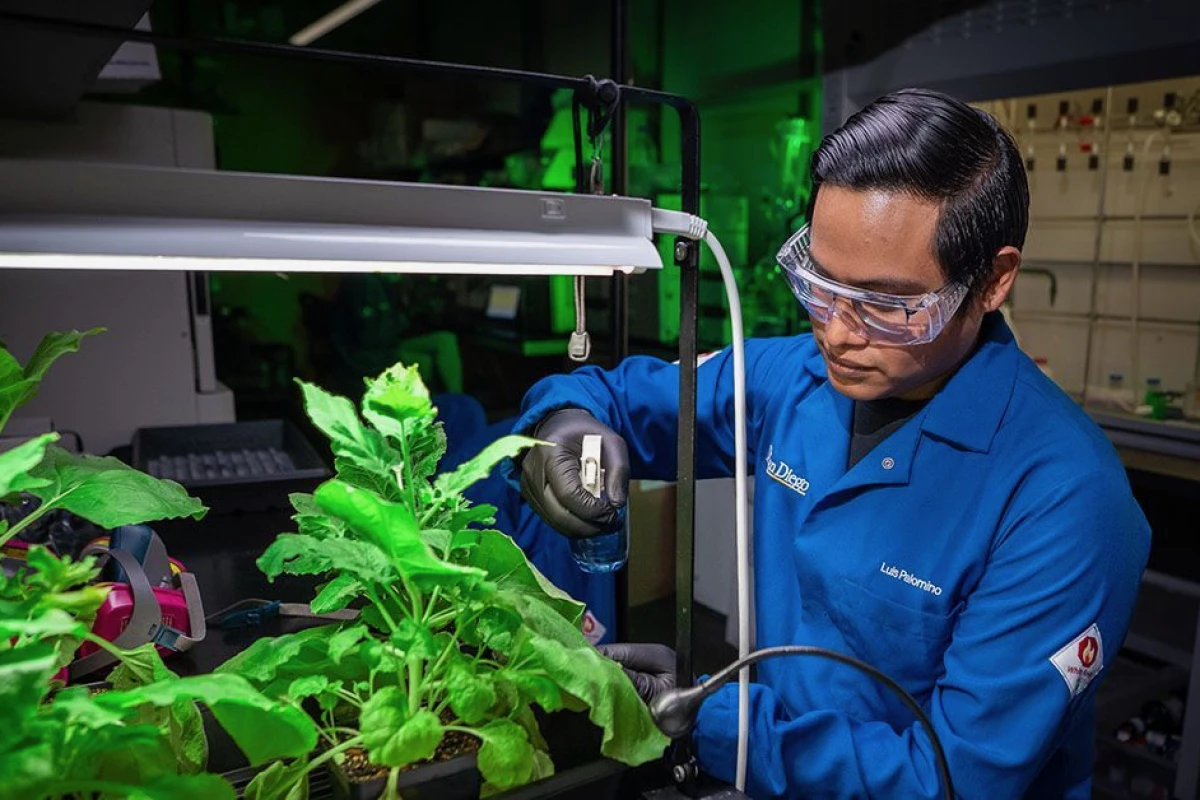
A team of researchers at the University of California San Diego has developed a promising solution to help combat the global food crisis. Their new innovation, detailed in their paper “Polynorbornene Spray Coating to Enhance Plant Health,” introduces a polymer that acts as a spray-on armor. This tool empowers plants to resist damaging bacteria and withstand drought conditions, which is especially critical as the United Nations highlights that 318 million people in 68 countries are facing acute hunger.
The global food crisis is exacerbated by factors such as climate change, economic inequality, and ongoing conflicts. Notably, simultaneous famines in Palestine and Sudan have been described by the UN as a significant humanitarian challenge this century. In the face of such dire circumstances, innovative approaches are essential to ensure food security and safeguard millions of lives.
Innovative Polymer Provides Plant Protection
The research team, led by Patrick Opdensteinen, along with co-first author Luis Palomino, has created a synthetic polymer that strengthens plant defenses against bacterial infections. This polymer, known as polynorbornene, is designed to be sprayed directly onto plants. It contains positively charged chemical groups and is formulated to work in water, making it biocompatible with plant life.
“Typically, polymers are synthesized using organic solvents that are toxic to plants,” Palomino explained. “What we did differently here is we made the polymer in buffer conditions in water. That allowed us to make a spray formulation that’s more biocompatible with plants.” This formulation can easily be dissolved to the right concentration and sprayed on crops, providing an effective protective layer.
One of the intriguing aspects of this spray-on armor is that it does not need to cover the entire plant to be effective. Opdensteinen noted, “We can spray just a small part of the leaf, and that translates to bacterial immunity for the whole plant. That was a really cool outcome.”
Benefits Beyond Bacterial Resistance
The benefits of this innovation extend beyond just combating bacterial threats. The research indicates that the spray-on polymer enhances plant resilience to drought conditions. In controlled experiments, untreated plants showed signs of severe dehydration after four days, while treated plants remained healthy. This suggests that the polymer may help reduce water loss, akin to a protective suit designed for survival in extreme conditions.
The researchers posit that the stress response triggered in the sprayed leaves could lead to a harmless increase in hydrogen peroxide, which may activate additional plant defenses. This multifaceted approach not only protects crops from bacterial diseases such as speck, canker, and blight but also improves their ability to thrive in challenging environmental conditions.
Looking ahead, Opdensteinen and his team aim to enhance the biodegradability of their polymer while assessing its potential toxicity. “Our hope is to use this in the field to benefit agriculture, and this is the first step. There’s a lot of potential for plant protection,” he stated.
As the world grapples with escalating food insecurity, innovations like this spray-on armor from the Jacobs School of Engineering at UC San Diego represent a significant advancement in agricultural technology. By leveraging scientific research to enhance plant health, there is potential to make a meaningful impact on global food security.




Revolutionary Photonic Ski-Jump Could Miniaturize LiDAR Systems

Couples Detox from Plastics in New Netflix Doc: Can It Boost Fertility?

Aventon Launches Affordable Full-Suspension Electric Mountain Bike

Discover Eight Must-Try Restaurants This Spring Season

UC Irvine Team Unveils Innovative Ion Pump for Water Treatment

One-Third of Americans Trim Daily Expenses for Healthcare Needs

Apple Secures First Oscar in Three Years with F1: The Movie

Fourth Graders Celebrate St. Patrick’s Day with Creative Weather Drawings

Kim Kardashian Dazzles at Vanity Fair Oscars Party 2026

Nostradamus’ 2026 Predictions: Star Death and Dark Events Loom

Breakthroughs and Challenges Await Science in 2026

Electric Moto Influencer Surronster Arrested in Tijuana

OpenAI to Implement Age Verification for ChatGPT by December 2025

Discover the Top 10 Calorie Counting Apps of 2025

Bella Hadid Shares Health Update After Treatment for Lyme Disease

Analysts Project Stronger Growth for Apple’s iPhone 17 Lineup

Japanese Study Finds Rose Oil Can Increase Brain Gray Matter

Top 10 Penny Stocks to Watch in 2026 for Strong Returns
-
 Science4 months ago
Nostradamus’ 2026 Predictions: Star Death and Dark Events Loom
-
 Science4 months ago
Breakthroughs and Challenges Await Science in 2026
-
 Technology7 months ago
Electric Moto Influencer Surronster Arrested in Tijuana
-
 Technology4 months ago
OpenAI to Implement Age Verification for ChatGPT by December 2025
-
 Technology9 months ago
Discover the Top 10 Calorie Counting Apps of 2025
-
 Health7 months ago
Bella Hadid Shares Health Update After Treatment for Lyme Disease
-
 Health7 months ago
Analysts Project Stronger Growth for Apple’s iPhone 17 Lineup
-
 Health7 months ago
Japanese Study Finds Rose Oil Can Increase Brain Gray Matter
-
 Technology4 months ago
Top 10 Penny Stocks to Watch in 2026 for Strong Returns
-

 Science6 months ago
Starship V3 Set for 2026 Launch After Successful Final Test of Version 2
-

 Technology1 month ago
Nvidia GTC 2026: Major Announcements Expected for AI and Hardware
-

 Education7 months ago
Harvard Secures Court Victory Over Federal Funding Cuts