
Science
New Hydrogel Adhesive Sticks Stronger Underwater, Opens Possibilities

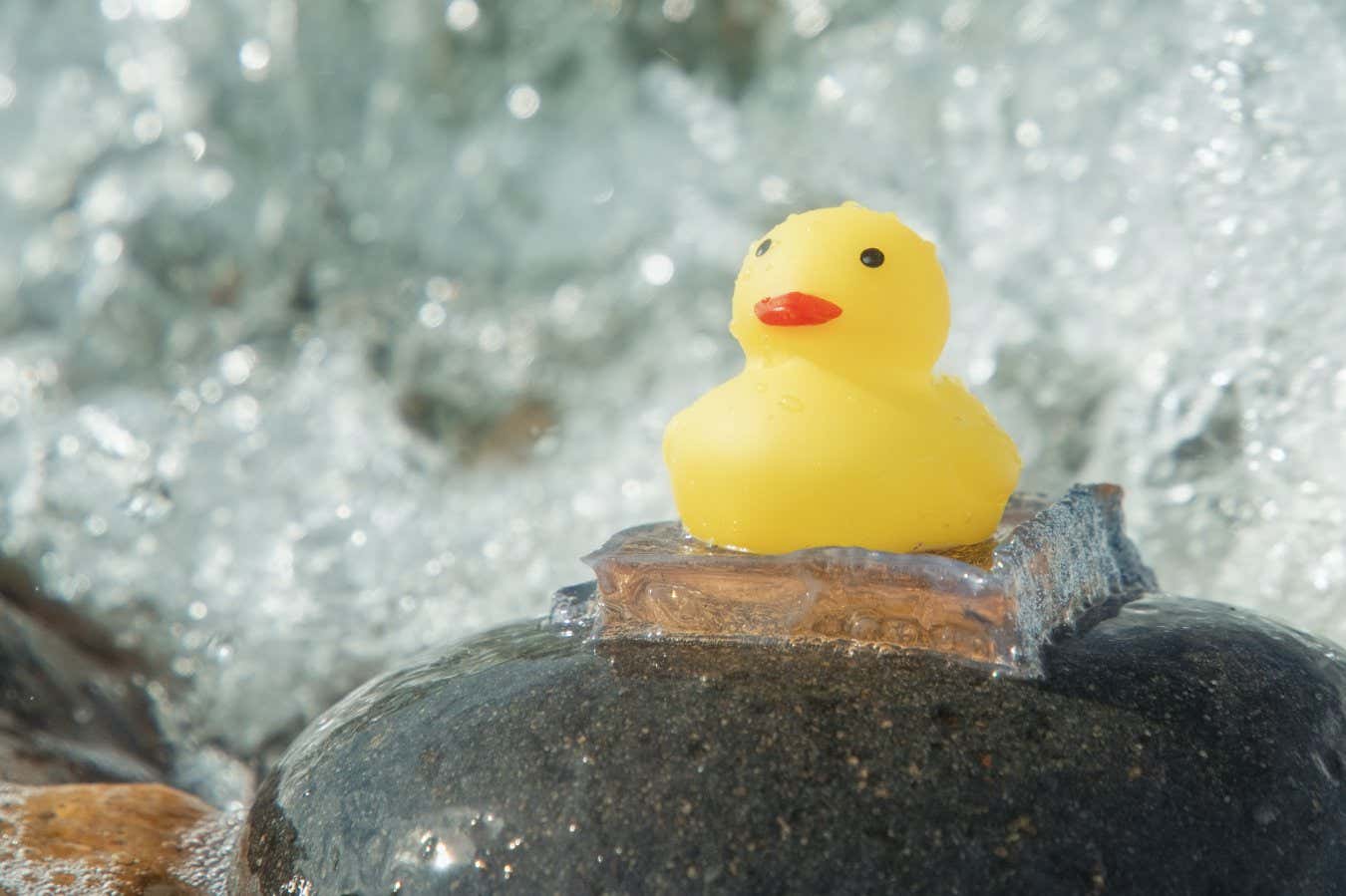
Researchers have developed a groundbreaking hydrogel adhesive that demonstrates exceptional strength underwater. This new material, which has held a rubber duck securely attached to a seaside rock for over a year, showcases the potential of hydrogels in various fields, including robotics, construction, and medicine.
Hailong Fan, a researcher from Shenzhen University in China, highlighted the significance of their creation: “We developed a super-adhesive hydrogel that works extremely well even underwater – something very few materials can achieve.” The research team, which included scientists from Hokkaido University in Japan, analyzed an extensive collection of sticky protein sequences—over 24,000—from various organisms. This analysis allowed them to identify the optimal combinations of amino acids necessary for strong adhesion.
Through their innovative approach, the researchers created 180 different types of adhesive hydrogels. They further enhanced the development process by employing artificial intelligence models to predict superior formulations of these materials. This led to the creation of a versatile hydrogel that maintains its adhesion even when subjected to multiple applications and submersion in seawater.
The hydrogel’s performance stands out, achieving adhesion strength exceeding 1 megapascal underwater—approximately ten times stronger than many conventional soft adhesives. Zhao Qin from Syracuse University commented on the research, stating, “This demonstrates a paradigm shift in the way we can design high-performance soft materials.” He commended the team for successfully capturing stickiness patterns found in natural proteins.
One of the most striking demonstrations of this hydrogel’s capabilities was its ability to keep a yellow rubber duck firmly attached to a rock, even in the face of relentless ocean waves. In a practical test, the hydrogel effectively sealed a leaking water pipe, suggesting potential applications in repairing underwater structures and enhancing the water resistance of flexible electronics and robotics.
The hydrogel’s biocompatibility adds another layer of promise. The researchers confirmed this by implanting samples under the skin of mice, paving the way for its use in biomedical applications such as securing implants and serving as surgical glue.
While the hydrogel’s adhesive properties are impressive, Qin noted that it must be relatively thick to function optimally. He expressed hope that future tests will explore its performance in less controlled environments, particularly on rough, contaminated, or dynamic surfaces.
The research team has taken steps to protect their innovation, submitting a patent for the hydrogel through Hokkaido University, where the majority of the researchers are based. As this technology develops, its potential impact on various industries could be substantial, marking a significant advancement in adhesive materials.







Revolutionary Photonic Ski-Jump Could Miniaturize LiDAR Systems

Couples Detox from Plastics in New Netflix Doc: Can It Boost Fertility?

Aventon Launches Affordable Full-Suspension Electric Mountain Bike

Discover Eight Must-Try Restaurants This Spring Season

UC Irvine Team Unveils Innovative Ion Pump for Water Treatment

One-Third of Americans Trim Daily Expenses for Healthcare Needs

Apple Secures First Oscar in Three Years with F1: The Movie

Fourth Graders Celebrate St. Patrick’s Day with Creative Weather Drawings

Kim Kardashian Dazzles at Vanity Fair Oscars Party 2026

Nostradamus’ 2026 Predictions: Star Death and Dark Events Loom

Breakthroughs and Challenges Await Science in 2026

Electric Moto Influencer Surronster Arrested in Tijuana

OpenAI to Implement Age Verification for ChatGPT by December 2025

Discover the Top 10 Calorie Counting Apps of 2025

Recovering a Suspended TikTok Account: A Step-by-Step Guide

Bella Hadid Shares Health Update After Treatment for Lyme Disease

Backpack Drives Equip Students with Supplies for New School Year

Analysts Project Stronger Growth for Apple’s iPhone 17 Lineup
-
 Science8 months ago
Nostradamus’ 2026 Predictions: Star Death and Dark Events Loom
-
 Science8 months ago
Breakthroughs and Challenges Await Science in 2026
-
 Technology11 months ago
Electric Moto Influencer Surronster Arrested in Tijuana
-
 Technology9 months ago
OpenAI to Implement Age Verification for ChatGPT by December 2025
-
 Technology1 year ago
Discover the Top 10 Calorie Counting Apps of 2025
-
 Technology1 year ago
Recovering a Suspended TikTok Account: A Step-by-Step Guide
-
 Health11 months ago
Bella Hadid Shares Health Update After Treatment for Lyme Disease
-
 Education1 year ago
Backpack Drives Equip Students with Supplies for New School Year
-
 Health11 months ago
Analysts Project Stronger Growth for Apple’s iPhone 17 Lineup
-

 Health12 months ago
Japanese Study Finds Rose Oil Can Increase Brain Gray Matter
-

 Technology8 months ago
Top 10 Penny Stocks to Watch in 2026 for Strong Returns
-

 Science10 months ago
Starship V3 Set for 2026 Launch After Successful Final Test of Version 2