
Science
NASA Plans Historic Moon Mission with Artemis II in 2026


NASA is preparing for a significant milestone in space exploration, with plans for astronauts to orbit the moon in 2026. The mission, known as Artemis II, aims to launch four astronauts on a ten-day journey that would mark humanity’s closest approach to the moon in over fifty years. This flight is expected to take place as early as February 2026, serving as a crucial step in revitalizing America’s lunar ambitions.
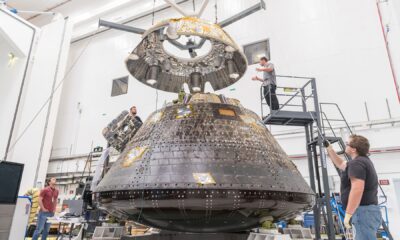
The upcoming mission will test the Space Launch System (SLS) rocket and the Orion spacecraft, both of which have been under development for more than a decade. The SLS has yet to carry a crew, making the Artemis II mission a pivotal evaluation of its capabilities. Delays and budget overruns in the program have prompted renewed urgency from the current administration, which seeks to assert U.S. leadership in the growing international space race, particularly against China, which aims to land astronauts on the lunar surface by 2030.
Objectives and Scientific Importance of Artemis II
The Artemis II mission is designed not only for crewed flight testing but also to lay the groundwork for future lunar exploration. Jared Isaacman, NASA’s newly appointed administrator, stated in an interview that within the next three years, American astronauts will return to the moon equipped for long-term stays. “We are going to land American astronauts again on the moon, but this time with the infrastructure to stay,” he emphasized.
The scientific community is particularly excited about the opportunity this mission presents to explore enduring questions regarding the moon’s formation. As noted by Brett Denevi, a planetary scientist at the Johns Hopkins University Applied Physics Laboratory, the Artemis missions could lead to new insights into the violent processes that shaped the moon and, by extension, Earth. “Lunar scientists have had a lot of pent-up questions for decades,” Denevi remarked. The moon’s surface, largely unchanged for billions of years, offers a unique window into the solar system’s history that Earth cannot provide due to geological activity.
While the Artemis II mission will not land on the moon, it will conduct critical tests of technology, including life-support systems and docking maneuvers, both in Earth orbit and around the moon. Previous missions, such as the uncrewed Artemis I launched in 2022, have paved the way for this upcoming crewed flight.
Mission Crew and Launch Preparations
Though no specific launch date has been confirmed, NASA anticipates liftoff between February and April 2026. The crew will consist of NASA astronauts Reid Wiseman, Victor Glover, and Christina Koch, along with Jeremy Hansen from the Canadian Space Agency. This mission will mark Glover’s and Koch’s second spaceflights, while Hansen will make his debut.
Recently, the astronauts completed a key rehearsal, donning their flight suits and simulating the countdown sequence in the Orion spacecraft. This hands-on training is vital for ensuring the crew is well-prepared for the upcoming mission.
The Artemis program, initiated during the Trump administration in 2019, has faced numerous challenges, including the need to salvage the SLS and Orion from previously stalled projects. The Artemis II mission is seen as a crucial milestone in this ongoing effort. Casey Dreier, chief of space policy at The Planetary Society, remarked, “There’s a lot riding on this, both good and bad.” He acknowledged the importance of this mission, noting that it will be the first time humans will be aboard the SLS rocket.
The Artemis II mission is intended to set the stage for the subsequent Artemis III mission, scheduled for 2027, which aims to land astronauts near the moon’s south pole. This region, characterized by its challenging terrain and permanently shadowed craters, is believed to contain significant water ice deposits. Such resources will be crucial for establishing a sustainable human presence on the moon and facilitating deeper space missions.
Denevi, who leads the geology team for Artemis III, expressed her enthusiasm for the opportunity to collect new lunar samples. “Now to have the opportunity to be involved in going to collect new samples that can provide new pieces to this puzzle, instead of trying to rearrange all of the old pieces, that’s going to be a huge step forward,” she stated.
As NASA moves closer to this historic mission, the world watches with anticipation. Artemis II represents not just a return to lunar exploration but a chance to deepen our understanding of the cosmos and our place within it.





Revolutionary Photonic Ski-Jump Could Miniaturize LiDAR Systems

Couples Detox from Plastics in New Netflix Doc: Can It Boost Fertility?

Aventon Launches Affordable Full-Suspension Electric Mountain Bike

Discover Eight Must-Try Restaurants This Spring Season

UC Irvine Team Unveils Innovative Ion Pump for Water Treatment

One-Third of Americans Trim Daily Expenses for Healthcare Needs

Apple Secures First Oscar in Three Years with F1: The Movie

Fourth Graders Celebrate St. Patrick’s Day with Creative Weather Drawings

Kim Kardashian Dazzles at Vanity Fair Oscars Party 2026

Nostradamus’ 2026 Predictions: Star Death and Dark Events Loom

Breakthroughs and Challenges Await Science in 2026

Electric Moto Influencer Surronster Arrested in Tijuana

OpenAI to Implement Age Verification for ChatGPT by December 2025

Discover the Top 10 Calorie Counting Apps of 2025

Bella Hadid Shares Health Update After Treatment for Lyme Disease

Analysts Project Stronger Growth for Apple’s iPhone 17 Lineup

Japanese Study Finds Rose Oil Can Increase Brain Gray Matter

Top 10 Penny Stocks to Watch in 2026 for Strong Returns
-
 Science4 months ago
Nostradamus’ 2026 Predictions: Star Death and Dark Events Loom
-
 Science4 months ago
Breakthroughs and Challenges Await Science in 2026
-
 Technology7 months ago
Electric Moto Influencer Surronster Arrested in Tijuana
-
 Technology4 months ago
OpenAI to Implement Age Verification for ChatGPT by December 2025
-
 Technology9 months ago
Discover the Top 10 Calorie Counting Apps of 2025
-
 Health7 months ago
Bella Hadid Shares Health Update After Treatment for Lyme Disease
-
 Health7 months ago
Analysts Project Stronger Growth for Apple’s iPhone 17 Lineup
-
 Health7 months ago
Japanese Study Finds Rose Oil Can Increase Brain Gray Matter
-
 Technology4 months ago
Top 10 Penny Stocks to Watch in 2026 for Strong Returns
-

 Science6 months ago
Starship V3 Set for 2026 Launch After Successful Final Test of Version 2
-

 Technology1 month ago
Nvidia GTC 2026: Major Announcements Expected for AI and Hardware
-

 Education7 months ago
Harvard Secures Court Victory Over Federal Funding Cuts