
Science
Marie Curie’s Groundbreaking Discovery of Radium and Polonium

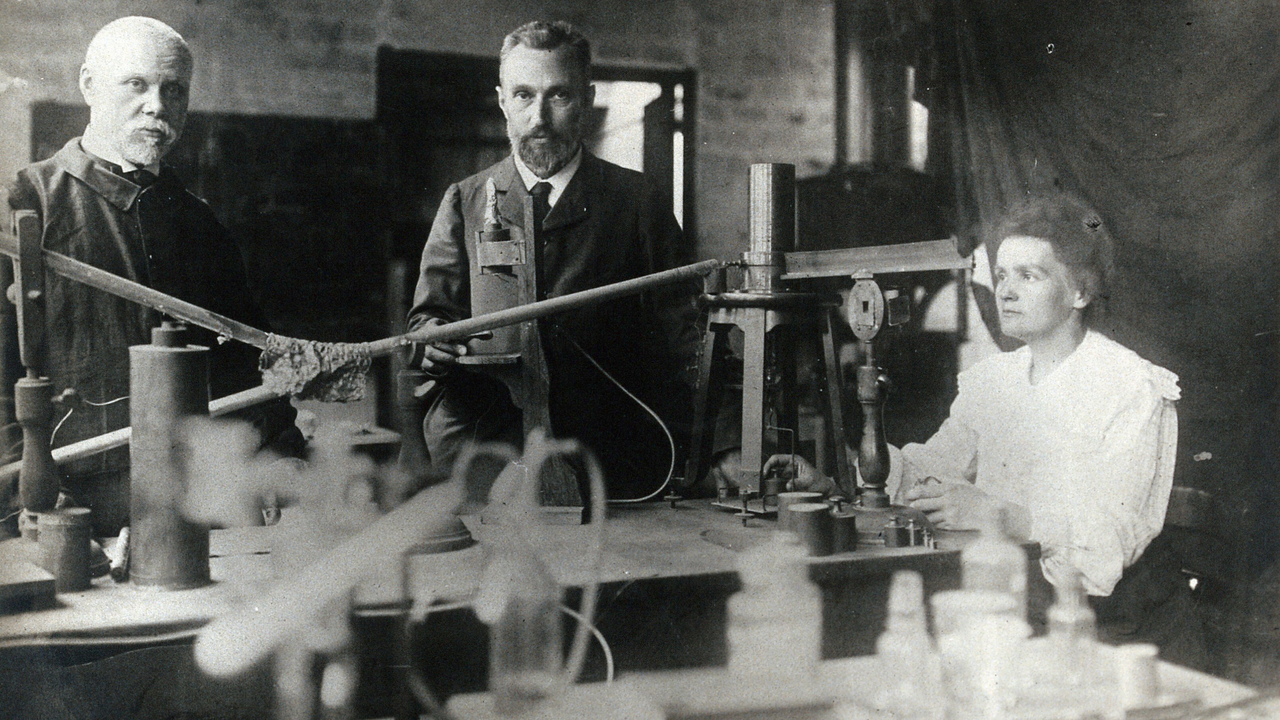
On December 26, 1898, in Paris, chemists Marie Curie and her husband Pierre Curie, alongside colleague Gustave Bémont, announced the discovery of two new radioactive elements: radium and polonium. This groundbreaking research revealed substances that were found to be 900 times more radioactive than uranium, leading to significant advancements in medical science but ultimately contributing to Curie’s own tragic fate.
Curie, then a medical student at the Sorbonne, shifted her focus to the emerging field of radiation for her thesis after the discovery of X-rays by Wilhelm Röntgen in 1895. In 1896, Henri Becquerel found that uranium salts emitted rays that could fog photographic plates, which sparked Curie’s interest. Recognizing the potential for exploration without the constraints of extensive prior research, she began her experiments in a cramped storeroom at the Paris Municipal School of Industrial Physics and Chemistry, where her husband provided support.
A pivotal tool in Curie’s research was the piezoelectric quartz electrometer, invented by her brother-in-law, Jacques Curie. This device measured weak electrical currents generated by radioactivity. In a 1904 article for Century magazine, Curie described her innovative approach to determining the intensity of radiation by measuring the conductivity of air exposed to these rays. Despite challenges posed by the inadequate workspace, she discovered that the intensity of radiation correlated with the concentration of uranium in the minerals being analyzed.
The Curies, along with Bémont, focused their studies on pitchblende, a mineral rich in uranium. Curie observed that pitchblende exhibited higher radioactivity than the uranium ore itself. She speculated that an unknown substance, more radioactive than uranium and thorium, must be present. Their research team set out to isolate this substance by separating pitchblende into its constituent minerals and employing light spectra techniques for identification.
By July 1898, the team identified polonium, a mineral approximately 60 times more radioactive than uranium. Shortly after, on December 21, they discovered radium, which exhibited an unprecedented level of radioactivity. They presented their findings at the French Academy of Sciences on December 26, marking a significant milestone in the field of chemistry.
The Curies continued their work over the following years, isolating the radioactive elements while operating in a poorly ventilated shed. Their pioneering research earned them the Nobel Prize in Physics in 1903, which initially overlooked Marie Curie until Pierre insisted on recognizing her contributions. In 1911, Marie Curie received a second Nobel Prize, this time in chemistry, for her groundbreaking work with radium.
Tragically, Pierre Curie died in 1906 after being struck by a horse-drawn carriage. Despite this loss, Marie Curie persisted in her advocacy for the application of X-rays in medical settings. She developed mobile X-ray units for use during World War I, providing critical support for injured soldiers. Additionally, she observed that radium could target diseased cells more effectively than healthy ones, a principle that laid the groundwork for future radiotherapy treatments for cancer.
Throughout their research, both Curies suffered from radiation exposure, leading to frequent sickness and injuries. Marie Curie’s prolonged exposure to radiation ultimately led to her death in 1934 from aplastic anemia, a condition linked to radiation damage to bone marrow. Her discovery notebook from 1898 remains radioactive and is stored in a lead box, a testament to the profound impact of her work.
Marie Curie’s legacy endures, not only through her scientific achievements but also as a pioneer for women in science. Her discoveries continue to shape the fields of chemistry and medicine, demonstrating the complex relationship between scientific advancement and the inherent risks involved.










Revolutionary Photonic Ski-Jump Could Miniaturize LiDAR Systems

Couples Detox from Plastics in New Netflix Doc: Can It Boost Fertility?

Aventon Launches Affordable Full-Suspension Electric Mountain Bike

Discover Eight Must-Try Restaurants This Spring Season

UC Irvine Team Unveils Innovative Ion Pump for Water Treatment

One-Third of Americans Trim Daily Expenses for Healthcare Needs

Apple Secures First Oscar in Three Years with F1: The Movie

Fourth Graders Celebrate St. Patrick’s Day with Creative Weather Drawings

Kim Kardashian Dazzles at Vanity Fair Oscars Party 2026

Nostradamus’ 2026 Predictions: Star Death and Dark Events Loom

Breakthroughs and Challenges Await Science in 2026

Electric Moto Influencer Surronster Arrested in Tijuana

OpenAI to Implement Age Verification for ChatGPT by December 2025

Discover the Top 10 Calorie Counting Apps of 2025

Recovering a Suspended TikTok Account: A Step-by-Step Guide

Bella Hadid Shares Health Update After Treatment for Lyme Disease

Backpack Drives Equip Students with Supplies for New School Year

Analysts Project Stronger Growth for Apple’s iPhone 17 Lineup
-
 Science8 months ago
Nostradamus’ 2026 Predictions: Star Death and Dark Events Loom
-
 Science8 months ago
Breakthroughs and Challenges Await Science in 2026
-
 Technology11 months ago
Electric Moto Influencer Surronster Arrested in Tijuana
-
 Technology9 months ago
OpenAI to Implement Age Verification for ChatGPT by December 2025
-
 Technology1 year ago
Discover the Top 10 Calorie Counting Apps of 2025
-
 Technology1 year ago
Recovering a Suspended TikTok Account: A Step-by-Step Guide
-
 Health11 months ago
Bella Hadid Shares Health Update After Treatment for Lyme Disease
-
 Education1 year ago
Backpack Drives Equip Students with Supplies for New School Year
-
 Health11 months ago
Analysts Project Stronger Growth for Apple’s iPhone 17 Lineup
-

 Health12 months ago
Japanese Study Finds Rose Oil Can Increase Brain Gray Matter
-

 Technology8 months ago
Top 10 Penny Stocks to Watch in 2026 for Strong Returns
-

 Science10 months ago
Starship V3 Set for 2026 Launch After Successful Final Test of Version 2