
Science
Latvian Startup Unveils Innovative Nuclear Waste-Powered Generator for Moon Missions

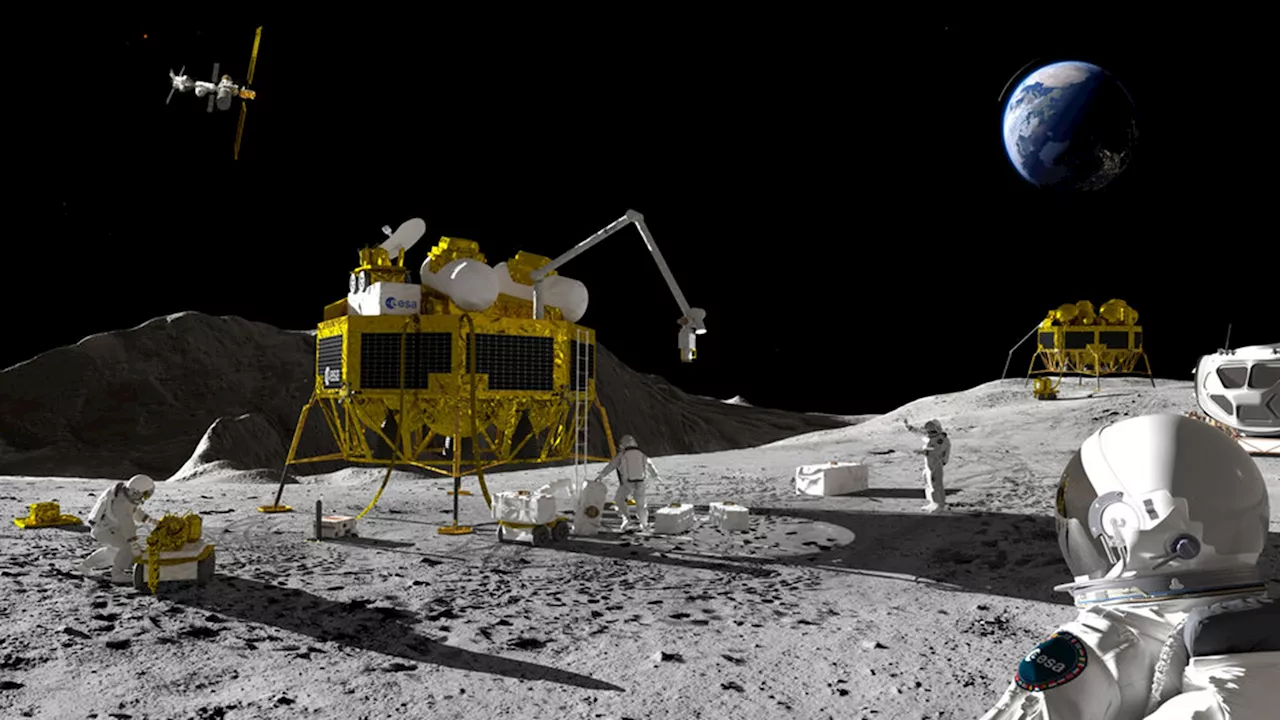
Latvian startup Deep Space Energy has announced the development of a compact radioisotope power generator designed to produce electricity for lunar missions and satellites, using significantly less fuel than traditional systems. The innovative generator claims to deliver the same power output as existing space nuclear technologies while requiring only one-fifth the amount of fuel. The company has successfully raised €350,000 in pre-seed funding and secured an additional €580,000 through public contracts and grants, propelling the technology closer to commercialization.
The generator harnesses heat from the radioactive decay of isotopes, particularly Americium-241, which is sourced from commercial nuclear reactor waste. Unlike conventional radioisotope thermoelectric generators (RTGs) that utilize thermocouples for energy conversion, Deep Space Energy’s design enhances fuel efficiency, a critical factor for space missions.
Revolutionizing Space Power Systems
Speaking about the generator’s potential, founder and CEO Mihails Ščepanskis stated, “Our technology, which has already been validated in the laboratory, has several applications across the defence and space sectors.” He emphasized its role as an auxiliary energy source, enhancing the resilience of strategic satellites. With the ability to provide backup power independent of solar energy, this system is vital for high-value military reconnaissance operations.
Traditional RTGs require substantial quantities of radioactive material to maintain power over long durations. Deep Space Energy asserts that its generator only needs approximately 2 kg of Americium-241 to generate 50 watts of electrical power for a lunar rover, while legacy systems typically require around 10 kg for the same output. This drastic reduction in fuel mass can have significant implications for launch costs, as sending one kilogram to the Moon can reach up to €1 million. Thus, cutting the mass of radioisotope material by 80 percent could dramatically reduce mission budgets or allow for additional payload capacity.
The company is focusing on satellite operations in Medium Earth Orbit, Geostationary Orbit, and Highly Elliptical Orbit. In these regions, spacecraft perform critical functions such as synthetic aperture radar imaging, signal intelligence, and missile-launch detection. A non-solar backup system enhances operational resilience, particularly during power degradation, eclipses, or other disruptions.
Addressing Lunar Challenges
The Moon presents unique challenges for energy generation. With lunar nights lasting around 354 hours and temperatures plummeting below minus 150 degrees Celsius, solar panels are ineffective in darkness, and battery systems struggle to provide sufficient power for extended periods. Deep Space Energy’s compact radioisotope generator offers a continuous low-power output that is independent of sunlight, which is essential for thermal regulation, communications, and survival systems during long lunar nights or in permanently shadowed areas.
Looking ahead, production capacity for Americium-241 is projected to reach around 10 kg annually by the mid-2030s. If the efficiency claims of Deep Space Energy hold true, this supply could facilitate numerous lunar and deep space missions that were previously unfeasible with traditional RTG technology.
Deep Space Energy aims to position its generator as a vital asset for deep space science missions, lunar operations, and high-value defence satellites, providing a lighter and more fuel-efficient alternative to outdated nuclear technologies. The company’s innovation could play a crucial role in advancing Europe’s independent capabilities in satellite technology, enhancing resilience against various operational challenges.

Revolutionary Photonic Ski-Jump Could Miniaturize LiDAR Systems

Couples Detox from Plastics in New Netflix Doc: Can It Boost Fertility?

Aventon Launches Affordable Full-Suspension Electric Mountain Bike

Discover Eight Must-Try Restaurants This Spring Season

UC Irvine Team Unveils Innovative Ion Pump for Water Treatment

One-Third of Americans Trim Daily Expenses for Healthcare Needs

Apple Secures First Oscar in Three Years with F1: The Movie

Fourth Graders Celebrate St. Patrick’s Day with Creative Weather Drawings

Kim Kardashian Dazzles at Vanity Fair Oscars Party 2026

Nostradamus’ 2026 Predictions: Star Death and Dark Events Loom

Breakthroughs and Challenges Await Science in 2026

Electric Moto Influencer Surronster Arrested in Tijuana

OpenAI to Implement Age Verification for ChatGPT by December 2025

Discover the Top 10 Calorie Counting Apps of 2025

Bella Hadid Shares Health Update After Treatment for Lyme Disease

Analysts Project Stronger Growth for Apple’s iPhone 17 Lineup

Japanese Study Finds Rose Oil Can Increase Brain Gray Matter

Top 10 Penny Stocks to Watch in 2026 for Strong Returns
-
 Science7 months ago
Nostradamus’ 2026 Predictions: Star Death and Dark Events Loom
-
 Science7 months ago
Breakthroughs and Challenges Await Science in 2026
-
 Technology10 months ago
Electric Moto Influencer Surronster Arrested in Tijuana
-
 Technology7 months ago
OpenAI to Implement Age Verification for ChatGPT by December 2025
-
 Technology12 months ago
Discover the Top 10 Calorie Counting Apps of 2025
-
 Health10 months ago
Bella Hadid Shares Health Update After Treatment for Lyme Disease
-
 Health10 months ago
Analysts Project Stronger Growth for Apple’s iPhone 17 Lineup
-
 Health11 months ago
Japanese Study Finds Rose Oil Can Increase Brain Gray Matter
-
 Technology7 months ago
Top 10 Penny Stocks to Watch in 2026 for Strong Returns
-

 Science9 months ago
Starship V3 Set for 2026 Launch After Successful Final Test of Version 2
-

 Technology9 months ago
InMotion Unveils P6 Electric Unicycle with 93 MPH Top Speed
-

 Technology5 months ago
Nvidia GTC 2026: Major Announcements Expected for AI and Hardware