
Science
Fossil Discovery Reveals Resilient Micro-Ecosystem Post-Mass Extinction

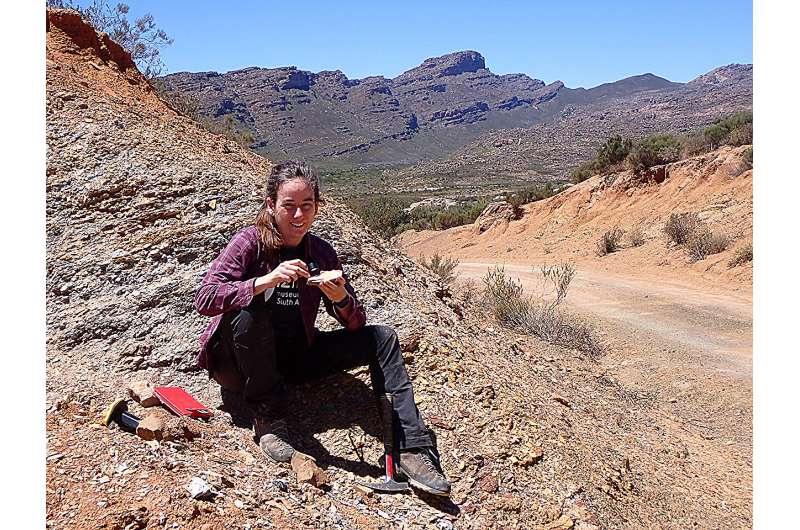
An international team of scientists has uncovered fossil evidence of a resilient micro-ecosystem that contributed to the recovery of Earth’s oceans following a global mass extinction. The research, led by Dr. Claire Browning from the University of Cape Town (UCT), reveals fossilized burrows and droppings from microscopic creatures that thrived in harsh conditions shortly after the end-Ordovician ice age. This significant discovery is reshaping current understanding of early marine resilience and is detailed in the journal Nature Ecology & Evolution.
Advanced Techniques Unveil Ancient Life
Using micro-CT scanning, a cutting-edge imaging technique, the research team examined mudrock from the Cederberg mountains, dating back approximately 444 million years. The scans uncovered minute life forms, including burrows and droppings from nematodes and foraminifera, which are tiny worms and single-celled protists, respectively.
“This was an unexpected find because the Cederberg rocks formed on a seafloor thought to be intermittently devoid of oxygen and toxic to life,” stated Dr. Browning. She emphasized the significance of identifying fossils of organisms that lived on the ocean floor during a time when 85% of marine species had vanished. The ability of these microorganisms to not only survive but thrive in such conditions highlights their resilience.
Insights into Marine Recovery and Climate Change
The discovery of this micro-ecosystem reveals the presence of a “small food web,” similar to those sustaining modern oceans. These tiny organisms played a crucial role in nutrient recycling and carbon support for larger marine life. By examining the sedimentary layers, the researchers found evidence that organic matter from phytoplankton regularly sank to the seafloor, nourishing this hidden community.
This research offers early evidence that seafloor ecosystems can stabilize rapidly following catastrophic events. It also contributes to global discussions on how ecosystems respond to climate shocks, providing historical parallels to the challenges faced by today’s oceans.
The team is now focused on determining the extent of this tiny ecosystem in ancient seas, looking beyond South Africa. “Geology does not respect modern borders. For example, rocks of the same age in South America were once connected to those in the Cederberg mountains and may also hold hidden evidence of marine snow, dust, and meiofauna,” Dr. Browning explained. Mapping the distribution of these ecosystems could enhance understanding of their roles in regulating ancient oceans’ carbon and nutrient cycles.
This research aligns with UCT’s commitment to linking Earth’s historical changes to its environmental future. Insights gained from this project could inform current models and strategies for addressing the impacts of human-induced climate change.
For further reading, see Claire Browning et al., “Marine snow fuels an opportunistic small food web in the Late Ordovician Soom Shale Lagerstätte,” published in Nature Ecology & Evolution (2025). DOI: 10.1038/s41559-025-02923-0.






Revolutionary Photonic Ski-Jump Could Miniaturize LiDAR Systems

Couples Detox from Plastics in New Netflix Doc: Can It Boost Fertility?

Aventon Launches Affordable Full-Suspension Electric Mountain Bike

Discover Eight Must-Try Restaurants This Spring Season

UC Irvine Team Unveils Innovative Ion Pump for Water Treatment

One-Third of Americans Trim Daily Expenses for Healthcare Needs

Apple Secures First Oscar in Three Years with F1: The Movie

Fourth Graders Celebrate St. Patrick’s Day with Creative Weather Drawings

Kim Kardashian Dazzles at Vanity Fair Oscars Party 2026

Nostradamus’ 2026 Predictions: Star Death and Dark Events Loom

Breakthroughs and Challenges Await Science in 2026

Electric Moto Influencer Surronster Arrested in Tijuana

OpenAI to Implement Age Verification for ChatGPT by December 2025

Discover the Top 10 Calorie Counting Apps of 2025

Recovering a Suspended TikTok Account: A Step-by-Step Guide

Bella Hadid Shares Health Update After Treatment for Lyme Disease

Backpack Drives Equip Students with Supplies for New School Year

Analysts Project Stronger Growth for Apple’s iPhone 17 Lineup
-
 Science8 months ago
Nostradamus’ 2026 Predictions: Star Death and Dark Events Loom
-
 Science8 months ago
Breakthroughs and Challenges Await Science in 2026
-
 Technology11 months ago
Electric Moto Influencer Surronster Arrested in Tijuana
-
 Technology9 months ago
OpenAI to Implement Age Verification for ChatGPT by December 2025
-
 Technology1 year ago
Discover the Top 10 Calorie Counting Apps of 2025
-
 Technology1 year ago
Recovering a Suspended TikTok Account: A Step-by-Step Guide
-
 Health11 months ago
Bella Hadid Shares Health Update After Treatment for Lyme Disease
-
 Education1 year ago
Backpack Drives Equip Students with Supplies for New School Year
-
 Health11 months ago
Analysts Project Stronger Growth for Apple’s iPhone 17 Lineup
-

 Health12 months ago
Japanese Study Finds Rose Oil Can Increase Brain Gray Matter
-

 Technology8 months ago
Top 10 Penny Stocks to Watch in 2026 for Strong Returns
-

 Science10 months ago
Starship V3 Set for 2026 Launch After Successful Final Test of Version 2