
Science
ELT and Space-Based Starshade Aim to Unlock Exoplanet Discoveries

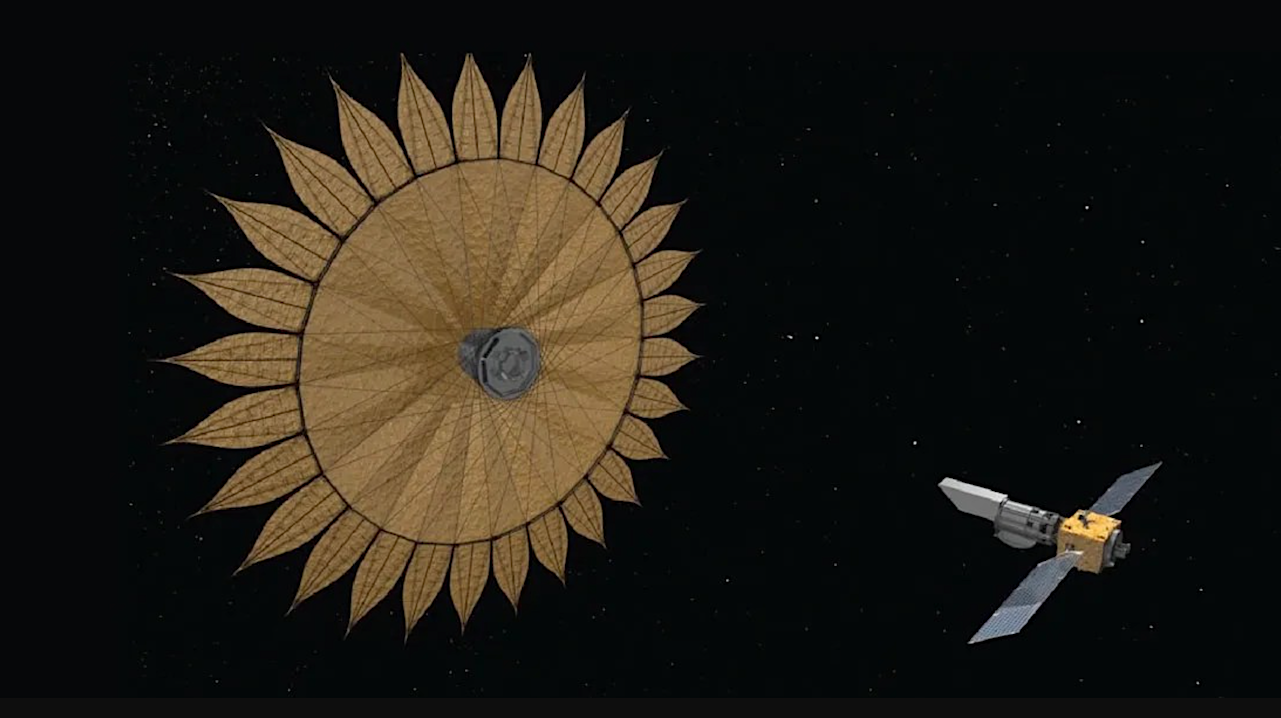
The European Southern Observatory’s Extremely Large Telescope (ELT) is set to significantly enhance the search for habitable exoplanets. A recent proposal emphasizes the potential of combining the ELT with a space-based starshade to improve the detection of Earth-like planets. This collaboration could address critical scientific questions regarding the abundance and distribution of life-sustaining environments in the universe.
Currently, the ELT is capable of groundbreaking research, particularly in the realm of small habitable-zone exoplanets. Nevertheless, true analogs of Earth, located within the habitable zones of Sun-like stars, remain elusive due to their faintness and the extreme brightness of their parent stars. The stark contrast ratio and minimal angular separation between these planets and their stars present significant observational challenges.
Combining the capabilities of the ELT with a space-based starshade could dramatically enhance the telescope’s effectiveness. The starshade would serve as a shield, blocking out the overwhelming light from the star, thereby allowing scientists to observe potentially dozens of Earth analogs and other planets with improved clarity. This advancement opens new avenues for understanding the frequency of habitability across the cosmos.
The proposed collaboration could see the European Southern Observatory (ESO) partner with the European Space Agency (ESA) and other organizations to develop a mission that maximizes the synergy between the ELT and the starshade. This partnership could lead to significant advancements in instrumentation, enabling the ELT to fully leverage the starshade’s capabilities.
Astrophysicists involved in this initiative include Markus Janson, Enric Palle, Thomas Henning, Sascha Quanz, Lars Buchhave, and Alexis Brandeker. Their contributions highlight the collaborative effort pushing the boundaries of current astronomical research.
According to a recent white paper titled “Expanding Horizons,” submitted on December 18, 2025, the integration of the ELT and a starshade could yield unprecedented scientific insights. The enhanced observational capabilities would allow researchers to tackle fundamental questions about life and habitability on a cosmic scale.
The ELT, with its enormous aperture, paired with the contrast typically achievable only in space, positions this initiative as a transformative leap in exoplanet discovery. The combined efforts of ESO and ESA could redefine our understanding of the universe and our place within it, paving the way for future explorations into the realms of astrobiology and planetary science.
As research continues, the scientific community eagerly anticipates the outcomes of this promising collaboration, which could ultimately revolutionize our approach to discovering life beyond Earth.








Revolutionary Photonic Ski-Jump Could Miniaturize LiDAR Systems

Couples Detox from Plastics in New Netflix Doc: Can It Boost Fertility?

Aventon Launches Affordable Full-Suspension Electric Mountain Bike

Discover Eight Must-Try Restaurants This Spring Season

UC Irvine Team Unveils Innovative Ion Pump for Water Treatment

One-Third of Americans Trim Daily Expenses for Healthcare Needs

Apple Secures First Oscar in Three Years with F1: The Movie

Fourth Graders Celebrate St. Patrick’s Day with Creative Weather Drawings

Kim Kardashian Dazzles at Vanity Fair Oscars Party 2026

Nostradamus’ 2026 Predictions: Star Death and Dark Events Loom

Breakthroughs and Challenges Await Science in 2026

Electric Moto Influencer Surronster Arrested in Tijuana

OpenAI to Implement Age Verification for ChatGPT by December 2025

Discover the Top 10 Calorie Counting Apps of 2025

Recovering a Suspended TikTok Account: A Step-by-Step Guide

Bella Hadid Shares Health Update After Treatment for Lyme Disease

Backpack Drives Equip Students with Supplies for New School Year

Analysts Project Stronger Growth for Apple’s iPhone 17 Lineup
-
 Science7 months ago
Nostradamus’ 2026 Predictions: Star Death and Dark Events Loom
-
 Science7 months ago
Breakthroughs and Challenges Await Science in 2026
-
 Technology11 months ago
Electric Moto Influencer Surronster Arrested in Tijuana
-
 Technology8 months ago
OpenAI to Implement Age Verification for ChatGPT by December 2025
-
 Technology1 year ago
Discover the Top 10 Calorie Counting Apps of 2025
-
 Technology1 year ago
Recovering a Suspended TikTok Account: A Step-by-Step Guide
-
 Health11 months ago
Bella Hadid Shares Health Update After Treatment for Lyme Disease
-
 Education1 year ago
Backpack Drives Equip Students with Supplies for New School Year
-
 Health11 months ago
Analysts Project Stronger Growth for Apple’s iPhone 17 Lineup
-

 Technology8 months ago
Top 10 Penny Stocks to Watch in 2026 for Strong Returns
-

 Health11 months ago
Japanese Study Finds Rose Oil Can Increase Brain Gray Matter
-

 Science10 months ago
Starship V3 Set for 2026 Launch After Successful Final Test of Version 2