
Science
Edible Turkey Tail Mushroom Offers Innovative Eco-Friendly Coating

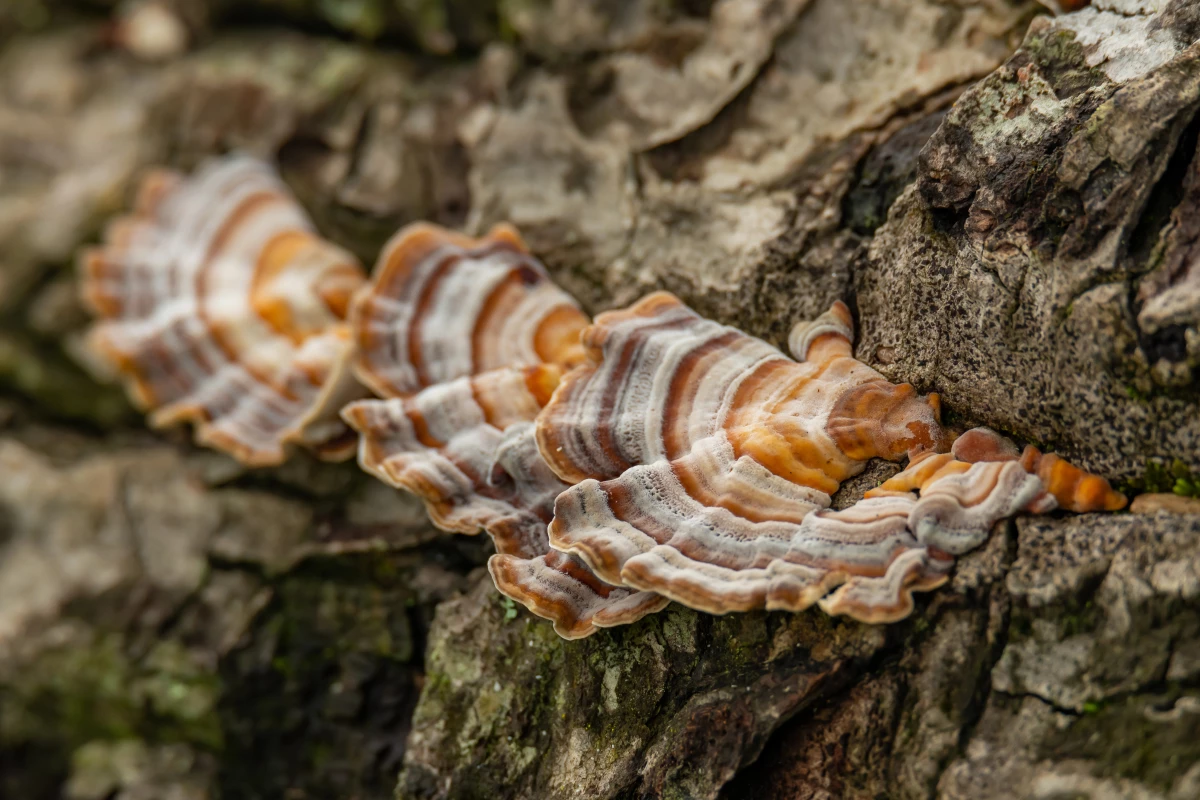
Research conducted by the University of Maine has revealed a promising alternative to single-use plastic food wrap and synthetic paper cup coatings. The study focuses on utilizing turkey tail fungus, scientifically known as Trametes versicolor, combined with wood fibers to create a sustainable, waterproof coating.
The researchers aimed to develop an environmentally safe coating resistant to water, oil, and grease while ensuring it remained food-safe. They achieved this by experimenting with the mycelium, a root-like structure of the fungus that intertwines within the wood it grows on. This mycelium forms a dense network of featherlike strands that exhibit waterproof properties.
Innovative Coating Process
To create the coating, the researchers combined the mycelium with nanofibrils, which are tiny wood cellulose fibers commonly used in paper-making. This mixture was then applied in thin layers to various surfaces, including two types of paper, denim, polyester felt, and birch wood veneer. The coated materials were dried in an oven, resulting in a waterproof barrier comparable to the thickness of paint after just three days of fungal growth.
According to Assoc. Prof. Caitlin Howell, the corresponding author of the study, “Our hope is that by providing more ways to potentially reduce our reliance on single-use plastics, we can help lessen the waste that ends up in landfills and the ocean; nature offers elegant, sustainable solutions to help us get there.”
Tests conducted on the coated materials showed significant effectiveness. Water droplets placed on the treated surfaces beaded up into small spheres, while those on untreated surfaces spread out or were absorbed. The fungal coating also demonstrated its ability to repel other liquids, including fuel n-heptane, the solvent toluene, and castor oil, indicating its potential as a versatile barrier.
Broader Implications for Mycelium Technology
This innovative approach is part of a growing trend in utilizing mycelium-based products across various industries. In the construction sector, for instance, researchers at Nanyang Technological University in Singapore have developed tiles made from oyster mushrooms and bamboo scraps. These tiles, resembling elephant skin due to their bumpy surface, are designed to improve energy efficiency in buildings by keeping them cool in warm months.
Another example includes mycocrete, a type of concrete made from mycelium and grains, currently in development at Newcastle University in Britain. Such advancements highlight the versatility of mycelium beyond food-related applications, paving the way for sustainable building materials.
The findings from the University of Maine’s study were recently published in the journal Langmuir, adding to the growing body of research that emphasizes the importance of finding eco-friendly solutions to combat plastic waste. As more innovative applications for mycelium emerge, the potential for these natural materials to replace synthetic options across various sectors continues to expand.




Revolutionary Photonic Ski-Jump Could Miniaturize LiDAR Systems

Couples Detox from Plastics in New Netflix Doc: Can It Boost Fertility?

Aventon Launches Affordable Full-Suspension Electric Mountain Bike

Discover Eight Must-Try Restaurants This Spring Season

UC Irvine Team Unveils Innovative Ion Pump for Water Treatment

One-Third of Americans Trim Daily Expenses for Healthcare Needs

Apple Secures First Oscar in Three Years with F1: The Movie

Fourth Graders Celebrate St. Patrick’s Day with Creative Weather Drawings

Kim Kardashian Dazzles at Vanity Fair Oscars Party 2026

Nostradamus’ 2026 Predictions: Star Death and Dark Events Loom

Breakthroughs and Challenges Await Science in 2026

Electric Moto Influencer Surronster Arrested in Tijuana

OpenAI to Implement Age Verification for ChatGPT by December 2025

Discover the Top 10 Calorie Counting Apps of 2025

Recovering a Suspended TikTok Account: A Step-by-Step Guide

Bella Hadid Shares Health Update After Treatment for Lyme Disease

Backpack Drives Equip Students with Supplies for New School Year

Analysts Project Stronger Growth for Apple’s iPhone 17 Lineup
-
 Science8 months ago
Nostradamus’ 2026 Predictions: Star Death and Dark Events Loom
-
 Science8 months ago
Breakthroughs and Challenges Await Science in 2026
-
 Technology11 months ago
Electric Moto Influencer Surronster Arrested in Tijuana
-
 Technology9 months ago
OpenAI to Implement Age Verification for ChatGPT by December 2025
-
 Technology1 year ago
Discover the Top 10 Calorie Counting Apps of 2025
-
 Technology1 year ago
Recovering a Suspended TikTok Account: A Step-by-Step Guide
-
 Health11 months ago
Bella Hadid Shares Health Update After Treatment for Lyme Disease
-
 Education1 year ago
Backpack Drives Equip Students with Supplies for New School Year
-
 Health12 months ago
Analysts Project Stronger Growth for Apple’s iPhone 17 Lineup
-

 Health12 months ago
Japanese Study Finds Rose Oil Can Increase Brain Gray Matter
-

 Technology8 months ago
Top 10 Penny Stocks to Watch in 2026 for Strong Returns
-

 Science10 months ago
Starship V3 Set for 2026 Launch After Successful Final Test of Version 2