
Science
Cosmic Rays Could Enable Life Beneath Mars and Icy Moons

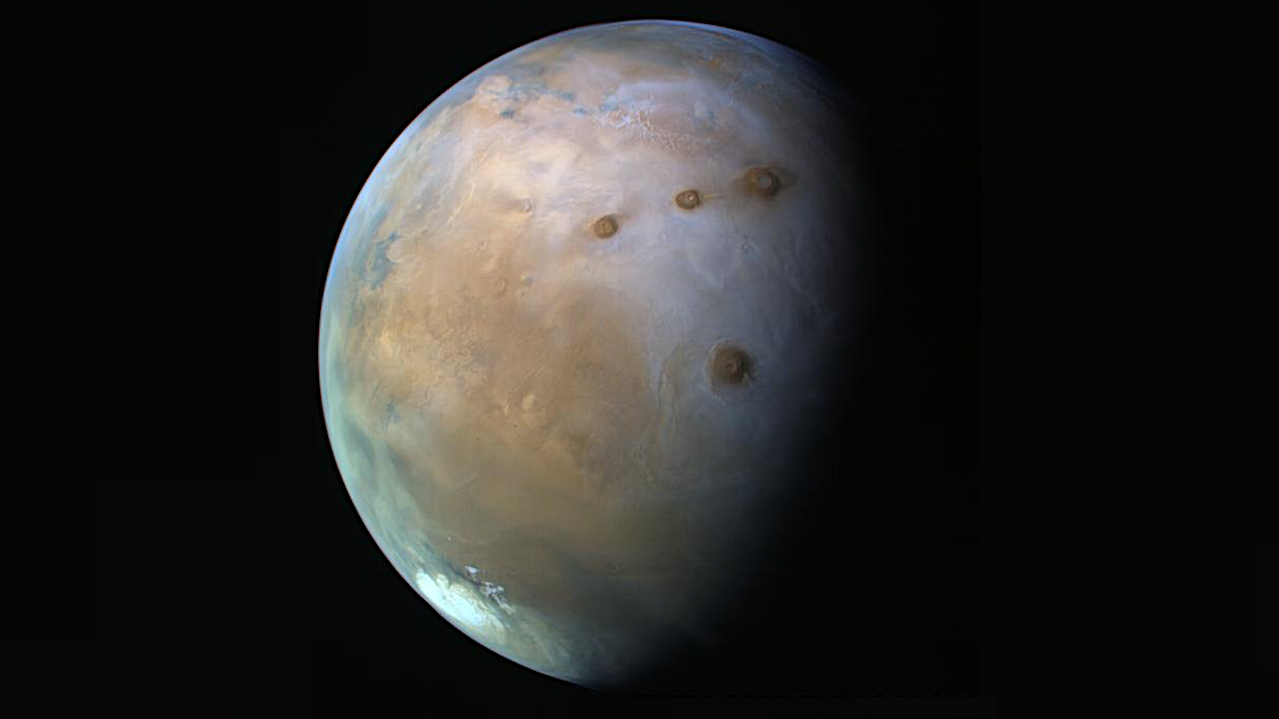
A groundbreaking study from NYU Abu Dhabi reveals that high-energy particles from space, known as cosmic rays, could support life beneath the surfaces of planets and moons in our solar system. This research, led by Dimitra Atri, Principal Investigator of the Space Exploration Laboratory at NYUAD’s Center for Astrophysics and Space Science (CASS), challenges the long-held belief that life can only thrive in sunlight or near volcanic heat.
Published in the International Journal of Astrobiology, the study focuses on the interactions between cosmic rays and water or ice found underground. When cosmic rays collide with these substances, they break apart water molecules and release electrons, which certain bacteria on Earth can utilize for energy. This process, known as radiolysis, suggests that life could persist even in environments devoid of sunlight and warmth.
The research team employed computer simulations to measure the energy produced through this process on Mars and the icy moons of Jupiter and Saturn. Their findings indicate that Enceladus, Saturn’s moon, holds the greatest potential for supporting life, followed by Mars, and then Europa, one of Jupiter’s moons.
Rethinking Life’s Habitats
“This discovery changes the way we think about where life might exist,” said Atri. “Instead of looking only for warm planets with sunlight, we can now consider places that are cold and dark, as long as they have some water beneath the surface and are exposed to cosmic rays. Life might be able to survive in more places than we ever imagined.”
The study introduces the concept of the Radiolytic Habitable Zone, which contrasts with the traditional “Goldilocks Zone.” While the Goldilocks Zone refers to areas around stars where conditions are just right for liquid water, the Radiolytic Habitable Zone emphasizes underground environments that can be energized by cosmic radiation. This perspective expands the potential locations for extraterrestrial life significantly.
Implications for Future Exploration
The implications of these findings are profound for future space missions. Rather than solely searching for signs of life on planetary surfaces, scientists have new avenues to explore underground habitats. Missions to Mars and the icy moons may incorporate tools designed to detect chemical energy generated by cosmic radiation.
This research paves the way for an exciting new chapter in the quest to discover life beyond Earth. It suggests that even in the darkest and coldest corners of the solar system, the right conditions for life to endure may exist, transforming our understanding of where life can thrive. The quest for knowledge about the universe continues, and this study opens doors to previously unconsidered possibilities.









Revolutionary Photonic Ski-Jump Could Miniaturize LiDAR Systems

Couples Detox from Plastics in New Netflix Doc: Can It Boost Fertility?

Aventon Launches Affordable Full-Suspension Electric Mountain Bike

Discover Eight Must-Try Restaurants This Spring Season

UC Irvine Team Unveils Innovative Ion Pump for Water Treatment

One-Third of Americans Trim Daily Expenses for Healthcare Needs

Apple Secures First Oscar in Three Years with F1: The Movie

Fourth Graders Celebrate St. Patrick’s Day with Creative Weather Drawings

Kim Kardashian Dazzles at Vanity Fair Oscars Party 2026

Nostradamus’ 2026 Predictions: Star Death and Dark Events Loom

Breakthroughs and Challenges Await Science in 2026

Electric Moto Influencer Surronster Arrested in Tijuana

OpenAI to Implement Age Verification for ChatGPT by December 2025

Discover the Top 10 Calorie Counting Apps of 2025

Recovering a Suspended TikTok Account: A Step-by-Step Guide

Bella Hadid Shares Health Update After Treatment for Lyme Disease

Backpack Drives Equip Students with Supplies for New School Year

Analysts Project Stronger Growth for Apple’s iPhone 17 Lineup
-
 Science7 months ago
Nostradamus’ 2026 Predictions: Star Death and Dark Events Loom
-
 Science8 months ago
Breakthroughs and Challenges Await Science in 2026
-
 Technology11 months ago
Electric Moto Influencer Surronster Arrested in Tijuana
-
 Technology8 months ago
OpenAI to Implement Age Verification for ChatGPT by December 2025
-
 Technology1 year ago
Discover the Top 10 Calorie Counting Apps of 2025
-
 Technology1 year ago
Recovering a Suspended TikTok Account: A Step-by-Step Guide
-
 Health11 months ago
Bella Hadid Shares Health Update After Treatment for Lyme Disease
-
 Education1 year ago
Backpack Drives Equip Students with Supplies for New School Year
-
 Health11 months ago
Analysts Project Stronger Growth for Apple’s iPhone 17 Lineup
-

 Technology8 months ago
Top 10 Penny Stocks to Watch in 2026 for Strong Returns
-

 Health11 months ago
Japanese Study Finds Rose Oil Can Increase Brain Gray Matter
-

 Science10 months ago
Starship V3 Set for 2026 Launch After Successful Final Test of Version 2