
Science
Cells Reveal More Membraneless Organelles, Challenging Biology’s Foundations

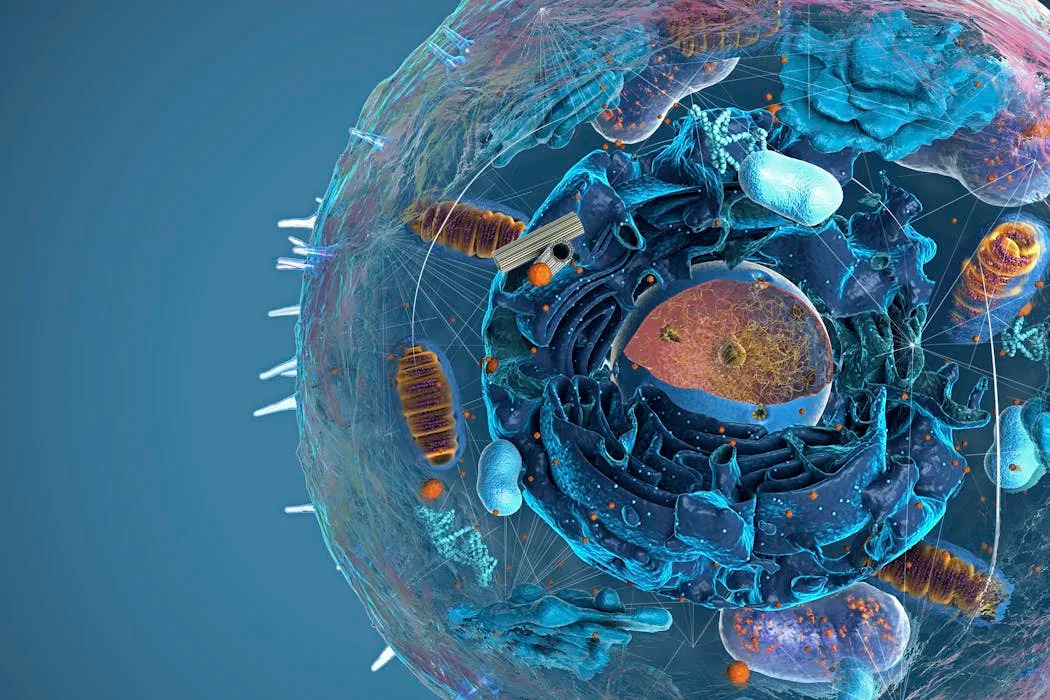
Recent research has unveiled that cells possess a greater number of membraneless organelles, known as biomolecular condensates, than previously understood. These organelles challenge established concepts in cell biology, as they function without the protective membranes that define traditional organelles like mitochondria and lysosomes. Understanding these structures is reshaping the way scientists view cellular organization and the fundamental principles of life itself.
Biomolecular condensates form gel-like droplets within cells, a process reminiscent of the behavior of blobs in a lava lamp. This phenomenon occurs when clusters of proteins and RNA molecules condense together, creating unique microenvironments that facilitate biochemical processes. As of 2022, researchers have identified approximately 30 kinds of these membraneless condensates, a significant increase compared to the dozen recognized traditional organelles.
The implications of these discoveries extend far beyond mere classification. Some biomolecular condensates play crucial roles in cellular functions, such as forming reproductive cells and stress granules. However, many remain enigmatic, lacking defined functions, which suggests they may perform a wider array of tasks than their membrane-bound counterparts. The exploration of these unknown roles is prompting scientists to rethink long-held beliefs about cellular operation.
A pivotal aspect of this research is its impact on the understanding of protein structure and function. Traditionally, the relationship between a protein’s shape and its function has been a fundamental tenet of biochemistry. The discovery of intrinsically disordered proteins (IDPs), which are crucial to biomolecular condensates, has significantly complicated this narrative. These proteins do not possess stable structures yet are implicated in essential cellular functions, highlighting a new avenue of inquiry in protein chemistry.
Furthermore, evidence of biomolecular condensates has been found in prokaryotic cells, or bacteria, which were previously thought to lack organelles. This revelation could transform the perception of bacterial complexity, as only about 6% of bacterial proteins are disordered, in contrast to 30% to 40% of eukaryotic proteins. The presence of these condensates in prokaryotes suggests a more intricate biological landscape than previously acknowledged.
The study of biomolecular condensates also bears significance for theories regarding the origins of life on Earth. Research indicates that the building blocks of RNA and DNA could form from simple chemicals under various conditions, supporting the RNA world hypothesis. This hypothesis posits that early life forms were strands of RNA that eventually evolved into more complex organisms. The discovery that RNA can spontaneously create biomolecular condensates raises the possibility that life could have originated without the need for membrane-bound structures, which likely did not exist on early Earth.
As scientists like Allan Albig from Boise State University explore these groundbreaking findings, new therapeutic approaches are also being considered. Biomolecular condensates are already influencing research into diseases such as Alzheimer’s and Huntington’s. Researchers are investigating methods to manipulate these condensates for medical purposes, potentially leading to innovative treatments.
The ongoing exploration of biomolecular condensates promises to deepen our understanding of biology. If each type of condensate is assigned a specific function, future biology students may find themselves with even more complex concepts to learn. The implications of these discoveries stretch far beyond academic curiosity; they could redefine our approach to health and disease, as well as our understanding of life’s origins.

Revolutionary Photonic Ski-Jump Could Miniaturize LiDAR Systems

Couples Detox from Plastics in New Netflix Doc: Can It Boost Fertility?

Aventon Launches Affordable Full-Suspension Electric Mountain Bike

Discover Eight Must-Try Restaurants This Spring Season

UC Irvine Team Unveils Innovative Ion Pump for Water Treatment

One-Third of Americans Trim Daily Expenses for Healthcare Needs

Apple Secures First Oscar in Three Years with F1: The Movie

Fourth Graders Celebrate St. Patrick’s Day with Creative Weather Drawings

Kim Kardashian Dazzles at Vanity Fair Oscars Party 2026

Nostradamus’ 2026 Predictions: Star Death and Dark Events Loom

Breakthroughs and Challenges Await Science in 2026

Electric Moto Influencer Surronster Arrested in Tijuana

OpenAI to Implement Age Verification for ChatGPT by December 2025

Discover the Top 10 Calorie Counting Apps of 2025

Recovering a Suspended TikTok Account: A Step-by-Step Guide

Bella Hadid Shares Health Update After Treatment for Lyme Disease

Backpack Drives Equip Students with Supplies for New School Year

Analysts Project Stronger Growth for Apple’s iPhone 17 Lineup
-
 Science8 months ago
Nostradamus’ 2026 Predictions: Star Death and Dark Events Loom
-
 Science8 months ago
Breakthroughs and Challenges Await Science in 2026
-
 Technology11 months ago
Electric Moto Influencer Surronster Arrested in Tijuana
-
 Technology9 months ago
OpenAI to Implement Age Verification for ChatGPT by December 2025
-
 Technology1 year ago
Discover the Top 10 Calorie Counting Apps of 2025
-
 Technology1 year ago
Recovering a Suspended TikTok Account: A Step-by-Step Guide
-
 Health11 months ago
Bella Hadid Shares Health Update After Treatment for Lyme Disease
-
 Education1 year ago
Backpack Drives Equip Students with Supplies for New School Year
-
 Health12 months ago
Analysts Project Stronger Growth for Apple’s iPhone 17 Lineup
-

 Health12 months ago
Japanese Study Finds Rose Oil Can Increase Brain Gray Matter
-

 Technology8 months ago
Top 10 Penny Stocks to Watch in 2026 for Strong Returns
-

 Science10 months ago
Starship V3 Set for 2026 Launch After Successful Final Test of Version 2