
Science
Blood Test Could Forecast Alzheimer’s Risk Up to 25 Years Ahead

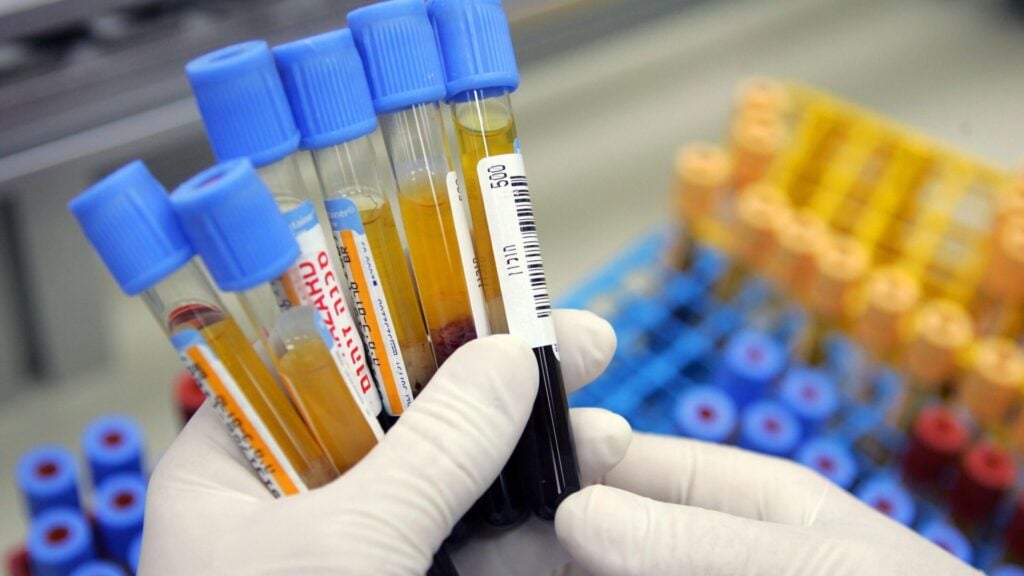
A recent study suggests that a simple blood test could predict the risk of developing Alzheimer’s disease up to 25 years before symptoms appear. Researchers at the University of California, San Diego, found that blood plasma levels of a protein called phosphorylated tau 217 (p-tau217) can serve as an effective biomarker for assessing future dementia risk, particularly in women.
The study involved analyzing blood samples from over 2,500 volunteers who participated in the long-term Women’s Health Initiative Memory Study. This research tracked the health of women aged 65 to 79 starting in the late 1990s. Among the participants, those exhibiting higher levels of p-tau217 were significantly more likely to develop dementia or mild cognitive decline later in life.
Aladdin Shadyab, the lead author and an associate professor of public health and medicine at UC San Diego, emphasized the significance of these findings, stating, “These findings underscore the value of plasma p-tau217 as an easily measured biomarker for dementia prediction.” The increased risk associated with elevated p-tau217 levels could be detected in women years before they display any cognitive symptoms.
Understanding Alzheimer’s and Its Biomarkers
Alzheimer’s disease, the most prevalent form of dementia, is characterized by the accumulation of two proteins in the brain: tau and amyloid beta. Abnormal versions of these proteins build up over time, leading to cognitive decline. Notably, p-tau217 can leak into the bloodstream, allowing researchers to measure its levels and assess brain health.
Shadyab noted, “Among all the blood-based biomarkers of Alzheimer’s disease, plasma p-tau217 has shown the most promise in detecting Alzheimer’s in the brain,” highlighting its correlation with brain changes indicative of the disease.
The study results, published in JAMA Network Open, indicate that the association between high p-tau217 levels and cognitive impairment is particularly pronounced in specific demographic groups. Women over the age of 70 years, those with a genetic predisposition to Alzheimer’s, and those undergoing estrogen plus progestin hormone therapy exhibited a stronger connection between elevated p-tau217 and cognitive decline.
Future Implications for Alzheimer’s Detection
Currently, there are two FDA-cleared blood tests designed to diagnose or rule out Alzheimer’s, with several more anticipated in the near future. Many of these tests utilize p-tau217 as a biomarker. However, Shadyab cautioned against using p-tau217 alone for diagnosing Alzheimer’s in asymptomatic individuals. “Additional studies are needed to determine the predictive ability of plasma p-tau217 in people who do not yet have symptoms for dementia,” he stated.
The potential of this research extends beyond mere predictions. Scientists are exploring the use of p-tau217 and similar biomarkers to identify individuals at high risk for participation in clinical trials aimed at testing new preventative treatments for Alzheimer’s. As research progresses, there is optimism that these advancements may aid in not only predicting the onset of Alzheimer’s but also in understanding its timeline.
While effective treatments for Alzheimer’s remain elusive, breakthroughs in biomarker research offer hope for more proactive approaches to managing brain health. By identifying at-risk individuals earlier, healthcare providers may enhance opportunities for intervention and improve outcomes for those affected by this devastating disease.









Revolutionary Photonic Ski-Jump Could Miniaturize LiDAR Systems

Couples Detox from Plastics in New Netflix Doc: Can It Boost Fertility?

Aventon Launches Affordable Full-Suspension Electric Mountain Bike

Discover Eight Must-Try Restaurants This Spring Season

UC Irvine Team Unveils Innovative Ion Pump for Water Treatment

One-Third of Americans Trim Daily Expenses for Healthcare Needs

Apple Secures First Oscar in Three Years with F1: The Movie

Fourth Graders Celebrate St. Patrick’s Day with Creative Weather Drawings

Kim Kardashian Dazzles at Vanity Fair Oscars Party 2026

Nostradamus’ 2026 Predictions: Star Death and Dark Events Loom

Breakthroughs and Challenges Await Science in 2026

Electric Moto Influencer Surronster Arrested in Tijuana

OpenAI to Implement Age Verification for ChatGPT by December 2025

Discover the Top 10 Calorie Counting Apps of 2025

Bella Hadid Shares Health Update After Treatment for Lyme Disease

Analysts Project Stronger Growth for Apple’s iPhone 17 Lineup

Japanese Study Finds Rose Oil Can Increase Brain Gray Matter

Top 10 Penny Stocks to Watch in 2026 for Strong Returns
-
 Science3 months ago
Nostradamus’ 2026 Predictions: Star Death and Dark Events Loom
-
 Science4 months ago
Breakthroughs and Challenges Await Science in 2026
-
 Technology7 months ago
Electric Moto Influencer Surronster Arrested in Tijuana
-
 Technology4 months ago
OpenAI to Implement Age Verification for ChatGPT by December 2025
-
 Technology9 months ago
Discover the Top 10 Calorie Counting Apps of 2025
-
 Health7 months ago
Bella Hadid Shares Health Update After Treatment for Lyme Disease
-
 Health7 months ago
Analysts Project Stronger Growth for Apple’s iPhone 17 Lineup
-
 Health7 months ago
Japanese Study Finds Rose Oil Can Increase Brain Gray Matter
-
 Technology4 months ago
Top 10 Penny Stocks to Watch in 2026 for Strong Returns
-

 Science6 months ago
Starship V3 Set for 2026 Launch After Successful Final Test of Version 2
-

 Technology1 month ago
Nvidia GTC 2026: Major Announcements Expected for AI and Hardware
-

 Education7 months ago
Harvard Secures Court Victory Over Federal Funding Cuts