
Science
Astronomers Locate Hypervelocity Stars to Map Milky Way’s Dark Matter


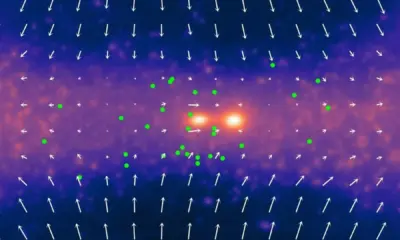
Recent research has led astronomers from China to undertake a comprehensive search for hypervelocity stars, which play a crucial role in understanding the Milky Way galaxy. These stars, known for their high velocities, offer insights into the galaxy’s gravitational potential and the distribution of matter. By identifying these stars, scientists hope to enhance their mapping of dark matter, a mysterious component believed to make up a significant portion of the universe.
Hypervelocity stars have been a focus of astronomical study since the 1920s. Their unique characteristics allow researchers to analyze various properties of the Milky Way. These stars are expelled from their home galaxies at incredible speeds, often exceeding 1,000 kilometers per second. This phenomenon not only reveals information about the galaxy’s structure but also aids in the exploration of dark matter’s elusive nature.
Enhanced Search Techniques
The recent endeavor by Chinese astronomers involves employing a specific class of stars recognized for their distinctive, regular, and predictable pulsation behaviors. This characteristic makes them valuable as distance indicators, simplifying the process of locating hypervelocity stars across vast cosmic distances. By leveraging these pulsating stars, the researchers aim to create a more detailed map of the Milky Way, contributing to a deeper understanding of its composition and dynamics.
This large-volume search is part of a broader initiative to investigate the fundamental properties of the universe. Dark matter, which does not emit light and is difficult to detect, has long puzzled scientists. The ability to identify hypervelocity stars enhances the potential for uncovering the distribution of dark matter within the galaxy, offering clues to its formation and evolution.
The Importance of Mapping Dark Matter
Understanding dark matter is critical for comprehending the universe’s overall structure. It is estimated that dark matter constitutes about 27% of the universe, yet its exact nature remains largely unknown. The findings from this research could provide essential data that assists in answering fundamental questions about the universe and its origins.
As the search for hypervelocity stars continues, the implications for astrophysics are significant. By combining advanced observational techniques with theoretical models, astronomers are poised to make substantial advancements in the study of cosmic phenomena. This ongoing research not only enriches our understanding of the Milky Way but also has the potential to reshape our perspective on the universe as a whole.
In conclusion, the efforts by Chinese astronomers to locate hypervelocity stars mark a pivotal step in mapping the dark matter of the Milky Way. As researchers delve deeper into the cosmos, their findings may illuminate the mysteries of dark matter and the fundamental workings of our galaxy, paving the way for future discoveries in the field of astrophysics.









Revolutionary Photonic Ski-Jump Could Miniaturize LiDAR Systems

Couples Detox from Plastics in New Netflix Doc: Can It Boost Fertility?

Aventon Launches Affordable Full-Suspension Electric Mountain Bike

Discover Eight Must-Try Restaurants This Spring Season

UC Irvine Team Unveils Innovative Ion Pump for Water Treatment

One-Third of Americans Trim Daily Expenses for Healthcare Needs

Apple Secures First Oscar in Three Years with F1: The Movie

Fourth Graders Celebrate St. Patrick’s Day with Creative Weather Drawings

Kim Kardashian Dazzles at Vanity Fair Oscars Party 2026

Nostradamus’ 2026 Predictions: Star Death and Dark Events Loom

Breakthroughs and Challenges Await Science in 2026

Electric Moto Influencer Surronster Arrested in Tijuana

OpenAI to Implement Age Verification for ChatGPT by December 2025

Discover the Top 10 Calorie Counting Apps of 2025

Recovering a Suspended TikTok Account: A Step-by-Step Guide

Bella Hadid Shares Health Update After Treatment for Lyme Disease

Backpack Drives Equip Students with Supplies for New School Year

Analysts Project Stronger Growth for Apple’s iPhone 17 Lineup
-
 Science8 months ago
Nostradamus’ 2026 Predictions: Star Death and Dark Events Loom
-
 Science8 months ago
Breakthroughs and Challenges Await Science in 2026
-
 Technology11 months ago
Electric Moto Influencer Surronster Arrested in Tijuana
-
 Technology9 months ago
OpenAI to Implement Age Verification for ChatGPT by December 2025
-
 Technology1 year ago
Discover the Top 10 Calorie Counting Apps of 2025
-
 Technology1 year ago
Recovering a Suspended TikTok Account: A Step-by-Step Guide
-
 Health11 months ago
Bella Hadid Shares Health Update After Treatment for Lyme Disease
-
 Education1 year ago
Backpack Drives Equip Students with Supplies for New School Year
-
 Health11 months ago
Analysts Project Stronger Growth for Apple’s iPhone 17 Lineup
-

 Health12 months ago
Japanese Study Finds Rose Oil Can Increase Brain Gray Matter
-

 Technology8 months ago
Top 10 Penny Stocks to Watch in 2026 for Strong Returns
-

 Science10 months ago
Starship V3 Set for 2026 Launch After Successful Final Test of Version 2