
Science
Advanced Machine Learning Enhances RFI Mitigation in SETI Research

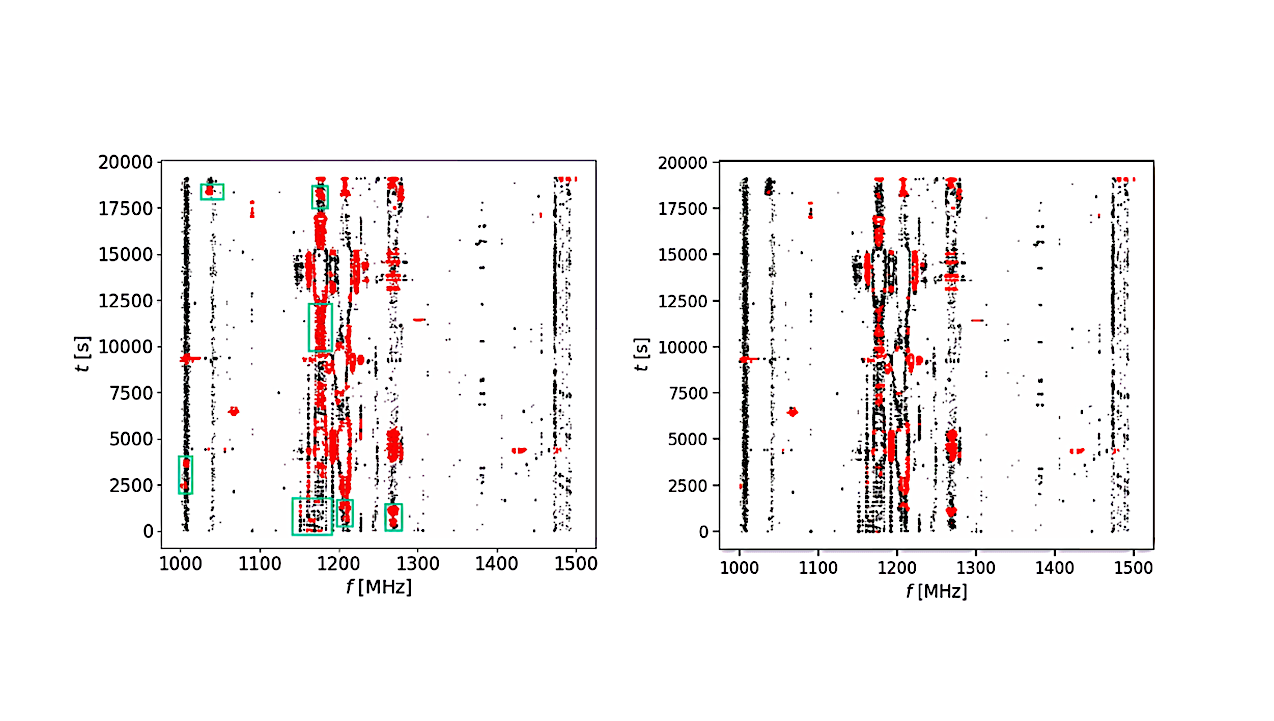
The search for extraterrestrial intelligence (SETI) has received a technological boost with the introduction of an enhanced machine learning technique aimed at mitigating radio frequency interference (RFI) in archival data from the Five-hundred-meter Aperture Spherical Telescope (FAST). This advancement is crucial as RFI can significantly hinder the detection of technosignatures from potential extraterrestrial life.
A team of researchers, including Li-Li Zhao and Xiao-Hang Luan, has applied the Density-Based Spatial Clustering of Applications with Noise (DBSCAN) algorithm to effectively identify and mitigate RFI in FAST’s commensal survey archival data from July 2019. The initial stages of RFI mitigation are essential, as they remove persistent and drifting narrowband interference. However, residual RFI remains a challenge due to its complex nature.
The researchers successfully identified and eliminated 36,977 instances of residual RFI, accounting for approximately 77.87% of the interference within a remarkable timeframe of just 1.678 seconds. This achievement represents a 7.44% improvement in the removal rate compared to previous machine learning methods, alongside a significant 24.85% reduction in execution time. The efficiency of the DBSCAN algorithm not only enhances RFI mitigation but also aids in preserving candidate signals of interest.
Further analysis of the data revealed intriguing candidate signals consistent with earlier studies. Notably, one candidate signal was retained for additional scrutiny, indicating the potential for future discoveries in the ongoing search for extraterrestrial life.
This research, which spans 14 pages and includes 2 tables and 8 figures, has been accepted for publication in The Astronomical Journal. The findings underscore the importance of leveraging advanced computational techniques in astrophysical research, particularly in the context of SETI, where the ability to filter out interference can significantly impact the outcomes of surveys.
In conclusion, the implementation of the DBSCAN algorithm marks a significant step forward in the quest to identify signals from extraterrestrial civilizations. The success of this improved machine learning approach reinforces the ongoing efforts of researchers in the field, promising a more efficient and effective methodology for future investigations into the cosmos.

Revolutionary Photonic Ski-Jump Could Miniaturize LiDAR Systems

Couples Detox from Plastics in New Netflix Doc: Can It Boost Fertility?

Aventon Launches Affordable Full-Suspension Electric Mountain Bike

Discover Eight Must-Try Restaurants This Spring Season

UC Irvine Team Unveils Innovative Ion Pump for Water Treatment

One-Third of Americans Trim Daily Expenses for Healthcare Needs

Apple Secures First Oscar in Three Years with F1: The Movie

Fourth Graders Celebrate St. Patrick’s Day with Creative Weather Drawings

Kim Kardashian Dazzles at Vanity Fair Oscars Party 2026

Nostradamus’ 2026 Predictions: Star Death and Dark Events Loom

Breakthroughs and Challenges Await Science in 2026

Electric Moto Influencer Surronster Arrested in Tijuana

OpenAI to Implement Age Verification for ChatGPT by December 2025

Discover the Top 10 Calorie Counting Apps of 2025

Recovering a Suspended TikTok Account: A Step-by-Step Guide

Bella Hadid Shares Health Update After Treatment for Lyme Disease

Backpack Drives Equip Students with Supplies for New School Year

Analysts Project Stronger Growth for Apple’s iPhone 17 Lineup
-
 Science8 months ago
Nostradamus’ 2026 Predictions: Star Death and Dark Events Loom
-
 Science8 months ago
Breakthroughs and Challenges Await Science in 2026
-
 Technology11 months ago
Electric Moto Influencer Surronster Arrested in Tijuana
-
 Technology9 months ago
OpenAI to Implement Age Verification for ChatGPT by December 2025
-
 Technology1 year ago
Discover the Top 10 Calorie Counting Apps of 2025
-
 Technology1 year ago
Recovering a Suspended TikTok Account: A Step-by-Step Guide
-
 Health11 months ago
Bella Hadid Shares Health Update After Treatment for Lyme Disease
-
 Education1 year ago
Backpack Drives Equip Students with Supplies for New School Year
-
 Health11 months ago
Analysts Project Stronger Growth for Apple’s iPhone 17 Lineup
-

 Health12 months ago
Japanese Study Finds Rose Oil Can Increase Brain Gray Matter
-

 Technology8 months ago
Top 10 Penny Stocks to Watch in 2026 for Strong Returns
-

 Science10 months ago
Starship V3 Set for 2026 Launch After Successful Final Test of Version 2