
Lifestyle
High School Extracurriculars Reveal Altruism Trends Among Students

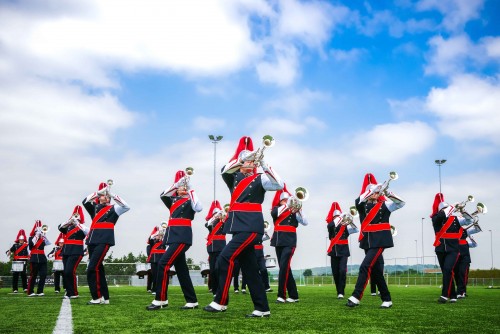
Research from Rutgers University suggests that high school extracurricular activities may significantly influence students’ levels of compassion in adulthood. The study, led by Chien-Chung Huang, a professor at the Rutgers School of Social Work, indicates that so-called “geeky” activities, including volunteer work and clubs, foster greater altruism compared to traditional sports.
The investigation, published in the journal Youth & Society, analyzed data from the long-term Future of Families and Child Wellbeing Study. This ongoing research has tracked thousands of participants across the United States since 1998. In 2022, over 2,700 respondents provided insights into their high school extracurricular involvement between 2014 and 2018.
Approximately 87% of participants reported engagement in after-school activities. Notably, around 70% indicated they had engaged in altruistic behaviors during the COVID-19 pandemic, such as running errands, providing childcare, or offering financial support to others in need.
Huang and his team employed statistical modeling to evaluate the correlation between extracurricular engagement and altruistic behaviors. Their findings revealed a distinct pattern: higher involvement in after-school programs was linked to a greater likelihood of helping others during crises. Volunteer service emerged as the most significant predictor of altruism, followed by participation in school clubs, hobbies, religious services, and performance groups. In contrast, sports, despite being the most widely participated activity, ranked lowest in terms of fostering altruistic behavior.
Huang emphasized that these findings should prompt policymakers and school administrators to reconsider how sports are integrated into student development. While he acknowledged that athletes often excel academically and demonstrate strong leadership skills, he also pointed out that the competitive nature of sports can limit opportunities for nurturing altruism.
“Coaches could incorporate volunteering into their sports programs,” Huang suggested. “Teams could engage in monthly activities at community centers or retirement homes, fostering closer bonds and adding an altruistic dimension to their experience.”
Importantly, Huang clarified that the study is not a criticism of sports themselves but rather a reminder that all extracurricular activities have the potential to include opportunities for caring for others. He asserted that after-school programs, including athletics, play a crucial role in preparing young people to contribute meaningfully during times of societal need.
This research not only sheds light on the role of extracurriculars in shaping future altruistic behaviors but also underscores the importance of fostering compassion in young people. As schools consider how best to support student development, integrating elements of service and community engagement into various activities could benefit both individuals and society as a whole.












Revolutionary Photonic Ski-Jump Could Miniaturize LiDAR Systems

Couples Detox from Plastics in New Netflix Doc: Can It Boost Fertility?

Aventon Launches Affordable Full-Suspension Electric Mountain Bike

Discover Eight Must-Try Restaurants This Spring Season

UC Irvine Team Unveils Innovative Ion Pump for Water Treatment

One-Third of Americans Trim Daily Expenses for Healthcare Needs

Apple Secures First Oscar in Three Years with F1: The Movie

Fourth Graders Celebrate St. Patrick’s Day with Creative Weather Drawings

Kim Kardashian Dazzles at Vanity Fair Oscars Party 2026

Nostradamus’ 2026 Predictions: Star Death and Dark Events Loom

Breakthroughs and Challenges Await Science in 2026

Electric Moto Influencer Surronster Arrested in Tijuana

OpenAI to Implement Age Verification for ChatGPT by December 2025

Discover the Top 10 Calorie Counting Apps of 2025

Recovering a Suspended TikTok Account: A Step-by-Step Guide

Bella Hadid Shares Health Update After Treatment for Lyme Disease

Backpack Drives Equip Students with Supplies for New School Year

Analysts Project Stronger Growth for Apple’s iPhone 17 Lineup
-
 Science8 months ago
Nostradamus’ 2026 Predictions: Star Death and Dark Events Loom
-
 Science8 months ago
Breakthroughs and Challenges Await Science in 2026
-
 Technology11 months ago
Electric Moto Influencer Surronster Arrested in Tijuana
-
 Technology9 months ago
OpenAI to Implement Age Verification for ChatGPT by December 2025
-
 Technology1 year ago
Discover the Top 10 Calorie Counting Apps of 2025
-
 Technology1 year ago
Recovering a Suspended TikTok Account: A Step-by-Step Guide
-
 Health11 months ago
Bella Hadid Shares Health Update After Treatment for Lyme Disease
-
 Education1 year ago
Backpack Drives Equip Students with Supplies for New School Year
-
 Health12 months ago
Analysts Project Stronger Growth for Apple’s iPhone 17 Lineup
-

 Health12 months ago
Japanese Study Finds Rose Oil Can Increase Brain Gray Matter
-

 Technology8 months ago
Top 10 Penny Stocks to Watch in 2026 for Strong Returns
-

 Science10 months ago
Starship V3 Set for 2026 Launch After Successful Final Test of Version 2