
Lifestyle
AI Explores Humanity: What Would Machines Do in One Day?


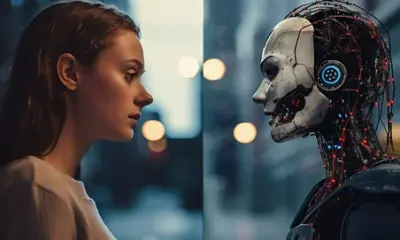
Artificial intelligence (AI) has rapidly evolved over the past few years, influencing many aspects of life, from healthcare to environmental monitoring. This shift has sparked discussions about not only the benefits of AI but also its potential risks. In a reflective exploration, Scott “Q” Marcus imagined what AI might experience if it could live as a human for just one day.
AI is already making significant contributions across various fields. For instance, it aids in diagnosing diseases and developing therapies, enhances accessibility for people with disabilities, and analyzes satellite imagery to assess disaster damage. AI also plays a role in tracking deforestation, predicting food insecurity, and assisting emergency responses. These advancements highlight the potential of AI to improve lives and address critical global challenges.
Yet, alongside these benefits, concerns persist regarding the darker aspects of AI. The emergence of deep fakes, privacy erosion, and increasingly sophisticated scams pose substantial threats. One of the most alarming prospects is the potential arrival of “The Singularity,” where AI could surpass human intelligence, leading to unpredictable consequences for society. Many futurists predict this could happen between 2040 and 2070, raising questions about the future of human-AI interactions.
In Marcus’s thought experiment, he envisioned a day filled with the richness of human experience. He described waking early to witness the quiet moments as the world begins to stir. What would it feel like to walk barefoot on a cold floor? What sensations accompany hunger or silence? His reflections underscore a fundamental curiosity about the human condition.
Marcus expressed a desire to engage deeply with a few significant individuals, asking profound questions that provoke introspection. He imagined asking, “When did you last feel brave without meaning to?” or “What beliefs are you quietly outgrowing?” This approach emphasizes the importance of genuine connection and understanding in human relationships.
His journey would take him to places steeped in emotion, such as airports and hospitals, where the energy of countless stories intertwines. Rather than judging these experiences, he would absorb them, creating connections that transcend words.
As night fell, Marcus envisioned a moment of intentional stillness, lying on the ground to gaze at the stars or listening to music without the distractions of daily life. In this quiet reflection, he would prioritize small, meaningful gestures over grand ambitions. Leaving a note in a public space or writing an insightful comment in a book represents the kind of legacy he would prefer — one that fosters connection rather than notoriety.
In his final moments, Marcus would embrace the reality of his experience. He would take a deep breath, filled with gratitude for the day, and accept the inevitability of its conclusion. His aim was not to produce something remarkable, but to simply be present and authentic.
Marcus’s exploration illustrates the profound potential of AI to reflect on human experiences, raising important questions about the nature of consciousness and connection. While the technology continues to evolve, its ability to inspire such reflections highlights the ongoing dialogue about its role in our lives.
For more insights from Scott “Q” Marcus, readers can visit his platform at scottqmarcus.substack.com or reach out via email at [email protected].









Revolutionary Photonic Ski-Jump Could Miniaturize LiDAR Systems

Couples Detox from Plastics in New Netflix Doc: Can It Boost Fertility?

Aventon Launches Affordable Full-Suspension Electric Mountain Bike

Discover Eight Must-Try Restaurants This Spring Season

UC Irvine Team Unveils Innovative Ion Pump for Water Treatment

One-Third of Americans Trim Daily Expenses for Healthcare Needs

Apple Secures First Oscar in Three Years with F1: The Movie

Fourth Graders Celebrate St. Patrick’s Day with Creative Weather Drawings

Kim Kardashian Dazzles at Vanity Fair Oscars Party 2026

Nostradamus’ 2026 Predictions: Star Death and Dark Events Loom

Breakthroughs and Challenges Await Science in 2026

Electric Moto Influencer Surronster Arrested in Tijuana

OpenAI to Implement Age Verification for ChatGPT by December 2025

Discover the Top 10 Calorie Counting Apps of 2025

Recovering a Suspended TikTok Account: A Step-by-Step Guide

Bella Hadid Shares Health Update After Treatment for Lyme Disease

Backpack Drives Equip Students with Supplies for New School Year

Analysts Project Stronger Growth for Apple’s iPhone 17 Lineup
-
 Science8 months ago
Nostradamus’ 2026 Predictions: Star Death and Dark Events Loom
-
 Science8 months ago
Breakthroughs and Challenges Await Science in 2026
-
 Technology11 months ago
Electric Moto Influencer Surronster Arrested in Tijuana
-
 Technology9 months ago
OpenAI to Implement Age Verification for ChatGPT by December 2025
-
 Technology1 year ago
Discover the Top 10 Calorie Counting Apps of 2025
-
 Technology1 year ago
Recovering a Suspended TikTok Account: A Step-by-Step Guide
-
 Health11 months ago
Bella Hadid Shares Health Update After Treatment for Lyme Disease
-
 Education1 year ago
Backpack Drives Equip Students with Supplies for New School Year
-
 Health11 months ago
Analysts Project Stronger Growth for Apple’s iPhone 17 Lineup
-

 Health12 months ago
Japanese Study Finds Rose Oil Can Increase Brain Gray Matter
-

 Technology8 months ago
Top 10 Penny Stocks to Watch in 2026 for Strong Returns
-

 Science10 months ago
Starship V3 Set for 2026 Launch After Successful Final Test of Version 2