
Health
Trump Administration Disrupts Decades-Long Research Collaboration

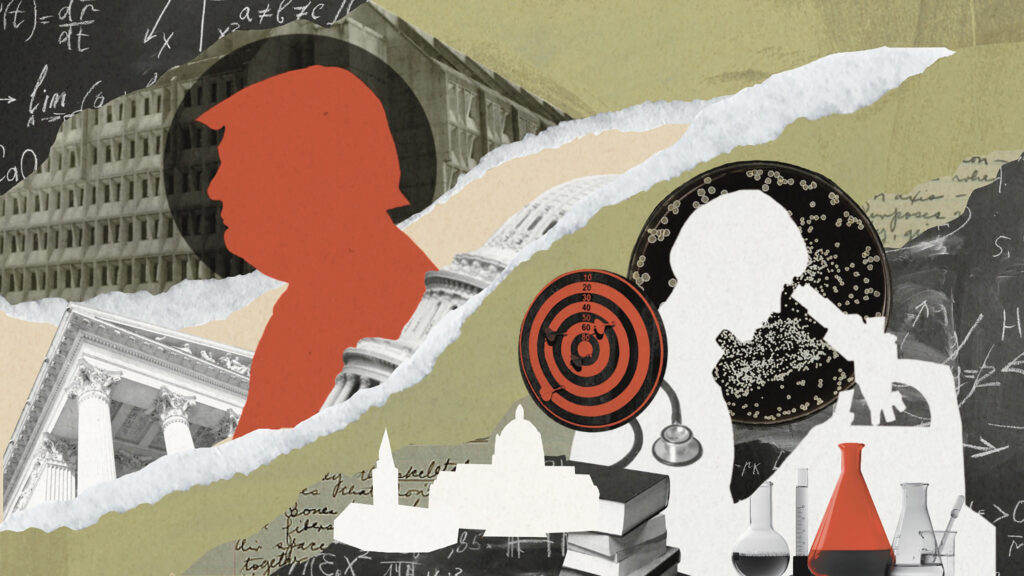
For many researchers in the United States, the year 2025 marks a significant turning point in the landscape of scientific funding. The Trump administration has dramatically altered the long-standing partnership between the federal government and academic institutions, leaving many scientists facing uncertainty regarding their research futures. This shift has not only affected funding levels but has also raised questions about the integrity of the research ecosystem that has historically propelled the country to the forefront of scientific advancement.
The National Institutes of Health (NIH), which has traditionally seen its funding increase year after year since the end of World War II, has now found itself in a precarious position. According to a STAT analysis of nearly 750,000 grants from the NIH RePORTER database, the total number of grant awards made from January through September 2025 dropped by 11.6% compared to the same period in 2024. While the total funding amount remained relatively stable, the number of new awards fell sharply, impacting critical areas such as cancer research, Alzheimer’s disease, and HIV/AIDS.
Impact on Research Funding and Academic Institutions
The decline in awards is largely attributed to a shift in funding strategy, with the NIH opting to pay for many multiyear grants upfront. This change has restricted the overall number of projects that can be funded, affecting not just the controversial areas of vaccine research and health disparities, but also diminishing support for high-risk, high-reward grants. In 2025, the NIH funded 364 high-risk grants, down from 406 the previous year.
As academic institutions grapple with this volatile funding climate, many are adopting defensive measures. Hiring freezes and layoffs have become common, and programs for graduate training have been scaled back significantly. Early indications from the National Student Clearinghouse Research Center suggest that enrollments in Ph.D. programs within the life and biomedical sciences flatlined in the fall of 2025.
The erosion of trust in the U.S. government’s role as a reliable partner in scientific research has been particularly concerning for many within the academic community. One NIH official expressed to STAT, “That’s the most devastating part of all this. Why would anyone trust the NIH ever again?” This sentiment echoes the frustrations voiced by academics like Shirley Tilghman, a prominent molecular biologist and former president of Princeton University, who remarked on the unintended consequences of the administration’s actions.
Reforming the Scientific Landscape
While some scientists view the current situation as a tragedy, others in the administration see an opportunity for reform. The administration’s leaders believe that the disruptions could lead to necessary changes in the way federal funding is allocated to universities and researchers. These potential reforms aim to dismantle what some perceive as an outdated system that has not sufficiently adapted to the needs of modern science.
Interviews conducted by STAT with over two dozen biomedical researchers, policy experts, and former federal officials, including past NIH directors, reveal a range of perspectives on the implications of the funding cuts. Many express concern over the long-term impacts on health and science in America, with a consensus emerging that the traditional partnership between government and academia may never return to its previous state.
Larry Tabak, who served as the NIH’s principal deputy director until early 2025, summarized the sentiment by stating, “Whatever comes next is never going to be what it used to be. The genie is out of the bottle.”
As the landscape of research funding continues to evolve, the academic community is left to navigate a system that has been fundamentally altered. The future of scientific inquiry in the United States now depends on how researchers, institutions, and policymakers respond to these unprecedented challenges.










Revolutionary Photonic Ski-Jump Could Miniaturize LiDAR Systems

Couples Detox from Plastics in New Netflix Doc: Can It Boost Fertility?

Aventon Launches Affordable Full-Suspension Electric Mountain Bike

Discover Eight Must-Try Restaurants This Spring Season

UC Irvine Team Unveils Innovative Ion Pump for Water Treatment

One-Third of Americans Trim Daily Expenses for Healthcare Needs

Apple Secures First Oscar in Three Years with F1: The Movie

Fourth Graders Celebrate St. Patrick’s Day with Creative Weather Drawings

Kim Kardashian Dazzles at Vanity Fair Oscars Party 2026

Nostradamus’ 2026 Predictions: Star Death and Dark Events Loom

Breakthroughs and Challenges Await Science in 2026

Electric Moto Influencer Surronster Arrested in Tijuana

OpenAI to Implement Age Verification for ChatGPT by December 2025

Discover the Top 10 Calorie Counting Apps of 2025

Bella Hadid Shares Health Update After Treatment for Lyme Disease

Analysts Project Stronger Growth for Apple’s iPhone 17 Lineup

Japanese Study Finds Rose Oil Can Increase Brain Gray Matter

Top 10 Penny Stocks to Watch in 2026 for Strong Returns
-
 Science3 months ago
Nostradamus’ 2026 Predictions: Star Death and Dark Events Loom
-
 Science4 months ago
Breakthroughs and Challenges Await Science in 2026
-
 Technology7 months ago
Electric Moto Influencer Surronster Arrested in Tijuana
-
 Technology4 months ago
OpenAI to Implement Age Verification for ChatGPT by December 2025
-
 Technology9 months ago
Discover the Top 10 Calorie Counting Apps of 2025
-
 Health7 months ago
Bella Hadid Shares Health Update After Treatment for Lyme Disease
-
 Health7 months ago
Analysts Project Stronger Growth for Apple’s iPhone 17 Lineup
-
 Health7 months ago
Japanese Study Finds Rose Oil Can Increase Brain Gray Matter
-
 Technology4 months ago
Top 10 Penny Stocks to Watch in 2026 for Strong Returns
-

 Science6 months ago
Starship V3 Set for 2026 Launch After Successful Final Test of Version 2
-

 Technology1 month ago
Nvidia GTC 2026: Major Announcements Expected for AI and Hardware
-

 Education7 months ago
Harvard Secures Court Victory Over Federal Funding Cuts