
Health
Study Reveals Key Genetic Variants in Neuroendocrine Tumors

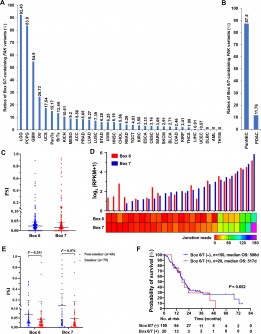
Research from the **Chinese Academy of Medical Sciences** and **Peking Union Medical College** has unveiled significant findings regarding the oncogene **Focal Adhesion Kinase (FAK)** in neuroendocrine tumors (NENs) of the pancreas and breast. The study, published in the journal **Frontiers of Medicine**, highlights the prevalence of specific splicing variants of FAK, providing insights that could lead to new biomarkers and therapeutic targets for these challenging tumors.
The researchers analyzed data from **The Cancer Genome Atlas**, which includes information from **9,193 patients across 33 different cancer subtypes**. Their findings indicate that splicing variants containing **Box 6/Box 7** of FAK, referred to as **FAK 6/7**, occur in a majority of pancreatic neuroendocrine carcinomas. Specifically, **87.5%** of the **8 tested pancreatic neuroendocrine carcinomas** exhibited the FAK 6/7 variant, compared to **11.76%** of **170 pancreatic ductal adenocarcinomas (PDACs)**.
In further testing involving **157 tumor samples** from Chinese patients diagnosed with pancreatic tumors, the researchers found that **FAK 6/7** was present in **75.6%** of **45 pancreatic NENs** and **47.5%** of **40 pancreatic solid pseudopapillary neoplasms**. In stark contrast, this variant was found in only **2.9%** of **69 PDACs**.
The study also extended its analysis to breast neuroendocrine carcinoma (BrNECs), where **FAK 6/7** was identified in **93.3%** of **15 BrNECs** but absent in **all 23 non-NEC breast cancer samples** tested. This striking difference underscores the potential of FAK 6/7 as a specific biomarker for neuroendocrine tumors.
The researchers explored the mechanisms underlying these findings and identified an overexpression of a splicing factor known as **serine/arginine repetitive matrix protein 4 (SRRM4)** in FAK 6/7-positive tumors. This overexpression appears to facilitate the production of the FAK 6/7 variant in both pancreatic and breast tumors, indicating a possible pathway for further investigation.
Given these insights, the authors suggest that **FAK 6/7** could serve not only as a biomarker for NENs but also represent a promising therapeutic target for these often-overlooked diseases. The study received funding from multiple prestigious sources, including the **Key Project of the National Natural Science Foundation of China** and the **National Key Research and Development Program of China**.
For those interested in the comprehensive findings, the full study is available in **Volume 17, Issue 5** of **Frontiers of Medicine**. The research opens avenues for future studies aimed at targeting FAK variants in clinical settings, potentially improving outcomes for patients with neuroendocrine tumors.

Revolutionary Photonic Ski-Jump Could Miniaturize LiDAR Systems

Couples Detox from Plastics in New Netflix Doc: Can It Boost Fertility?

Aventon Launches Affordable Full-Suspension Electric Mountain Bike

Discover Eight Must-Try Restaurants This Spring Season

UC Irvine Team Unveils Innovative Ion Pump for Water Treatment

One-Third of Americans Trim Daily Expenses for Healthcare Needs

Apple Secures First Oscar in Three Years with F1: The Movie

Fourth Graders Celebrate St. Patrick’s Day with Creative Weather Drawings

Kim Kardashian Dazzles at Vanity Fair Oscars Party 2026

Nostradamus’ 2026 Predictions: Star Death and Dark Events Loom

Breakthroughs and Challenges Await Science in 2026

Electric Moto Influencer Surronster Arrested in Tijuana

OpenAI to Implement Age Verification for ChatGPT by December 2025

Discover the Top 10 Calorie Counting Apps of 2025

Recovering a Suspended TikTok Account: A Step-by-Step Guide

Bella Hadid Shares Health Update After Treatment for Lyme Disease

Backpack Drives Equip Students with Supplies for New School Year

Analysts Project Stronger Growth for Apple’s iPhone 17 Lineup
-
 Science7 months ago
Nostradamus’ 2026 Predictions: Star Death and Dark Events Loom
-
 Science7 months ago
Breakthroughs and Challenges Await Science in 2026
-
 Technology11 months ago
Electric Moto Influencer Surronster Arrested in Tijuana
-
 Technology8 months ago
OpenAI to Implement Age Verification for ChatGPT by December 2025
-
 Technology1 year ago
Discover the Top 10 Calorie Counting Apps of 2025
-
 Technology1 year ago
Recovering a Suspended TikTok Account: A Step-by-Step Guide
-
 Health11 months ago
Bella Hadid Shares Health Update After Treatment for Lyme Disease
-
 Education1 year ago
Backpack Drives Equip Students with Supplies for New School Year
-
 Health11 months ago
Analysts Project Stronger Growth for Apple’s iPhone 17 Lineup
-

 Technology7 months ago
Top 10 Penny Stocks to Watch in 2026 for Strong Returns
-

 Health11 months ago
Japanese Study Finds Rose Oil Can Increase Brain Gray Matter
-

 Science10 months ago
Starship V3 Set for 2026 Launch After Successful Final Test of Version 2