
Health
Researcher Discusses Leucovorin’s Role in Autism Treatment

In a significant development for autism treatment, the federal government plans to update the labeling of leucovorin, a drug derived from folinic acid, making it more accessible for patients. This announcement, made by President Donald Trump, aims to facilitate the use of leucovorin calcium tablets specifically for individuals with autism who also suffer from cerebral folate deficiency, a condition that hinders the transport of folate into the brain.
The autism community has long discussed the potential benefits of leucovorin through anecdotal evidence shared among parents. For decades, some families have reported improvements in their children’s communication abilities after administering folinic acid, leading some physicians to prescribe leucovorin. Despite this growing interest, the scientific backing for leucovorin remains limited and primarily stems from small-scale studies.
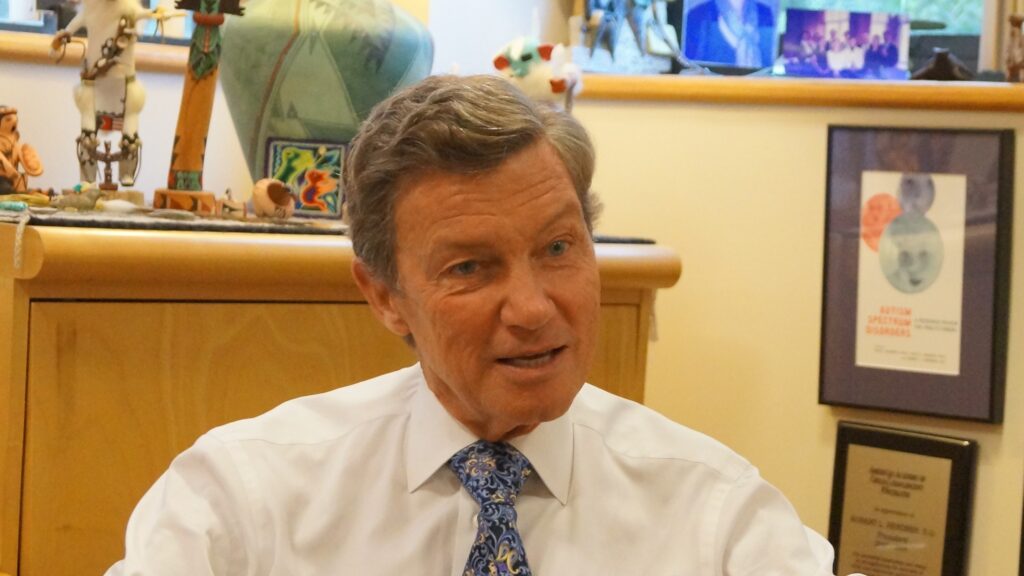
According to Robert Hendren, a retired autism researcher from the University of California, San Francisco, who conducted research on this treatment, the effectiveness of leucovorin is modest at best. His 2020 study involving 12 children showed little noticeable change after 12 weeks of treatment. While Hendren acknowledges that some subgroups may experience minor improvements in communication, he cautions parents against overly optimistic expectations.
Hendren’s initial interest in leucovorin arose when fellow researcher Richard Frye suggested submitting a grant proposal to investigate the effects of both vitamin B12 and leucovorin. Although the grant was not funded, it sparked Hendren’s curiosity about the potential pathways affected by leucovorin in relation to autism. He subsequently conducted a small study at the Oak Hill School in California, where he administered leucovorin to a group of children with autism.
The results of Hendren’s study were inconclusive. “There was not a clear improvement in the leucovorin group, but there was a subgroup that seemed to do better,” he stated. He highlighted that while some children may show minor enhancements in speech and language, the overall response to leucovorin or folinic acid is not strong enough to warrant expectations of significant change.
Hendren suggests further studies to solidify Frye’s findings. Specifically, testing for cerebral folate deficiency in patients prior to administering leucovorin could help determine the drug’s effectiveness in this subset of individuals. He emphasizes the need for caution: “It’s not going to cure autism. It’s not going to make them speak or fully be able to communicate, but it’ll make things a little bit better.”
The recent announcement regarding leucovorin’s accessibility has stirred conversations among parents and researchers alike. While some families remain hopeful, Hendren notes that many parents from his study ultimately discontinued the treatment. “None of the parents in the study continued to take leucovorin,” he explained, although a few families still explore the supplement as a potential aid for their children.
Hendren’s insights into the autism treatment landscape reflect a broader tension between anecdotal claims and scientific validation. He recalls interactions with groups advocating for alternative treatments, such as the Defeat Autism Now (DAN) movement, which often relied on testimonials rather than rigorous research.
Funding for studies on supplements like leucovorin remains a challenge, as pharmaceutical companies typically focus on patented drugs. This gap in research underscores the complexity of autism, which is influenced by a myriad of genetic and environmental factors.
In light of his extensive research background, Hendren also expressed concern regarding public statements made by influential figures, including President Trump and political activist Robert F. Kennedy Jr., who have made strong claims about links between certain medications and autism. Hendren commended their interest in the subject but criticized their lack of scientific grounding.
“I’m really happy that Trump and RFK Jr. are interested in autism,” he said. “But I don’t applaud them appointing themselves as experts and telling mothers what to do.” Hendren encourages a commitment to evidence-based science to avoid perpetuating stigmas or misinformation surrounding autism.
As the conversation around leucovorin and its role in autism treatment continues, Hendren remains focused on the importance of research and the careful consideration of each child’s unique needs. He believes that while leucovorin may not provide a definitive solution for autism, it represents a step toward understanding and addressing the complexities of this condition.
In conclusion, the arrival of leucovorin calcium tablets as a treatment option is a noteworthy development for families affected by autism. Yet, as researchers and parents navigate this terrain, it is critical to maintain realistic expectations and prioritize scientifically validated approaches.












Revolutionary Photonic Ski-Jump Could Miniaturize LiDAR Systems

Couples Detox from Plastics in New Netflix Doc: Can It Boost Fertility?

Aventon Launches Affordable Full-Suspension Electric Mountain Bike

Discover Eight Must-Try Restaurants This Spring Season

UC Irvine Team Unveils Innovative Ion Pump for Water Treatment

One-Third of Americans Trim Daily Expenses for Healthcare Needs

Apple Secures First Oscar in Three Years with F1: The Movie

Fourth Graders Celebrate St. Patrick’s Day with Creative Weather Drawings

Kim Kardashian Dazzles at Vanity Fair Oscars Party 2026

Nostradamus’ 2026 Predictions: Star Death and Dark Events Loom

Breakthroughs and Challenges Await Science in 2026

Electric Moto Influencer Surronster Arrested in Tijuana

OpenAI to Implement Age Verification for ChatGPT by December 2025

Discover the Top 10 Calorie Counting Apps of 2025

Recovering a Suspended TikTok Account: A Step-by-Step Guide

Bella Hadid Shares Health Update After Treatment for Lyme Disease

Backpack Drives Equip Students with Supplies for New School Year

Analysts Project Stronger Growth for Apple’s iPhone 17 Lineup
-
 Science8 months ago
Nostradamus’ 2026 Predictions: Star Death and Dark Events Loom
-
 Science8 months ago
Breakthroughs and Challenges Await Science in 2026
-
 Technology11 months ago
Electric Moto Influencer Surronster Arrested in Tijuana
-
 Technology9 months ago
OpenAI to Implement Age Verification for ChatGPT by December 2025
-
 Technology1 year ago
Discover the Top 10 Calorie Counting Apps of 2025
-
 Technology1 year ago
Recovering a Suspended TikTok Account: A Step-by-Step Guide
-
 Health11 months ago
Bella Hadid Shares Health Update After Treatment for Lyme Disease
-
 Education1 year ago
Backpack Drives Equip Students with Supplies for New School Year
-
 Health12 months ago
Analysts Project Stronger Growth for Apple’s iPhone 17 Lineup
-

 Health12 months ago
Japanese Study Finds Rose Oil Can Increase Brain Gray Matter
-

 Technology8 months ago
Top 10 Penny Stocks to Watch in 2026 for Strong Returns
-

 Science10 months ago
Starship V3 Set for 2026 Launch After Successful Final Test of Version 2