
Health
Rare Enzyme Mutation Uncovers New Pathway in Dementia Research

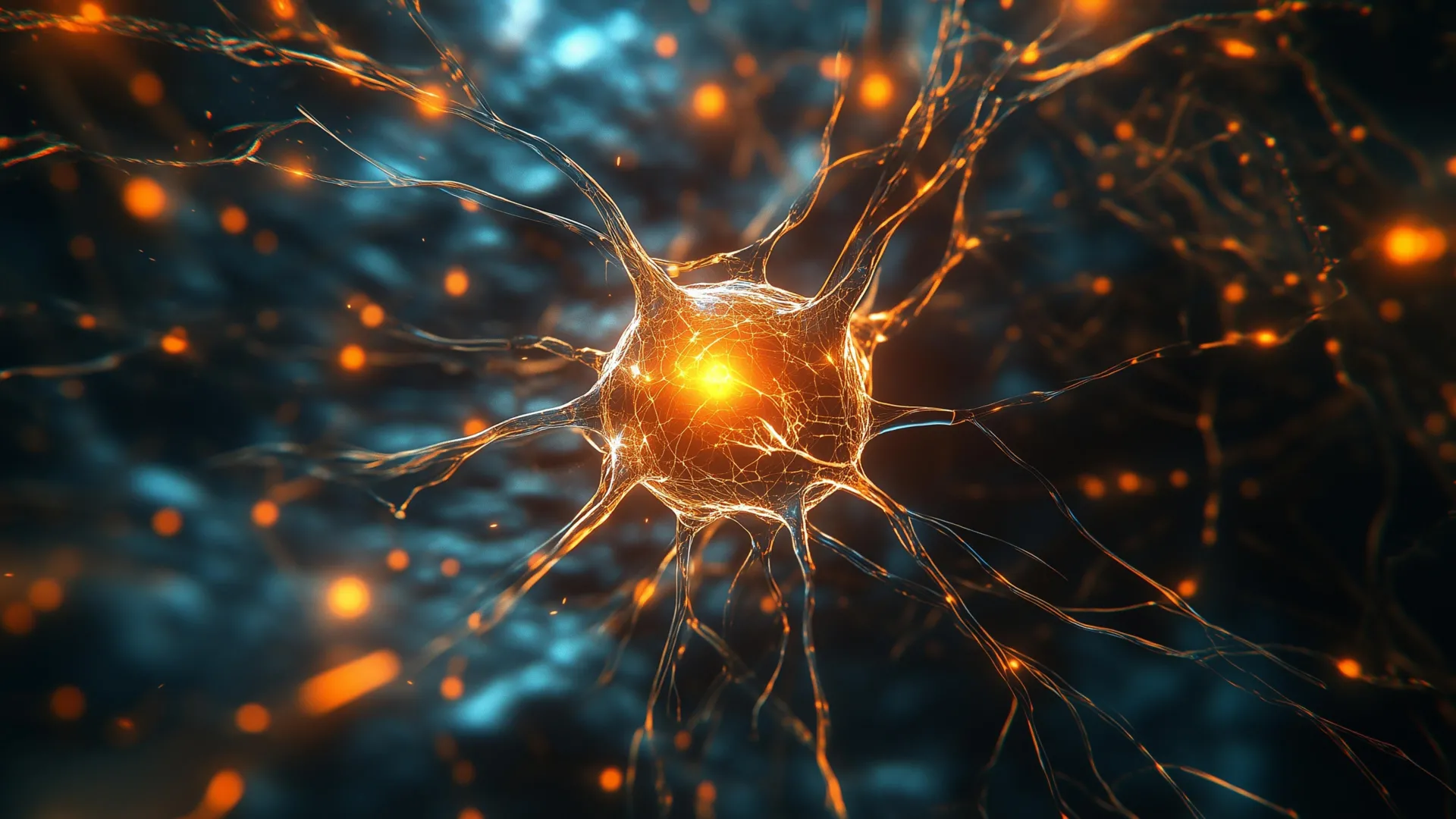
A recent study from researchers at **Helmholtz Munich** has identified a rare enzyme mutation that may reveal a critical factor in the onset of dementia. This breakthrough focuses on the enzyme **glutathione peroxidase 4** (GPX4), which plays a vital role in protecting neurons. The study, published on **December 9, 2025**, highlights how a specific mutation can compromise neuronal health, potentially leading to early-onset dementia.
The research, led by **Prof. Marcus Conrad**, Director of the Institute of Metabolism and Cell Death at Helmholtz Munich and Chair of Translational Redox Biology at the **Technical University of Munich** (TUM), examined how nerve cells defend themselves against a form of cell death known as ferroptosis. The findings suggest that a single genetic alteration can disrupt the protective function of GPX4, which is crucial for maintaining cell membrane integrity.
In children with a rare genetic form of early-onset dementia, a mutation identified as **R152H** leads to significant changes in the structure of GPX4. When functioning correctly, GPX4 utilizes a short protein segment, likened to a “fin,” that embeds within the inner surface of neuronal membranes. This configuration allows GPX4 to neutralize lipid peroxides—harmful molecules that can damage cell membranes.
**”GPX4 is a bit like a surfboard,”** says Conrad. **”With its fin immersed into the cell membrane, it rides along the inner surface and swiftly detoxifies lipid peroxides as it goes.”** The mutation, however, alters this fin-like structure, preventing GPX4 from properly embedding itself. As a result, lipid peroxides accumulate, leading to membrane vulnerability, triggering ferroptosis, and ultimately resulting in neuron loss.
The research team began their investigation with three children in the United States who exhibit this unusual mutation. Scientists reverted cells from one affected child to a stem-cell-like state, which then enabled them to grow cortical neurons and three-dimensional brain organoids for further study.
To further understand the implications of the R152H mutation, the researchers introduced it into a mouse model. This allowed them to observe how modifying GPX4 affected entire organisms. The mice developed notable motor impairments, experienced significant neuron loss in the **cerebral cortex** and **cerebellum**, and exhibited neuroinflammatory responses. These findings closely mirrored the conditions observed in the affected children and also reflected patterns associated with common neurodegenerative diseases.
Additionally, the team analyzed protein levels in mouse models, discovering shifts that closely resemble those found in **Alzheimer’s disease**. Changes in protein levels documented in patients with Alzheimer’s were echoed in mice lacking functional GPX4, suggesting that ferroptotic stress may play a role not only in this rare childhood condition but also in more prevalent dementia-related disorders.
**”Our data indicate that ferroptosis can be a driving force behind neuronal death—not just a side effect,”** says **Dr. Svenja Lorenz**, one of the study’s lead authors. She emphasizes a shift in dementia research focus, moving away from solely examining amyloid-beta plaques in the brain to addressing the damage to cell membranes that initiates neurodegeneration.
Early experiments indicate that inhibiting ferroptosis could slow cell death associated with the loss of GPX4 in both cell cultures and mouse models. **”This is an important proof of principle, but it is not yet a therapy,”** cautions **Dr. Tobias Seibt**, a nephrologist at **LMU University Hospital Munich** and co-first author of the study.
**Dr. Adam Wahida**, another first author, envisions potential genetic or molecular strategies to stabilize this protective system in the future, although he acknowledges that the current work remains firmly within the realm of basic research.
This project exemplifies a long-term scientific collaboration that has spanned nearly 14 years, integrating expertise from genetics, structural biology, stem cell research, and neuroscience. **”It has taken us almost 14 years to link a yet-unrecognized small structural element of a single enzyme to a severe human disease,”** remarks Conrad. He underscores the importance of sustained funding for fundamental research and the necessity of international multidisciplinary teams to unravel complex diseases like dementia.
This discovery not only sheds light on the mechanisms of early-onset dementia but also opens new avenues for understanding and potentially treating various forms of dementia in the future.













Revolutionary Photonic Ski-Jump Could Miniaturize LiDAR Systems

Couples Detox from Plastics in New Netflix Doc: Can It Boost Fertility?

Aventon Launches Affordable Full-Suspension Electric Mountain Bike

Discover Eight Must-Try Restaurants This Spring Season

UC Irvine Team Unveils Innovative Ion Pump for Water Treatment

One-Third of Americans Trim Daily Expenses for Healthcare Needs

Apple Secures First Oscar in Three Years with F1: The Movie

Fourth Graders Celebrate St. Patrick’s Day with Creative Weather Drawings

Kim Kardashian Dazzles at Vanity Fair Oscars Party 2026

Nostradamus’ 2026 Predictions: Star Death and Dark Events Loom

Breakthroughs and Challenges Await Science in 2026

OpenAI to Implement Age Verification for ChatGPT by December 2025

Electric Moto Influencer Surronster Arrested in Tijuana

Discover the Top 10 Calorie Counting Apps of 2025

Bella Hadid Shares Health Update After Treatment for Lyme Disease

Analysts Project Stronger Growth for Apple’s iPhone 17 Lineup

Top 10 Penny Stocks to Watch in 2026 for Strong Returns

Japanese Study Finds Rose Oil Can Increase Brain Gray Matter
-
 Science3 months ago
Nostradamus’ 2026 Predictions: Star Death and Dark Events Loom
-
 Science3 months ago
Breakthroughs and Challenges Await Science in 2026
-
 Technology4 months ago
OpenAI to Implement Age Verification for ChatGPT by December 2025
-
 Technology6 months ago
Electric Moto Influencer Surronster Arrested in Tijuana
-
 Technology8 months ago
Discover the Top 10 Calorie Counting Apps of 2025
-
 Health6 months ago
Bella Hadid Shares Health Update After Treatment for Lyme Disease
-
 Health7 months ago
Analysts Project Stronger Growth for Apple’s iPhone 17 Lineup
-
 Technology3 months ago
Top 10 Penny Stocks to Watch in 2026 for Strong Returns
-
 Health7 months ago
Japanese Study Finds Rose Oil Can Increase Brain Gray Matter
-

 Science5 months ago
Starship V3 Set for 2026 Launch After Successful Final Test of Version 2
-

 Technology4 weeks ago
Nvidia GTC 2026: Major Announcements Expected for AI and Hardware
-

 Education7 months ago
Harvard Secures Court Victory Over Federal Funding Cuts