
Health
Doctors Reflect on Trauma After Minneapolis Church Shooting

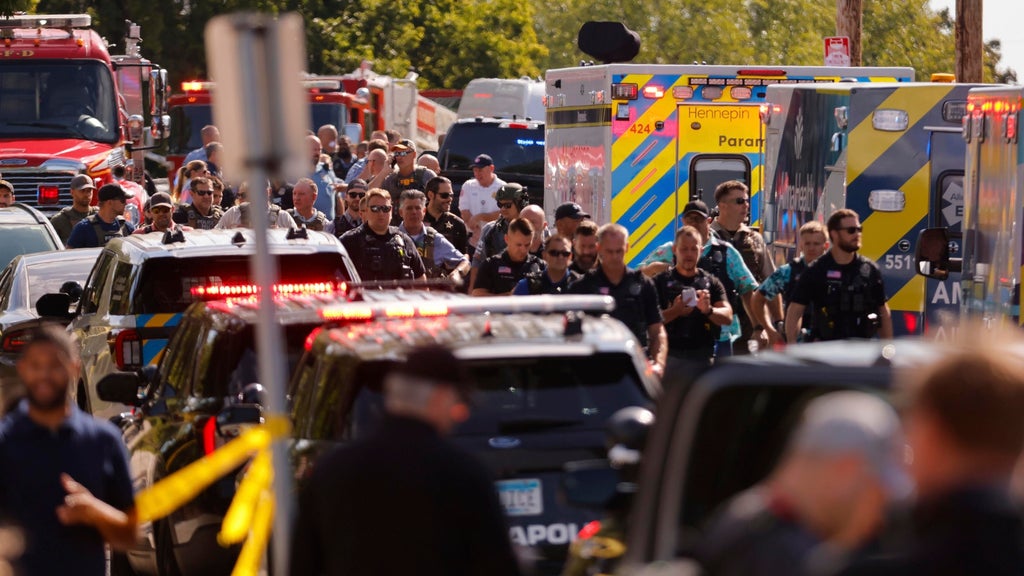
The mass shooting at Annunciation Catholic Church in Minneapolis has left lasting scars on both survivors and first responders. While some injuries are visible, many others remain hidden, affecting the mental health of those who rushed to save lives on that tragic day.
Emergency personnel, including doctors and paramedics, were quick to respond when gunfire erupted during a service, targeting innocent children. Six victims from this horrific incident are currently being treated at Hennepin Healthcare, where medical staff continue to address both physical wounds and the emotional aftermath of the violence witnessed.
Ryan Mayfield, Assistant Chief of Hennepin County EMS, described the harrowing experience of the day. “There’s a part of your brain you have to turn off and just focus on the task and not think about the emotion,” he stated. Mayfield emphasized the significance of their role, noting that paramedics transported 14 patients within just 24 minutes of the initial 911 call.
The chaotic scene is one that Dr. Aaron Robinson, a physician at Hennepin Healthcare, will never forget. He expressed the shock felt by many on the scene, stating, “I’ve never felt that sense of just shock as being on that scene.” In order to assist the injured effectively, Robinson had to push through the trauma of what he witnessed.
Coordination among police, fire services, and EMS was critical in managing the crisis. Dr. Matt Prekker, who was at the hospital coordinating patient arrivals, noted the importance of the established emergency protocols. “The system that’s in place worked that day,” he explained, highlighting how pre-notification helped prepare their team for the influx of victims.
Despite the successful response, the emotional toll on first responders is significant. Robinson shared that professionals in the field often need to compartmentalize their feelings to focus on patient care. “Think about the medicine in the moment, think about what you need to do for your patient and let the emotion — the emotion comes later,” he said.
As they navigate their own healing processes, these medical professionals are leaning on colleagues for support. Prekker acknowledged the lasting impact of the event on their daily work environment, stating, “It’s a different feeling coming into the building each morning since this happened and I’m not sure when that gets back to normal.”
In the aftermath of the shooting, there has been a call for blood donations in Minnesota, which is currently facing a severe shortage. Medical professionals urge the community to contribute, emphasizing that anyone can be a hero by donating blood.
The trauma from this incident serves as a reminder of the unpredictable nature of violence and the profound effect it can have on individuals and communities. As first responders continue to process their experiences, the resilience of medical staff and their commitment to saving lives remains evident.









Revolutionary Photonic Ski-Jump Could Miniaturize LiDAR Systems

Couples Detox from Plastics in New Netflix Doc: Can It Boost Fertility?

Aventon Launches Affordable Full-Suspension Electric Mountain Bike

Discover Eight Must-Try Restaurants This Spring Season

UC Irvine Team Unveils Innovative Ion Pump for Water Treatment

One-Third of Americans Trim Daily Expenses for Healthcare Needs

Apple Secures First Oscar in Three Years with F1: The Movie

Fourth Graders Celebrate St. Patrick’s Day with Creative Weather Drawings

Kim Kardashian Dazzles at Vanity Fair Oscars Party 2026

Nostradamus’ 2026 Predictions: Star Death and Dark Events Loom

Breakthroughs and Challenges Await Science in 2026

Electric Moto Influencer Surronster Arrested in Tijuana

OpenAI to Implement Age Verification for ChatGPT by December 2025

Discover the Top 10 Calorie Counting Apps of 2025

Recovering a Suspended TikTok Account: A Step-by-Step Guide

Bella Hadid Shares Health Update After Treatment for Lyme Disease

Backpack Drives Equip Students with Supplies for New School Year

Analysts Project Stronger Growth for Apple’s iPhone 17 Lineup
-
 Science8 months ago
Nostradamus’ 2026 Predictions: Star Death and Dark Events Loom
-
 Science8 months ago
Breakthroughs and Challenges Await Science in 2026
-
 Technology11 months ago
Electric Moto Influencer Surronster Arrested in Tijuana
-
 Technology9 months ago
OpenAI to Implement Age Verification for ChatGPT by December 2025
-
 Technology1 year ago
Discover the Top 10 Calorie Counting Apps of 2025
-
 Technology1 year ago
Recovering a Suspended TikTok Account: A Step-by-Step Guide
-
 Health11 months ago
Bella Hadid Shares Health Update After Treatment for Lyme Disease
-
 Education1 year ago
Backpack Drives Equip Students with Supplies for New School Year
-
 Health12 months ago
Analysts Project Stronger Growth for Apple’s iPhone 17 Lineup
-

 Health12 months ago
Japanese Study Finds Rose Oil Can Increase Brain Gray Matter
-

 Technology8 months ago
Top 10 Penny Stocks to Watch in 2026 for Strong Returns
-

 Science10 months ago
Starship V3 Set for 2026 Launch After Successful Final Test of Version 2