
Education
Trump Critiques Putin, Revises His Stance on Russian Relations

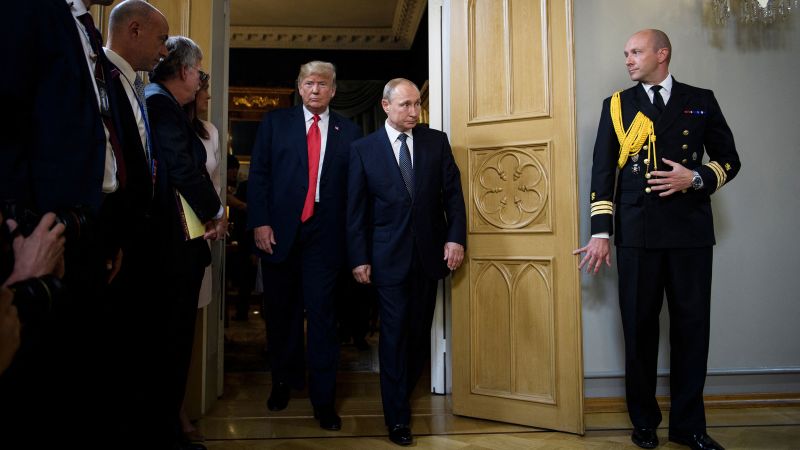
President Donald Trump has recently altered his public stance on Vladimir Putin, expressing new criticisms of the Russian leader and indicating a willingness to provide significant military support to Ukraine. This shift raises questions about the sincerity and implications of Trump’s remarks regarding his past interactions with Putin.
In a series of statements made this week, Trump has suggested he never truly trusted Putin, claiming, “He’s fooled a lot of people,” during a press briefing at the White House. He emphasized that he believes Putin has deceived multiple former US presidents, including Bill Clinton, George W. Bush, Barack Obama, and Joe Biden, stating, “He didn’t fool me.” In a subsequent interview with the BBC, Trump reiterated this sentiment, expressing general distrust toward world leaders, saying, “I trust almost nobody, to be honest with you.”
Despite these claims, Trump’s historical support for Putin complicates his current narrative. Just five months ago, he expressed confidence in Putin’s desire for peace regarding the conflict in Ukraine. On February 14, 2023, he stated, “I believe he wants peace… I trust him on this subject.” This stark contrast highlights how Trump’s rhetoric has evolved in response to the ongoing geopolitical climate.
Trump’s earlier reassurances about Putin’s intentions included dismissing concerns about potential violations of agreements. He responded to inquiries about Putin’s reliability during negotiations by saying, “I think he’ll keep his word.” This perspective shifted dramatically when he acknowledged that in multiple instances, he believed agreements were in place, only for Putin to act contrary to expectations and intensify military actions against Ukraine.
Discontent within the US administration regarding negotiations with Russia has also come to light. Tensions escalated during a meeting with Ukrainian President Volodymyr Zelensky, where Vice President JD Vance suggested prioritizing diplomacy. Zelensky challenged this approach, citing past agreements with Russia that had been violated. He recounted, “We signed ceasefire… but after that, he broke the ceasefire, he killed our people.” This exchange underscored the skepticism many in Ukraine have towards diplomatic engagements with Russia.
In light of the current situation, Trump has adopted a more critical view of Putin’s actions. He noted that while Putin may express cordial sentiments during their conversations, these words do not translate into positive actions on the ground. Trump shared, “I go home, I tell the first lady, ‘You know, I spoke to Vladimir today, and we had a wonderful conversation,’” only to be reminded of ongoing military strikes in Ukraine.
This dynamic is not new for Trump, who has previously shown support for authoritarian leaders under varying circumstances. In early 2020, he praised China and President Xi Jinping for their handling of the COVID-19 pandemic, despite significant evidence suggesting a lack of transparency. Later, as the virus spread in the United States, Trump pivoted to blaming China for the outbreak.
Trump’s previous defense of Putin during the 2016 US election interference allegations also highlights his complicated relationship with the Russian leader. At a press conference in Helsinki, Finland, in 2018, he stated he did not “see any reason why” Russia would interfere, siding with Putin over his own intelligence community. Although he later claimed to have misspoken, the episode reflects a pattern of reluctance to confront Putin directly.
While many might scrutinize Trump’s previous confidence in Putin, he now positions himself as a leader who understands the complexities of international relations. He has suggested that other US presidents were too trusting of Putin, pointing to his own experiences as evidence of the Russian leader’s duplicitous nature. Yet, Trump’s remarks hint at a recognition of his earlier miscalculations, as he acknowledges that Putin’s reassurances often lack follow-through.
This evolving narrative raises important questions about future US foreign policy and the implications of Trump’s shifting stance on Russia. As the situation in Ukraine continues to develop, the effectiveness of Trump’s new approach remains uncertain.










Revolutionary Photonic Ski-Jump Could Miniaturize LiDAR Systems

Couples Detox from Plastics in New Netflix Doc: Can It Boost Fertility?

Aventon Launches Affordable Full-Suspension Electric Mountain Bike

Discover Eight Must-Try Restaurants This Spring Season

UC Irvine Team Unveils Innovative Ion Pump for Water Treatment

One-Third of Americans Trim Daily Expenses for Healthcare Needs

Apple Secures First Oscar in Three Years with F1: The Movie

Fourth Graders Celebrate St. Patrick’s Day with Creative Weather Drawings

Kim Kardashian Dazzles at Vanity Fair Oscars Party 2026

Nostradamus’ 2026 Predictions: Star Death and Dark Events Loom

Breakthroughs and Challenges Await Science in 2026

Electric Moto Influencer Surronster Arrested in Tijuana

OpenAI to Implement Age Verification for ChatGPT by December 2025

Discover the Top 10 Calorie Counting Apps of 2025

Recovering a Suspended TikTok Account: A Step-by-Step Guide

Bella Hadid Shares Health Update After Treatment for Lyme Disease

Backpack Drives Equip Students with Supplies for New School Year

Analysts Project Stronger Growth for Apple’s iPhone 17 Lineup
-
 Science7 months ago
Nostradamus’ 2026 Predictions: Star Death and Dark Events Loom
-
 Science7 months ago
Breakthroughs and Challenges Await Science in 2026
-
 Technology10 months ago
Electric Moto Influencer Surronster Arrested in Tijuana
-
 Technology8 months ago
OpenAI to Implement Age Verification for ChatGPT by December 2025
-
 Technology1 year ago
Discover the Top 10 Calorie Counting Apps of 2025
-
 Technology1 year ago
Recovering a Suspended TikTok Account: A Step-by-Step Guide
-
 Health10 months ago
Bella Hadid Shares Health Update After Treatment for Lyme Disease
-
 Education1 year ago
Backpack Drives Equip Students with Supplies for New School Year
-
 Health11 months ago
Analysts Project Stronger Growth for Apple’s iPhone 17 Lineup
-

 Technology7 months ago
Top 10 Penny Stocks to Watch in 2026 for Strong Returns
-

 Health11 months ago
Japanese Study Finds Rose Oil Can Increase Brain Gray Matter
-

 Science9 months ago
Starship V3 Set for 2026 Launch After Successful Final Test of Version 2